

A cardiologist testifies that Maradona was a high-risk patient and should have recovered in a clinic
Advertisement
Read this article for free:
or
Already have an account? Log in here »
To continue reading, please subscribe:

Digital Subscription
One year of digital access for only $205*
- Enjoy unlimited reading on winnipegfreepress.com
- Read the E-Edition, our digital replica newspaper
- Access News Break, our award-winning app
- Play interactive puzzles
*First annual payment billed as $205.00 + GST for one year. This annual subscription will automatically renew at $233.00 + GST every 52 weeks (10% off the regular annual price of $259.35). Offer available to new and qualified returning subscribers only. Cancel any time.
To continue reading, please subscribe:
Add Free Press access to your Brandon Sun subscription for only an additional
$1 for the first 4 weeks*
- Enjoy unlimited reading on winnipegfreepress.com
- Read the E-Edition, our digital replica newspaper
- Access News Break, our award-winning app
- Play interactive puzzles
*Your next Brandon Sun subscription payment will increase by $1.00 and you will be charged $17.95 plus GST for four weeks. After four weeks, your payment will increase to $24.95 plus GST every four weeks.
Read unlimited articles for free today:
or
Already have an account? Log in here »
Hey there, time traveller!
This article was published 24/04/2025 (527 days ago), so information in it may no longer be current.
BUENOS AIRES, Argentina (AP) — A cardiologist testified on Thursday that Diego Maradona was considered a “high-risk patient” and said that the authorities at the clinic where he underwent surgery days before his death recommended that the former national team captain should have to recover in a rehabilitation clinic rather than in a private home.
“He was a high-risk patient who was experiencing withdrawal symptoms and required significant care,” Sebastián Nani, head of cardiology at the Olivos Clinic, testified to the court trying seven healthcare professionals for the alleged negligent homicide of the former player.
Maradona, who led Argentina to the World Cup title in 1986, died on Nov. 25, 2020 while undergoing home care on the outskirts of Buenos Aires, days after undergoing surgery for a hematoma that formed between his skull and brain. He was 60.
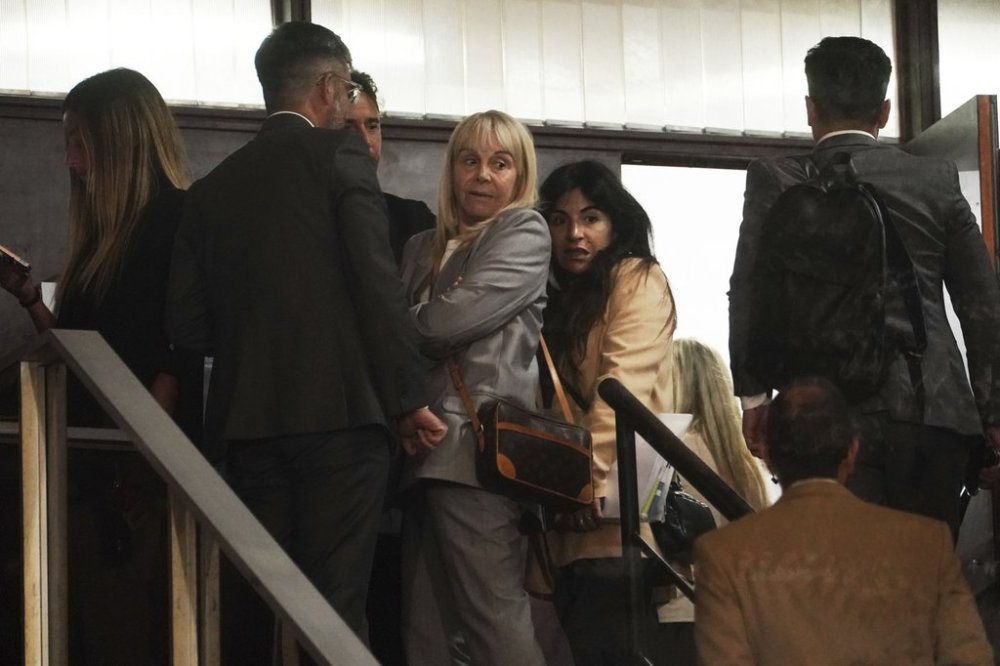
Last week, Diego Maradona’s ex-wife and a doctor also questioned the decision to take him to a private home following the surgery instead of admitting him to a rehabilitation center.
The deficiencies in Maradona’s home care are one of the prosecution’s key pieces of evidence against the defendants.
Nani highlighted the differences of opinion between hospital authorities and two of the accused who were close to the former player — neurosurgeon Leopoldo Luque and psychiatrist Agustina Cosachov — who proposed that the hospitalization continue in a private home in the town of Tigre, almost 40 kilometers from the capital.

The cardiologist asserted that outside the clinic, “Maradona’s responsibility rested 100% with Luque.”
Luque, was Maradona’s personal physician for the last four years of his life while Cosachov prescribed medication that Maradona took until the time of his death.
In addition to Luque and Cosachov, psychologist Carlos Díaz; doctors Nancy Forlini and Pedro Di Spagna; Mariano Perroni, representative of the company that provided the nursing service; and nurse Ricardo Almirón are also on trial.
___
AP soccer: https://apnews.com/hub/soccer
Related Articles
Johnson leads Wild to 4-1 NSL win over Tides Former Inter Milan and Brazil striker Jair da Costa dies at 84 Barcelona edges Real Madrid in extra time to win Copa del Rey final



Advertisement Advertise With Us
Advertisement Advertise With Us