

Maradona allowed to order hamburgers in days after surgery, ICU director testifies
Advertisement
Read this article for free:
or
Already have an account? Log in here »
To continue reading, please subscribe:

Digital Subscription
One year of digital access for only $205*
- Enjoy unlimited reading on winnipegfreepress.com
- Read the E-Edition, our digital replica newspaper
- Access News Break, our award-winning app
- Play interactive puzzles
*First annual payment billed as $205.00 + GST for one year. This annual subscription will automatically renew at $233.00 + GST every 52 weeks (10% off the regular annual price of $259.35). Offer available to new and qualified returning subscribers only. Cancel any time.
To continue reading, please subscribe:
Add Free Press access to your Brandon Sun subscription for only an additional
$1 for the first 4 weeks*
- Enjoy unlimited reading on winnipegfreepress.com
- Read the E-Edition, our digital replica newspaper
- Access News Break, our award-winning app
- Play interactive puzzles
*Your next Brandon Sun subscription payment will increase by $1.00 and you will be charged $17.95 plus GST for four weeks. After four weeks, your payment will increase to $24.95 plus GST every four weeks.
Read unlimited articles for free today:
or
Already have an account? Log in here »
Hey there, time traveller!
This article was published 29/04/2025 (522 days ago), so information in it may no longer be current.
BUENOS AIRES, Argentina (AP) — Diego Maradona was allowed to order unhealthy food including hamburgers during recovery from surgery, the director of the clinic’s intensive care unit testified Tuesday at the the trial of seven health professionals charged with negligence in the soccer star’s death.
Fernando Villarejo, who worked at the Olivos Clinic on the outskirts of Buenos Aires, told the court he felt like a pawn between the “king and the queen,” referring to neurosurgeon Leopoldo Luque and psychiatrist Agustina Cosachov, as they determined Maradona’s post-surgery care in November 2020.
“Anything was allowed inside the room,” Villarejo testified. “It was embarrassing what happened there. I take responsibility.”
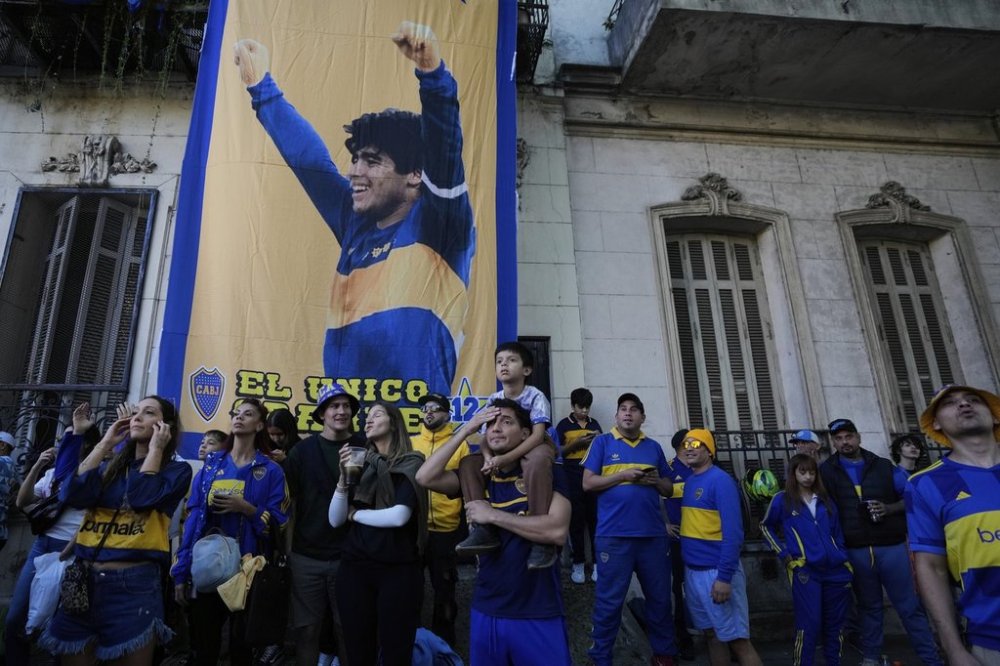
Maradona had surgery for a hematoma that formed between his skull and brain and stayed in intensive care at the Olivos Clinic between Nov. 4-11.
Luque and Cosachov proposed that Maradona’s care continue in a private home in the town of Tigre, almost 40 kilometers (25 miles) from the capital.
Maradona, who led Argentina to the World Cup title in 1986, died on Nov. 25, 2020 while in home care. He was 60.
Villarejo said that Maradona underwent surgery without any preoperative examinations and that a few days after the surgery, Luque ordered him to sedate Maradona to “try to detoxify” him from his drinking habits and because he was an unmanageable patient.
“I didn’t agree — it wasn’t the right place. I told Luque all this,” said the director of the clinic’s intensive care unit, who said that he recorded all of it in the medical records.

He added that Maradona’s family agreed to the sedation “out of ignorance or because they trusted (his father’s people).”
Villarejo said that he agreed with the cardiologist who testified last week that the former national team captain should have recovered in a rehabilitation clinic rather than in a private home.
Luque was Maradona’s personal physician for the last four years of his life, while Cosachov prescribed medication that Maradona took until the time of his death.
___
AP soccer: https://apnews.com/hub/soccer
Related Articles
Chelsea beats Djurgården 4-1 in Conference League semifinals, Real Betis tops Fiorentina 2-1




Advertisement Advertise With Us
Advertisement Advertise With Us