

Decision to switch Africa Cup to 4-year cycle rankles
Advertisement
Read this article for free:
or
Already have an account? Log in here »
To continue reading, please subscribe:

Digital Subscription
One year of digital access for only $205*
- Enjoy unlimited reading on winnipegfreepress.com
- Read the E-Edition, our digital replica newspaper
- Access News Break, our award-winning app
- Play interactive puzzles
*First annual payment billed as $205.00 + GST for one year. This annual subscription will automatically renew at $233.00 + GST every 52 weeks (10% off the regular annual price of $259.35). Offer available to new and qualified returning subscribers only. Cancel any time.
To continue reading, please subscribe:
Add Free Press access to your Brandon Sun subscription for only an additional
$1 for the first 4 weeks*
- Enjoy unlimited reading on winnipegfreepress.com
- Read the E-Edition, our digital replica newspaper
- Access News Break, our award-winning app
- Play interactive puzzles
*Your next Brandon Sun subscription payment will increase by $1.00 and you will be charged $17.95 plus GST for four weeks. After four weeks, your payment will increase to $24.95 plus GST every four weeks.
Read unlimited articles for free today:
or
Already have an account? Log in here »
Hey there, time traveller!
This article was published 04/01/2026 (260 days ago), so information in it may no longer be current.
RABAT, Morocco (AP) — The decision to switch the Africa Cup of Nations’ cycle to every four years instead of two has not gone down well among coaches at the tournament.
Patrice Motsepe, the president of the Confederation of African Football (CAF), surprised many with his announcement on Dec. 20 that the hitherto biennial competition will switch in 2028 to a schedule that aligns with FIFA’s international calendar.
Some see colonial overtones behind the decision and argue that it was made with European wishes in mind to the detriment of African interests.
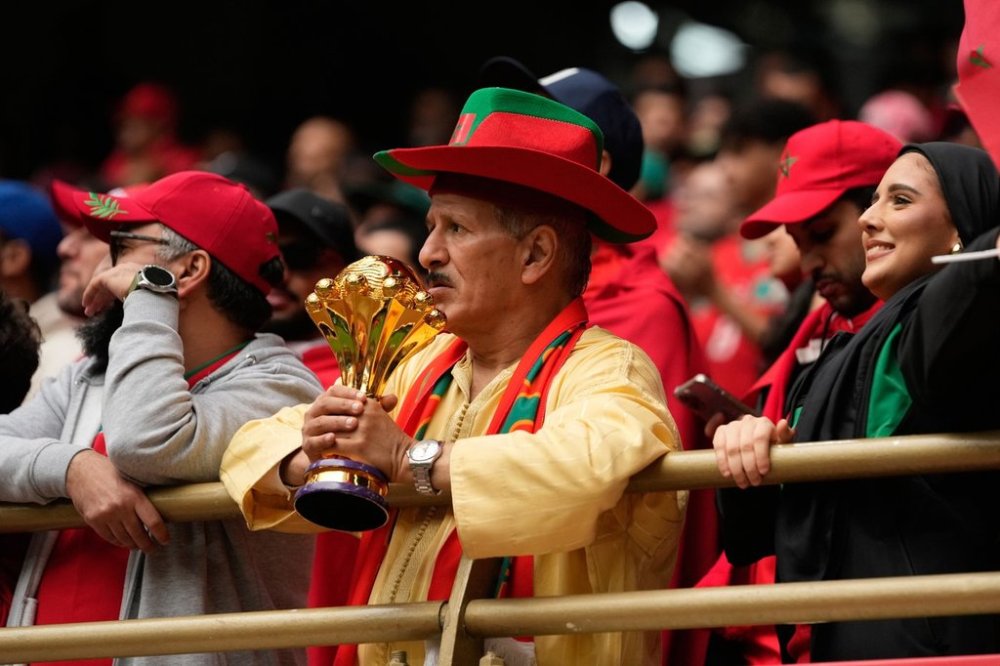
“Since (the first tournament) in 1957, Africa has had Africa Cup every two years,” Mali coach Tom Saintfiet said. “We need to respect Africa. It cannot be that Europe decides – the big clubs, FIFA, UEFA – what we have to do.”
Egyptian counterpart Hossam Hassan criticized CAF for not defending African perspectives and asked who really benefits from the decision.
“It seems designed for African players based in Europe whose European clubs do not want to release them for their national teams,” Hassan said. “So, what did they actually work on? They worked on ensuring that the African Cup of Nations is not played every two years.”
Hassan said he believed African competitions were being adapted to suit “European conditions and to serve European teams.”
“FIFA often speaks of respect. Respect must apply to everyone, to all the national teams in the world,” Hassan said. “It is essential to respect African football, including the conditions of the players, the fans, and the national teams.”
Morocco coach Walid Regragui preferred to look at the impact the decision will have on African soccer, saying it had “good points and bad points.”
Regragui referred to the problems many teams had getting their players released from European clubs to play in the tournament and suggested the players were undervalued because they’re away every two years.
“Maybe there will be a silver lining. Maybe the fact that European clubs know an African player only plays in the Africa Cup of Nations every four years will make them pay these players what they deserve. And maybe they’ll trust these players more because they’ll know they’re less likely to lose them during the tournament,” said Regragui, who said the Africa Cup is “as strong as the Euros.”
“The AFCON every four years will inevitably be a real event that no one will want to miss. There are interests everywhere. My interest is to see African football grow,” Regragui said.
None of the coaches seemed impressed by the idea of playing the new African Nations League that Motsepe claimed would be the equivalent of playing an Africa Cup every year. There will also be no Nations League during FIFA World Cup years.
Motsepe was flanked by FIFA secretary general Mattias Grafström as he made the announcement. Grafström referred to the scheduling problems with the current Africa Cup, which was pushed back from a summer tournament to avoid clashing with FIFA’s revamped Club World Cup.

Scheduling of Africa’s premier national competition has been a consistent issue. The current tournament was supposed to be in Guinea, but the West African country was stripped of the tournament in 2022 when CAF determined it would not have adequate infrastructure and facilities in place. Every Africa Cup since 2013 has been moved because of problems with the original host.
French coach Claude Le Roy, who led Cameroon to the 1988 title and later took charge of Senegal, Congo and Ghana among others, spoke about the benefits of holding an Africa Cup every two years brought in terms of development.
“It’s not at all for Africa,” Le Roy said of the decision. “It’s for FIFA.”
___
AP at the Africa Cup: https://apnews.com/hub/africa-cup-of-nations
Related Articles
Man United candidates for interim coach include Solskjaer and Carrick, AP source says










Advertisement Advertise With Us
Advertisement Advertise With Us