

FIFA explains World Cup ruling that led to controversial disallowed Germany goal
Advertisement
Read this article for free:
or
Already have an account? Log in here »
To continue reading, please subscribe:

Digital Subscription
One year of digital access for only $205*
- Enjoy unlimited reading on winnipegfreepress.com
- Read the E-Edition, our digital replica newspaper
- Access News Break, our award-winning app
- Play interactive puzzles
*First annual payment billed as $205.00 + GST for one year. This annual subscription will automatically renew at $233.00 + GST every 52 weeks (10% off the regular annual price of $259.35). Offer available to new and qualified returning subscribers only. Cancel any time.
To continue reading, please subscribe:
Add Free Press access to your Brandon Sun subscription for only an additional
$1 for the first 4 weeks*
- Enjoy unlimited reading on winnipegfreepress.com
- Read the E-Edition, our digital replica newspaper
- Access News Break, our award-winning app
- Play interactive puzzles
*Your next Brandon Sun subscription payment will increase by $1.00 and you will be charged $17.95 plus GST for four weeks. After four weeks, your payment will increase to $24.95 plus GST every four weeks.
Read unlimited articles for free today:
or
Already have an account? Log in here »
ATLANTA (AP) — FIFA explained Tuesday the tighter regulations that resulted in Germany having a potentially game-winning goal disallowed in its shock elimination from the World Cup.
Defender Jonathan Tah’s headed goal in extra time against Paraguay on Monday was ruled out after a video review because of a foul on goalkeeper Orlando Gill.
Replays showed Germany’s Waldemar Anton push Gill to the ground, but the minimal contact led to criticism of the decision.
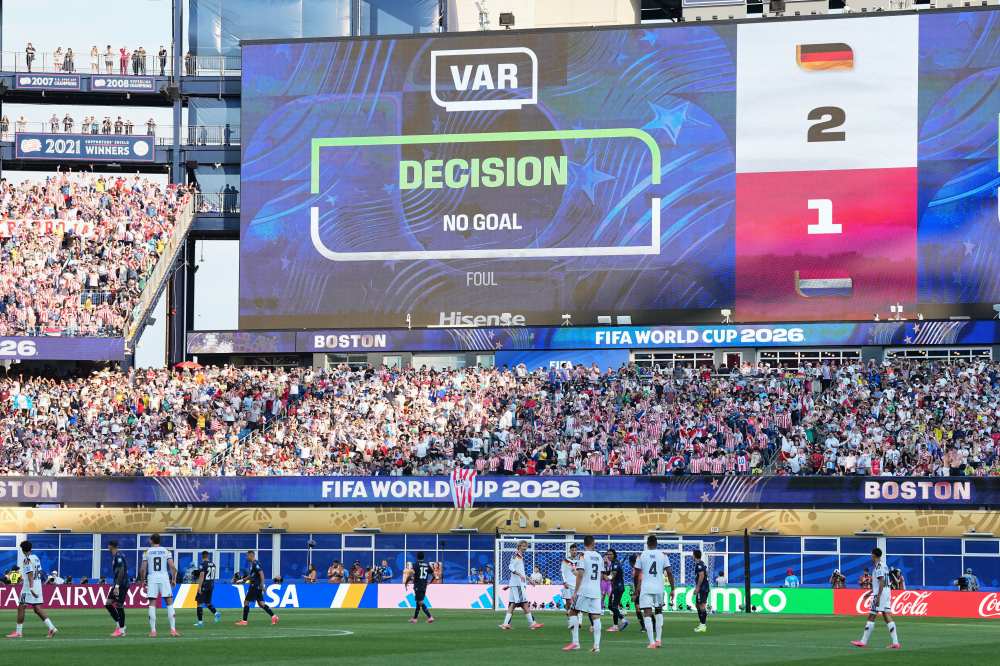
Germany went on to lose the round of 32 game in a penalty shootout, with Tah firing a decisive spot kick over the bar.
FIFA’s referees chief Pierluigi Collina said officials had been told to punish incidents when players try to block opponents and make no attempt to play the ball, especially where goalkeepers are concerned.
“Although keeping a position is not a foul per se, when an attacking player is not interested in the ball and deliberately moves, even marginally, with the clear intention of obstructing opponents’ movement and prevents him from defending, then referees, and VAR when needed, should carefully analyze the incident and intervene,” Collina said. “This is especially the case when the tactic aims to prevent the opposing goalkeeper from being able to defend the goal.
“Coaches and players were informed so it should come as no surprise that referees will punish these fouls.”
Collina said moves to curb timewasting had been successful.
There are now time limits on goal kicks, throw ins and substitutions, while players are forced to leave the field for one minute after an injury.

“These measures have all been very effective and unanimously considered as very positive innovations,” Collina said.
___
James Robson is at https://x.com/jamesalanrobson
___
See more of AP’s World Cup coverage here
Related Articles
Ramos, Ronaldo score as Portugal rallies to beat Croatia 2-1 and advance to round of 16









Advertisement Advertise With Us
Advertisement Advertise With Us