

Senegal gets CAS date for appeal to regain AFCON title won in chaotic final against Morocco
Advertisement
Read this article for free:
or
Already have an account? Log in here »
To continue reading, please subscribe:

Digital Subscription
One year of digital access for only $205*
- Enjoy unlimited reading on winnipegfreepress.com
- Read the E-Edition, our digital replica newspaper
- Access News Break, our award-winning app
- Play interactive puzzles
*First annual payment billed as $205.00 + GST for one year. This annual subscription will automatically renew at $233.00 + GST every 52 weeks (10% off the regular annual price of $259.35). Offer available to new and qualified returning subscribers only. Cancel any time.
To continue reading, please subscribe:
Add Free Press access to your Brandon Sun subscription for only an additional
$1 for the first 4 weeks*
- Enjoy unlimited reading on winnipegfreepress.com
- Read the E-Edition, our digital replica newspaper
- Access News Break, our award-winning app
- Play interactive puzzles
*Your next Brandon Sun subscription payment will increase by $1.00 and you will be charged $17.95 plus GST for four weeks. After four weeks, your payment will increase to $24.95 plus GST every four weeks.
Read unlimited articles for free today:
or
Already have an account? Log in here »
GENEVA (AP) — Senegal’s appeal to regain the Africa Cup of Nations title it won in a chaotic final against host nation Morocco in January will be heard at sport’s highest court on Oct. 8.
The Court of Arbitration for Sport said Friday the hearing will be held behind closed doors at its headquarters in Lausanne, Switzerland, with no target date set for a verdict.
CAS judges can typically take several months to announce their decision, and the AFCON case will be rigorously scrutinized after provoking a furor in African soccer and political circles.
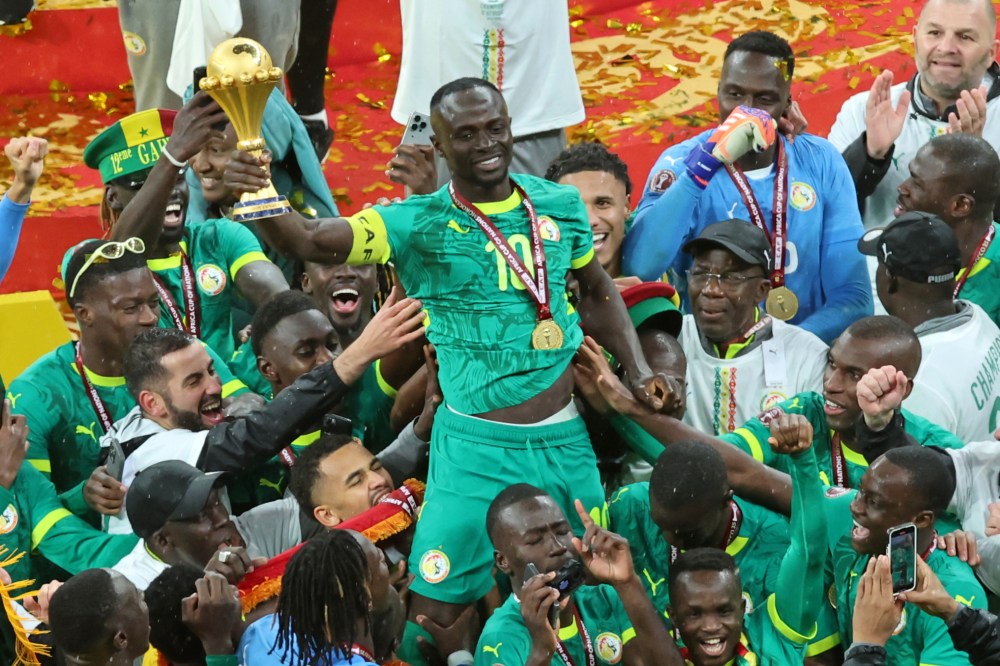
Senegal beat Morocco 1-0 after extra time in an extraordinary final in Rabat on Jan. 18.
Morocco was awarded the title several weeks later when appeal judges for the Confederation of African Football ruled Senegal defaulted the game by leaving the field to protest a penalty kick being awarded to Morocco.
Preparing the appeal hearing was in process throughout the World Cup where Morocco reached the quarterfinals and Senegal stunningly lost in the round of 32 against Belgium after leading 2-0 late in the game.
“At this stage, CAS cannot state when a final decision will be rendered but it will not be on the day of the hearing,” the court said Friday in a statement.
How the final unfolded
The AFCON final drama erupted in stoppage time after the regulation 90 minutes with the score tied at 0-0.
Senegal players walked off the field and delayed play for 15 minutes when Morocco was awarded the penalty that was eventually saved.
Senegal’s star forward Sadio Mané was credited with helping persuade his team to complete the game.
That avoided the game being abandoned amid angry scenes in the stadium as Moroccan police clashed with Senegal fans. Tensions had risen when Senegal had a goal disallowed in stoppage time, minutes before the penalty was awarded.
Morocco’s missed penalty kick also entered soccer lore. Stepping up for what shaped as the final play of the game, Morocco forward Brahim Díaz attempted a delicate slow chip shot — known as a “Panenka” — that Senegal goalkeeper Édouard Mendy stood up to save easily.
Fallout from the final continued into May. Morocco’s King Mohammed VI pardoned 18 Senegal fans who were jailed for up to one year because of the clashes in the stadium.
African soccer judges challenged

The CAF appeal ruling in March seemed to ignore the laws of soccer which state the referee’s decision on the field of play is final.
The judges, however, cited a CAF tournament rule that any team refusing to play “shall be eliminated for good from the current competition.” Senegal’s refusal to play lasted several minutes though did not force or persuade the referee to abandon the game.
The decision to strip the title from Senegal fueled a perception that Morocco, which will co-host the 2030 World Cup with Spain and Portugal, has increasing influence in international soccer politics.
___
AP soccer: https://apnews.com/hub/soccer
Related Articles
Felipe Mora scores twice in swan song with Timbers for 2-1 victory over Real Salt Lake Son Heung-min, Denis Bouanga get 1st-half goals in surging LAFC's 4-0 win over Sporting Kansas City Dallas loses newcomer Daniel De Sousa Britto to injury in 1-0 loss to San Diego Paintsil scores a goal, Marcinkowski has 5 saves for Galaxy in 1-1 tie with Earthquakes Lacasse converts late penalty to cap 4-1 win for the Royals against the Courage

Advertisement Advertise With Us
Advertisement Advertise With Us