

Croatia fans pulling for Modric magic against England
Advertisement
Read this article for free:
or
Already have an account? Log in here »
To continue reading, please subscribe:
Monthly Digital Subscription
$1 per week for 24 weeks*
- Enjoy unlimited reading on winnipegfreepress.com
- Read the E-Edition, our digital replica newspaper
- Access News Break, our award-winning app
- Play interactive puzzles
*Billed as $4.00 plus GST every four weeks. After 24 weeks, price increases to the regular rate of $19.95 plus GST every four weeks. Offer available to new and qualified returning subscribers only. Cancel any time.
Monthly Digital Subscription
$4.99/week*
- Enjoy unlimited reading on winnipegfreepress.com
- Read the E-Edition, our digital replica newspaper
- Access News Break, our award-winning app
- Play interactive puzzles
*Billed as $19.95 plus GST every four weeks. Cancel any time.
To continue reading, please subscribe:
Add Free Press access to your Brandon Sun subscription for only an additional
$1 for the first 4 weeks*
*Your next subscription payment will increase by $1.00 and you will be charged $16.99 plus GST for four weeks. After four weeks, your payment will increase to $23.99 plus GST every four weeks.
Read unlimited articles for free today:
or
Already have an account? Log in here »
Hey there, time traveller!
This article was published 10/07/2018 (2812 days ago), so information in it may no longer be current.
Ten years ago, I joined about 70 Croatia fans to watch the Euro 2008 Group B opener between their national team and tournament co-hosts Austria. I had been commissioned to write something about the Austrian side for ESPN, but given the company I was in, it was the Vatreni that held much of my attention — particularly a scrawny, 22-year-old midfielder named Luka Modric.
Having recently joined Tottenham Hotspur at a record-tying fee for the North London club (they had paid equal money for Darren Bent the previous year), Modric was already known to anyone who closely followed the major leagues of Europe.
The folks I watched the match with, however, had naturally followed his progress at Dinamo Zagreb, where he had just won a third title and second Croatian Footballer of the Year award.
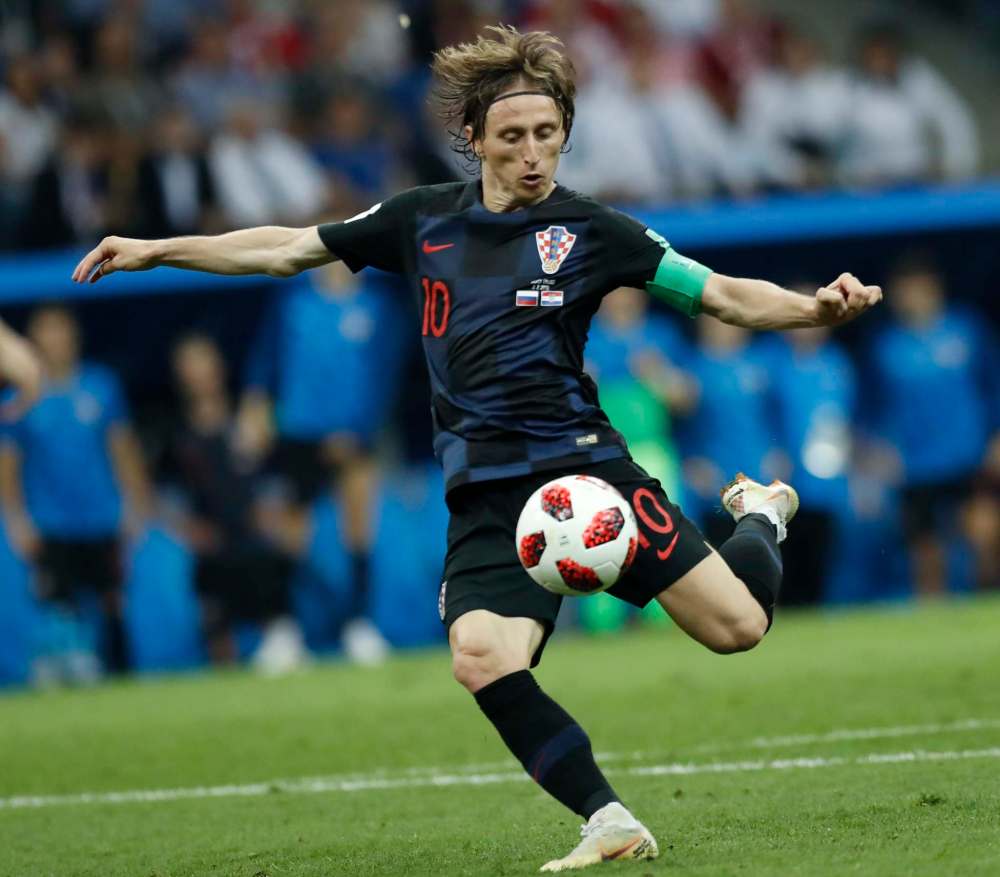
They told me about how they preferred Croatia to keep the ball on the ground, and how Modric was key to that. Modric, as it happens, showed up more often in my notes that afternoon than Martin Harnik, who I had figured I’d write about, given my assignment.
Now, I have a good memory, but I remembered none of this until last week when I fired up my old Toshiba laptop, intending to revisit some of the quirky (and by “quirky” I mean “brilliant”) tracks my friends and I recorded in high school.
Right there, on the home screen, was a draft of my column that would appear in the June 11, 2008 edition of this newspaper.
Modric only showed up on the periphery — more in my notes than in the piece, itself. But, looking back, it is no surprise that as a young man he was already something of a national icon, his story resonating with many who left Croatia, and many more who stayed, amidst the violence and destruction of the early 1990s.
By now, of course, his story is well-documented. His grandfather, Luka Snr., was murdered by Serbian militia in 1991, and after the family house was burned he and his parents and sister became refugees. There was no money, no electricity, no running water. Modric has said that while the experience made him stronger, it’s nevertheless something he doesn’t want to carry around with him forever; not that he intends to forget, either.
As if the nightmare of his childhood wasn’t enough, he was also told he would never make it as a professional footballer. He was too small. That old chestnut. Still, after he turned some heads at a youth tournament in Italy, Dinamo took a chance on him. He would go on to play 128 matches for the club and help it claim five major honours.
Then there were those four years at Spurs. Then six at Real Madrid, where he has so far won La Liga, the Copa del Rey and four Champions Leagues.
A decade on from my personal introduction to his story from Winnipeg’s Croatian community, he is one of the best midfielders in the world. Maybe the best. He has certainly been the best at the ongoing World Cup.
Against Russia in one of Saturday’s quarter-finals, the now-32-year-old delivered what has to be one of the finest performances of his sensational, if not unlikely, career. He touched the ball a mind-boggling 140 times in Sochi — he had it nearly 10 per cent of the game.
And against an opponent that sought to disrupt the middle of the park, he nevertheless completed more than 87 per cent of his passes. Few players can control a match in the best of circumstances. He does it in the middle of mayhem.
It makes you wonder. Here is a player who grew up dribbling a makeshift ball while the crackle of gunfire was never far away, where the neighbourhood being shelled was always too close. What can possibly faze him? He spent the formative years of his life either fleeing horror or trying to survive in the middle of it.

What is soccer, even World Cup soccer, in comparison? I suppose only he could tell us, really.
What Modric will be looking to tell England today in Moscow is that a World Cup semifinal — one of the biggest games of his life, of any footballer’s life — is still something he can control, an occasion that, while incredibly meaningful, will only partially define him.
He knows stakes, and these aren’t them. Not that he won’t be the encounter’s single most important figure, anyway. And wouldn’t a World Cup final be an appropriate, poetic climax in a story that has somehow, against all odds, inspiringly reached this point?
Even he must think so. And if he doesn’t admit it, I know many, many others will. They’ll admit it loud and proud when he leads Croatia onto the field at Luzhniki Stadium. Because his story also describes theirs. I can’t even imagine the emotion they’ll be projecting onto the wiry, awkward midfielder when they see him emerge from the tunnel. And they’ve told me. But it still seems a story too good to be true.
Twitter @JerradPetersJerradpeters@gmail.com
Our newsroom depends on a growing audience of readers to power our journalism. If you are not a paid reader, please consider becoming a subscriber.
Our newsroom depends on its audience of readers to power our journalism. Thank you for your support.