

Ecuador a soccer baby, but growing quickly

Advertisement
Read this article for free:
or
Already have an account? Log in here »
To continue reading, please subscribe:

Digital Subscription
One year of digital access for only $205*
- Enjoy unlimited reading on winnipegfreepress.com
- Read the E-Edition, our digital replica newspaper
- Access News Break, our award-winning app
- Play interactive puzzles
*First annual payment billed as $205.00 + GST for one year. This annual subscription will automatically renew at $233.00 + GST every 52 weeks (10% off the regular annual price of $259.35). Offer available to new and qualified returning subscribers only. Cancel any time.
To continue reading, please subscribe:
Add Free Press access to your Brandon Sun subscription for only an additional
$1 for the first 4 weeks*
- Enjoy unlimited reading on winnipegfreepress.com
- Read the E-Edition, our digital replica newspaper
- Access News Break, our award-winning app
- Play interactive puzzles
*Your next Brandon Sun subscription payment will increase by $1.00 and you will be charged $17.95 plus GST for four weeks. After four weeks, your payment will increase to $24.95 plus GST every four weeks.
Read unlimited articles for free today:
or
Already have an account? Log in here »
Hey there, time traveller!
This article was published 16/06/2015 (4125 days ago), so information in it may no longer be current.
ONE last match before Investors Group Field returns to business as usual — and today, city and teams will say goodbye to the Women’s World Cup together.
The 4 p.m. game will be Winnipeg’s seventh and final tournament match. It will also be Ecuador’s last as they face Japan.
There isn’t much at stake in this game. After two blowout Group C losses, Ecuador knows they won’t move on to the Round of 16. Japan, on the other hand, was one of the first sides to clinch their spot in the knockout rounds.
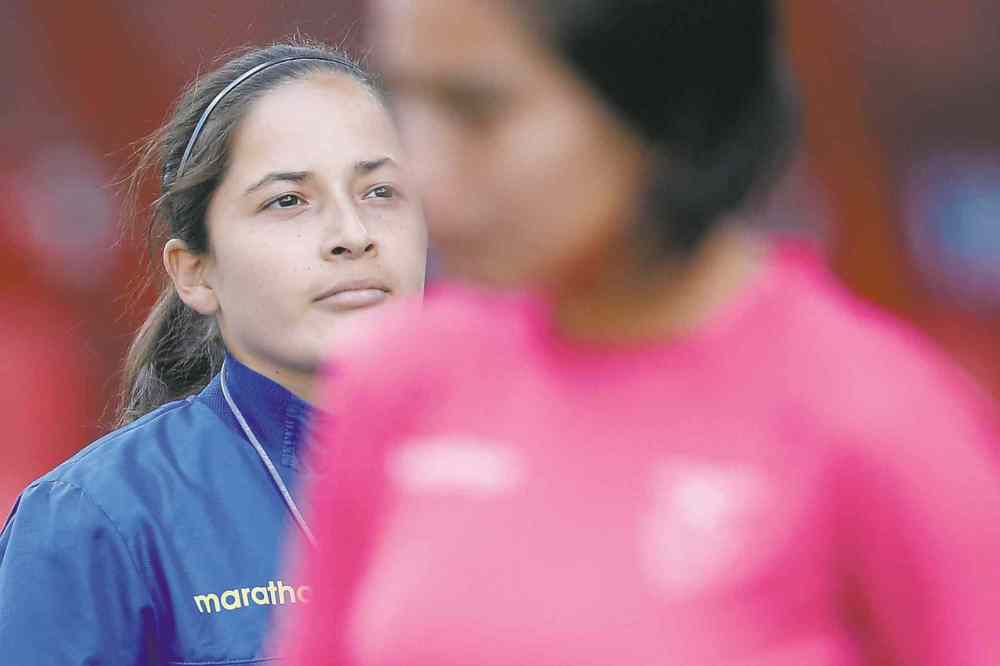
It is a lopsided lineup, with the 48th-ranked team in the world facing off against the electric Japan side. Still, this is Ecuador’s first World Cup, and their roster is very young. Their most experienced player, 29-year-old defender Nancy Aguilar, has 48 international caps; half the Japanese roster has more. Ecuador striker Ambar Torres leads her team with 10 goals in 24 games.
They are growing, though. They’ve already started.
“This tournament has been an eye-opener for us,” head coach Vanessa Arauz said Sunday, through a FIFA interpreter. “When we left Ecuador, we were a bit blind. Now, we better understand what has to be done to play better, to be world-class players.”
To be blunt, there isn’t much hope for Ecuador, not against the reigning Women’s World Cup champions. Through their first two matches, Ecuador was outscored by 15 goals. Even if coach Norio Sasaki rests his top guns, Japan’s back-up firepower should be able to handle the job.
“No matter who the opponent is, I think it’s important we are able to compete,” Sasaki said Sunday, through an interpreter. “Even if they are to rest, of course sometimes there may be some positive aspects, but sometimes resting too much could be an issue.”
So maybe this match is less a story of the game at present, and more a tale of the shape of the women’s game to come — and a rare chance for Winnipeggers to see the soccer world’s present and future together on the pitch.
It’s not just the players who are young. It’s everything around Ecuador: at just 26, Arauz is the youngest manager in the tournament. She was already six years old when Ecuador fielded its first national women’s team, a patchwork roster cobbled together for the continental championship in 1995.
For years, women’s soccer in Ecuador existed like that, haphazard. Two years ago that began to change. Ecuador launched the Campeonato Ecuatoriano de Fútbol Femenino, its first regular women’s league. It’s amateur-level competition, and for the most part the players don’t get paid. Still, they are finally able to compete on a regular basis and develop their skills at home.
Most of this Women’s World Cup roster was drawn from those ranks, Arauz noted, and she said the league made a “significant effort” to support the team on the road to Canada. Still, the side doesn’t get to play or train as often as she would like.

The road to a world champion has to begin somewhere, with steady forward steps. Arauz would like to see more girls’ programs in schools — most players in Ecuador now start learning the game around age 15, she said.
“We need to make a lot of headway,” Arauz said. “We know we need to work (a longer) amount of time, with more continuity, if possible 365 days a year… we have seen only the tip of the iceberg. Now we see what underlies the tip. We do have potential, but we have to invest.”
Against Japan, they have one final chance to show that potential on the largest stage. Arauz stated flatly she does not expect Ecuador to win the game. She does expect them to try and limit the goals against, to defend better, to wring every second of life out of those 90-plus minutes they can get.
“We may be defeated, we will always hold our heads high,” Arauz said. “Success and defeat are two sides of the same coin. Because if I dream, if I take risks, if I confront the challenge, I may win, I may lose. But the person who never takes upon themselves the challenge will never grow, will never develop.”
melissa.martin@freepress.mb.ca
Melissa Martin
Reporter-at-large
Melissa Martin reports and opines for the Winnipeg Free Press.
Every piece of reporting Melissa produces is reviewed by an editing team before it is posted online or published in print — part of the Free Press‘s tradition, since 1872, of producing reliable independent journalism. Read more about Free Press’s history and mandate, and learn how our newsroom operates.
Our newsroom depends on a growing audience of readers to power our journalism. If you are not a paid reader, please consider becoming a subscriber.
Our newsroom depends on its audience of readers to power our journalism. Thank you for your support.
Melissa Martin
Reporter-at-large
Melissa Martin reports and opines for the Winnipeg Free Press.
Every piece of reporting Melissa produces is reviewed by an editing team before it is posted online or published in print — part of the Free Press‘s tradition, since 1872, of producing reliable independent journalism. Read more about Free Press’s history and mandate, and learn how our newsroom operates.
Our newsroom depends on a growing audience of readers to power our journalism. If you are not a paid reader, please consider becoming a subscriber.
Our newsroom depends on its audience of readers to power our journalism. Thank you for your support.


Advertisement Advertise With Us
Advertisement Advertise With Us