

It’s been four years since the Senate began a study of conditions in Canada’s prisons. Where’s the final report?
Advertisement
Read this article for free:
or
Already have an account? Log in here »
To continue reading, please subscribe:

Digital Subscription
One year of digital access for only $205*
- Enjoy unlimited reading on winnipegfreepress.com
- Read the E-Edition, our digital replica newspaper
- Access News Break, our award-winning app
- Play interactive puzzles
*First annual payment billed as $205.00 + GST for one year. This annual subscription will automatically renew at $233.00 + GST every 52 weeks (10% off the regular annual price of $259.35). Offer available to new and qualified returning subscribers only. Cancel any time.
To continue reading, please subscribe:
Add Free Press access to your Brandon Sun subscription for only an additional
$1 for the first 4 weeks*
- Enjoy unlimited reading on winnipegfreepress.com
- Read the E-Edition, our digital replica newspaper
- Access News Break, our award-winning app
- Play interactive puzzles
*Your next Brandon Sun subscription payment will increase by $1.00 and you will be charged $17.95 plus GST for four weeks. After four weeks, your payment will increase to $24.95 plus GST every four weeks.
Read unlimited articles for free today:
or
Already have an account? Log in here »
Hey there, time traveller!
This article was published 10/05/2021 (1961 days ago), so information in it may no longer be current.
It’s been more than four years since the Senate human rights committee launched a “comprehensive study” of federal prisons.
The study saw senators touring prisons — parliamentarians being among the few who by law are permitted access to any part of a penitentiary — and hearing directly from prisoners.
But due to a variety of factors — the 2019 federal election, the COVID-19 pandemic — the committee has yet to release its final report with recommendations.
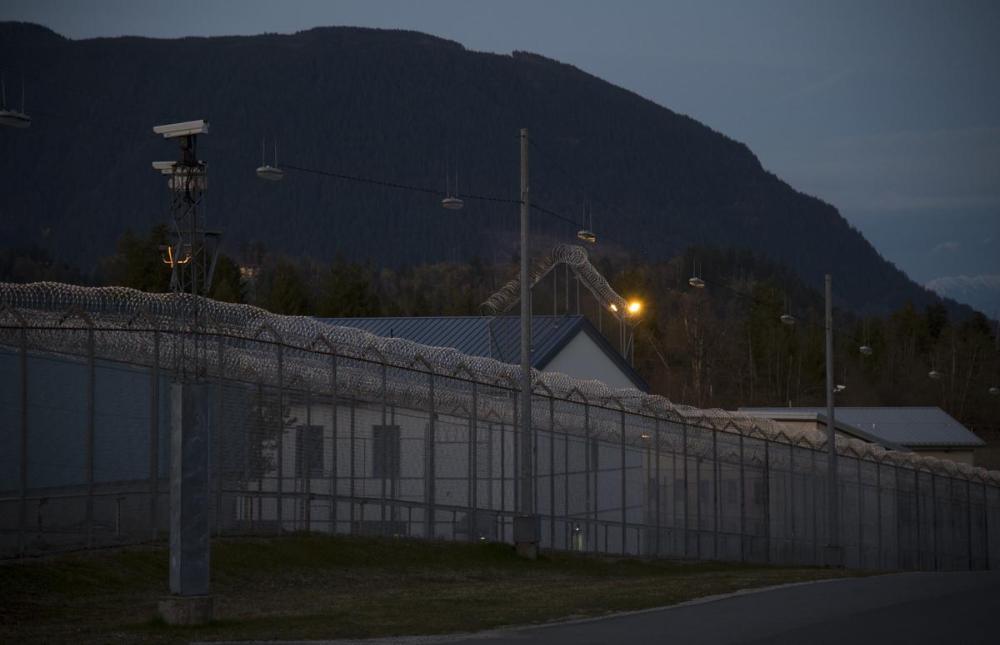
As COVID-19 continues to lead to outbreaks and lockdowns in Canadian prisons — laying bare the living conditions of prisoners — advocates are urging the committee to release its findings and recommendations as soon as possible, hoping it will provide fresh ammunition in their push for reform.
They point to lockdowns used to try to control the spread of COVID-19, in which prisoners are confined to their cells for lengthy periods of time.
And despite the federal government promising an end to solitary confinement, a report this year from criminologists Jane Sprott and Anthony Doob highlighted that the practice is still being used in Canadian prisons — in some cases meeting the United Nations’ definition of torture.
“We believe that you’re seeing solitary confinement under different names elsewhere in the prisons and it’s very difficult to get a handle on that, whether it’s ‘restricted movement’ or ‘medical observations,’” said Catherine Latimer, executive director of the John Howard Society, which advocates for a just and humane criminal justice system.
“I think the more eyes you have on what’s actually happening in the prisons, the more likely it is that there will be some motivation to try and fix it.”
The delay in getting the final committee report out prompted Vicky Chartrand, an associate professor of sociology at Bishop’s University, to launch an open letter addressed to the committee, signed by researchers, prisoners’ rights advocates and relatives of prisoners
“What I liked about this study is they had money to bring people forward to testify — it was wide-ranging and expansive. They interviewed people from within prisons to people who are advocating for people in prisons, to experts,” Chartrand said. “It would provide so much significant insight.”
The open letter notes that the need for the report and its recommendations is especially pressing due to the pandemic.
“It is clear that the inequalities and injustices experienced by people in prison were both underlined and exacerbated throughout the COVID-19 pandemic,” the letter states.
“This reality is highlighted by countless media reports, class-action lawsuits across the country for the measures taken and not taken by corrections to protect people in prison, as well as the hunger strikes by the people in prison themselves as one of the few means to protest their conditions of confinement.”
Committee member and former chair Sen. Wanda Thomas Bernard said in an interview that the delays have been “most unfortunate,” but that the committee is aiming to complete the work as soon as possible.
“The reality is, we owe it to every person that met with us, to everyone we interviewed, to everyone who attended one of the fact-finding visits and the public hearings that we held. They are waiting to hear,” she said.
“A number of people, prisoners, have written to us asking about the report. There were so many who told us that they never thought that the Senate would be interested in their experiences. I think that signals for some people just how significant this work is.”
Asked about the significance of a Senate report, given the many studies and reports done by other bodies on prisons, Thomas Bernard said the Senate can — and will — request a response from the government on the findings, and can also request follow-ups on specific areas.
She said the report has been bogged down in delays since 2019, when she said the committee was prepared to complete a draft final report but the Senate denied the committee the opportunity to finish it over the summer recess.
Then there was the October 2019 election, new committees were formed, COVID-19 hit, and only in the last few months has work started up again. But then most committee meetings were temporarily suspended earlier this month due to public health measures, and set to resume again this week.
Current human rights committee chair Sen. Salma Ataullahjan said in an email to the Star that committee members have until Tuesday to submit their questions to witnesses, but it remains unclear when the final report will be released.
“We will continue the process virtually in order to continue moving the study forward,” she said.
Jacques Gallant is a Toronto-based reporter covering politics for the Star. Follow him on Twitter: @JacquesGallant