

Bill Davis was the king of a better kind of politics
Advertisement
Read this article for free:
or
Already have an account? Log in here »
To continue reading, please subscribe:

Digital Subscription
One year of digital access for only $205*
- Enjoy unlimited reading on winnipegfreepress.com
- Read the E-Edition, our digital replica newspaper
- Access News Break, our award-winning app
- Play interactive puzzles
*First annual payment billed as $205.00 + GST for one year. This annual subscription will automatically renew at $233.00 + GST every 52 weeks (10% off the regular annual price of $259.35). Offer available to new and qualified returning subscribers only. Cancel any time.
To continue reading, please subscribe:
Add Free Press access to your Brandon Sun subscription for only an additional
$1 for the first 4 weeks*
- Enjoy unlimited reading on winnipegfreepress.com
- Read the E-Edition, our digital replica newspaper
- Access News Break, our award-winning app
- Play interactive puzzles
*Your next Brandon Sun subscription payment will increase by $1.00 and you will be charged $17.95 plus GST for four weeks. After four weeks, your payment will increase to $24.95 plus GST every four weeks.
Read unlimited articles for free today:
or
Already have an account? Log in here »
Hey there, time traveller!
This article was published 09/08/2021 (1860 days ago), so information in it may no longer be current.
Beyond his staying power as premier, the legacy of Bill Davis has endured despite his leaving power so many decades ago.
After presiding over Canada’s most populous province for 14 years, Davis enjoyed unrivalled popularity. The miracle is that public affection grew even stronger in the nearly 40 years since.
All these decades later, what made Davis so dramatically different?
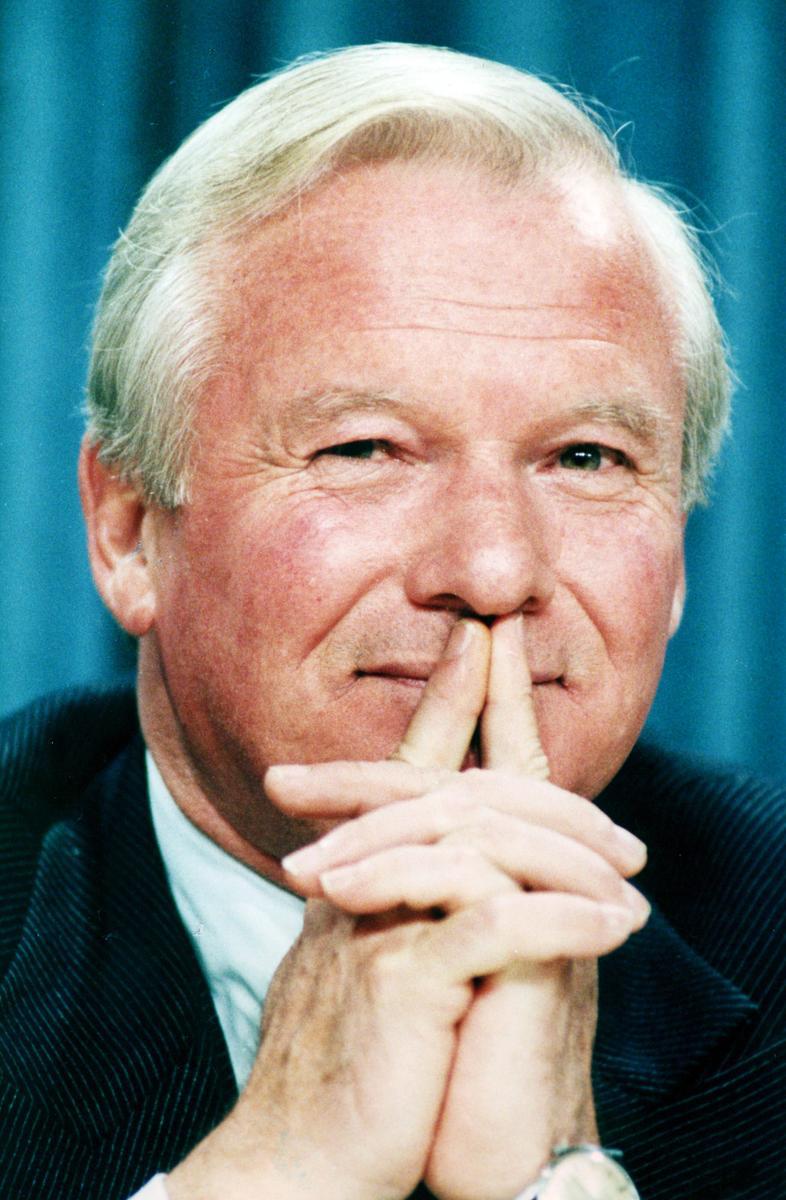
Not his misleading and mischievous motto, “Bland works!” Those words were not merely a cliché but a kind of camouflage — political cover for the underlying boldness of “Bland Bill.”
Davis built college campuses, bought into an oil company, blocked an expressway and birthed an industrial strategy.
But that alone does not explain all the accolades since his death this week at age 92. Beyond his achievements in government — some enduring, others ephemeral — Davis did politics differently from other politicians of his day, and, assuredly, those of today.
He bridged the seemingly irreconcilable contradictions of politics, rising above his own perceptions and prejudices (or his own privilege, in the current vernacular) to hear what others were hearing, saying, demanding, expecting of government. Without always letting on, he listened.
The Davis that I covered as a cub reporter, basking in his final years in power, projected the persona of an impenetrable and imperturbable premier. He was at the top of his game, the peak of his power, enjoying the unchallenged authority of a majority government that had eluded him for years.
By then he relied heavily on humour to poke holes in hostile questions from opposition politicians and journalists alike. It could be funny but also frustrating as the premier hid behind his punch lines to duck the blows of critics, evading serious answers with barbs or bonhomie.
Covering a speech in his Brampton hometown one evening, the only reporter in the hall, I was a foil for his gentle mockery, though all in good fun and never foul. After the laugh lines, Davis turned serious when talking about tolerance, long before it became fashionable to preach diversity.
But he also believed in diversity of ideas, rising above rivalries. His fierce debates with Ontario’s former NDP leader Stephen Lewis gave rise to a private friendship, culminating in Davis recommending him to then-PM Brian Mulroney as Canada’s ambassador to the UN (not unlike his personal fondness for another impatient provincial NDP leader, Bob Rae).
Who knew? Davis didn’t want it known, and neither did the erstwhile adversaries whom he befriended behind the scenes.
The personal relationships reveal a partisan who overcame partisanship. But he never stopped competing, dominating and defeating.
Lest we forget, apart from Lewis and Rae he faced a succession of determined Liberal opponents — Robert Nixon, Dr. Stuart Smith and David Peterson. Yet Davis outmanoeuvred them, and it was only after he departed the political scene that Peterson and Rae could have their turns as premier.
True, the aging Tory dynasty tumbled into minority status under Davis, who made errors left and right. But the true measure of his success is that he never lost power to tough opponents, even if he did lose his legislative majority.
Davis discovered a talent for making minority government work, making the most of it when he won back a majority in his final 1981 campaign. That he adapted and pivoted so readily to so many setbacks and challenges attests to his political ability and agility.
Davis was a pragmatist who saw beyond ideology, a competitor who reached out to his competition, a politician who could compromise without being compromised.
Yes, he gets credit for modernizing the educational system — advancing pedagogy without pedantry. But he also modernized — and monetized — partisan politics by remaking the old Progressive Conservative dynasty into the so-called Big Blue Machine, powered by an unrivalled polling and fundraising apparatus.
Back then, I wrote about his dependency on opinion polls to gauge the public mood. And I reported on his private reliance on breakfast meetings at the old Park Plaza Hotel with his inner circle of advisers — though it wasn’t always a completely closed circle.
Acutely sensitive to the public mood, Davis leaned heavily on the latest political polling but he also valued politicking with the old pols. He lived in a man’s world, but also promoted some of the best and brightest women to his office and cabinet.
He was a master of brokerage politics, making time not only for captains of industry but leaders of the union movement to rethink and relaunch economic growth. The same skills made him a pillar of federal-provincial dialogue as the country grappled with ambitious and divisive constitutional reform.
Many premiers pay lip service to governing for everyone, but Davis reached well beyond his own political base — at the risk of alienating bedrock Tories. In later years, long out of power, Davis would occasionally talk on the phone — always off the record — lamenting the politics of division from politicians quick to drive a wedge (no names, please).
Never failing to remind me that he was a paying subscriber to the Toronto Star, he would always pass on his mother’s advice: “In all things, moderation.”
Davis was among the last of the Red Tories — Progressive Conservatives who believed in activist government. He firmly believed that good government is good politics, and that both should be a force for good — rising above ideological lines, partisan rivalries and personal feelings.
As premier, Davis liked to say that politics is the art of the possible. But he governed in another era, a different Ontario.
It is hard to fathom his pipe-smoking persona succeeding in today’s rapid-fire environment, where our virtual debates are more confrontational than consultative, and our personalized politics is more destructive than deliberative. But in his day, in his way, Davis helped lay the foundations for the old Ontario to become the modern province it is today.
Few politicians have aged so well — in and out of public life, on both sides of the political divide.
Martin Regg Cohn is a Toronto-based columnist focusing on Ontario politics and international affairs for the Star. Follow him on Twitter: @reggcohn