

Twitter Canada managing director Paul Burns on the new Safety Mode feature, healthy conversations and hiring in Toronto
Advertisement
Read this article for free:
or
Already have an account? Log in here »
To continue reading, please subscribe:

Digital Subscription
One year of digital access for only $205*
- Enjoy unlimited reading on winnipegfreepress.com
- Read the E-Edition, our digital replica newspaper
- Access News Break, our award-winning app
- Play interactive puzzles
*First annual payment billed as $205.00 + GST for one year. This annual subscription will automatically renew at $233.00 + GST every 52 weeks (10% off the regular annual price of $259.35). Offer available to new and qualified returning subscribers only. Cancel any time.
To continue reading, please subscribe:
Add Free Press access to your Brandon Sun subscription for only an additional
$1 for the first 4 weeks*
- Enjoy unlimited reading on winnipegfreepress.com
- Read the E-Edition, our digital replica newspaper
- Access News Break, our award-winning app
- Play interactive puzzles
*Your next Brandon Sun subscription payment will increase by $1.00 and you will be charged $17.95 plus GST for four weeks. After four weeks, your payment will increase to $24.95 plus GST every four weeks.
Read unlimited articles for free today:
or
Already have an account? Log in here »
Hey there, time traveller!
This article was published 09/04/2022 (1634 days ago), so information in it may no longer be current.
Plenty is happening on Twitter thanks in no small part to Tesla and SpaceX billionaire Elon Musk, one of its most outspoken critics. After soliciting advice from his 80.5 million followers on the platform on what to do about what he describes as Twitter’s free speech problems, he became the platform’s single largest shareholder.
Musk’s stock buy made international headlines, but Twitter Canada is making waves in other ways. The New York Times profiled the company’s engineering team expansion in Toronto in March. The month before, Twitter announced Canada would be one of six markets to prototype the app’s “Safety Mode” feature to temporarily block users who make hateful remarks. Twitter also announced a new open research partnership with Montreal AI research institute Mila to develop what it describes as “cutting-edge, ethical machine learning approaches that can accelerate the realization of our unique mission to serve the public conversation.”
Paul Burns, Twitter Canada’s managing director, sat down (virtually) with the Star to talk hiring Canadian talent, harassment on its platform, and why Twitter — despite all predictions to the contrary — is thriving:
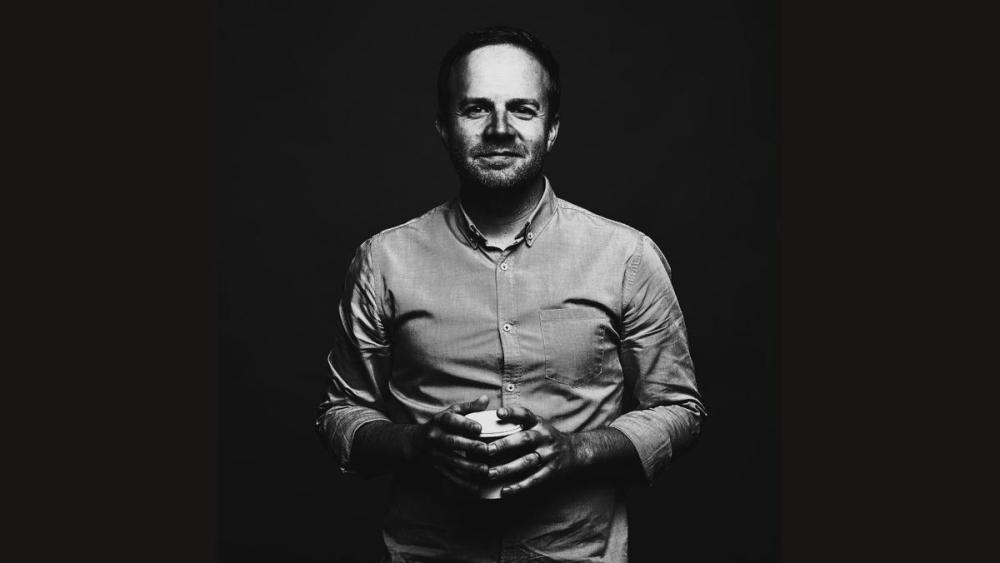
Toronto is the third largest and fastest growing tech hub in North America. What’s so different about expanding in Toronto, compared to San Francisco? Aren’t they both major tech hubs in their own way?
When we think about where to expand across the globe, Toronto is particularly attractive for a lot of reasons. One of the reasons is the proximity to the great universities in the area: the University of Waterloo, U of T, Queen’s University, McMaster University. Toronto’s diversity as a market is unique. There are incredible pools of talent across design, media, marketing, engineering in the community. We have so many Canadians at Twitter who understand the power of the talent that exists here locally. When you look at all the global markets, Toronto just becomes a natural place to invest and expand.
Do you have plans to hire outside of Toronto — from the far North, or more rural areas?
Our stance generally on location has been fairly public. It’s really a choice for the employee — we call them ‘Tweeps’ for a Twitter employee. We want the Tweep to make the decision on where they’re the most creative and productive. So, yes, we have a Canadian headquarters in Toronto, but if you’re an incredibly talented individual in your domain and you happen to live outside of the city — absolutely, we are hiring.
Doesn’t it cost a lot to maintain a big downtown office when you may not even fill it?
We have about 200 employees in Canada. The vast majority are in the Toronto office. We have 80 to 100 open jobs right now in the Toronto area. That will continue to grow over time. Now that we’re back in full-swing and offices are opening up around the world, we want to give our employees the choice to work from where they are. That is not a decision based on cost efficiencies. It’s based on giving our people the best possible place to be the most creative and the most productive. For some, that’s working in a cabin up north. For others, that’s in an office.
A lot of tech professionals coming out of Toronto get snapped up by companies in the Bay Area, or Boston, or New York — and they leave. How are you ensuring your talent pool stays in Toronto?
We’re actually seeing the opposite take place. We’re seeing Canadians who work at Twitter in the Bay Area wanting to move back to Toronto. They can still work on global projects, but be based here, which is unique.
Toronto is an amazing city. It’s a great city to live. It’s a great city to raise a family. It’s a great city for talent, and it’s culturally vibrant and diverse. I think Toronto punches well above its weight, and I think it can go toe-to-toe against some of the best cities in the world.
You were a vice-president at Shaw and CanWest. Is running a platform like Twitter Canada much different from running a major telecom or media company?
I would say there are similarities to working for large media and technology companies and telecom brands. Where it’s different is that Twitter is a global platform. Twitter is a global conversation — and yet, there are such a beautiful set of diverse conversations happening locally here in Canada. There are millions of them, all the time. What it has provided me is a view into Canada in the context of the world. In many ways, it’s a reflection of culture. It’s a reflection of society. It’s a reflection of what people think, and what they care about.
What’s been fascinating is having the ability to look at the Canadian context, but also cross-reference with how conversations are evolving globally. I know many big tech companies try to mimic the elements of Twitter, but I still feel Twitter is one of the most unique platforms in terms of what we do and how we do it.
How do users here differ from users in the U.S., or the U. K.?
We generally have a lot of similarities with our friends down south. Twitter is this amazing anomaly. It is the number one place to find out what’s happening in the world. Right now, 16 million Canadians are on the service every single month. The demographic profile of users on the platform, I would say, represents and reflects the population of Canada.
A dominant user trait across many social platforms is this tendency to say, ‘look at me,’ whereas at Twitter, we see a very pronounced ‘look at this’ where there’s something happening in the world. There is a passivity to other social programs — sleep scrolling these almost perfectly curated lives. Whereas, on Twitter, you see this very real difference. People are leaning in. They’re trying to discover what’s new. Twitter has almost become, for many, this daily utility.
Twitter is a huge space for journalists, policy-makers and politicians. How do you grapple with the idea that your platform can literally drive the news cycle for days a time?
We often talk about Twitter as the conversation layer of the internet. Often, when you see something happening in the culture, or in business or in sports or in news — you’re hearing it first on Twitter. It’s fascinating to look at the various permutations and conversations that exist across all those different topics.
How do we ensure conversations are healthy? How do we ensure that the way we allow people to participate in conversations are creating more opportunities for Canadians to participate in safe ways — and also enjoy the experience? I would say that’s one of our biggest priorities.
Outlets like The Rebel or Breitbart get a lot of traction on Twitter because people like to click on them, not necessarily because they’re accurate. How do you choose who to amplify, and who not to?
We are not perfect as a company. I think we’re always trying to learn and re-evaluate how we’ve approached things. How do we minimize harassment and harm on the platform — and hopefully, one day, eliminate it? How do we act as responsible platform owners when we know that something on the platform is misleading and give users the tools and information to make those decisions themselves?
During the U.S. presidential election, we found a substantial number of people were retweeting an article without actually reading it. We built a tool that prompted the user to read the article before retweeting. And what we found is by simply changing that element in the navigation of Twitter, the amount of people retweeting unread articles decreased substantially.
Nearly every transgender and non-binary person I know on the platform since I joined in 2013 has faced some kind of serious harassment on Twitter. The same goes for a lot of female users I know, Black users, Muslim users, Indigenous users, and disabled users. How are you trying to change that?
This is an ongoing priority for us to provide a healthier conversation. We launched Safety Mode recently to help users fundamentally feel more comfortable and in control of their timeline and their Twitter experience. It’s being tested right now in Canada, along with five other countries. It’s a new feature that temporarily blocks accounts for seven days for using potentially harmful language, such as insults or hateful remarks. That feature also blocks accounts from sending repetitive, uninvited replies or mentions. The system we have will assess the likelihood of a negative engagement by considering the tweet, the content of the tweet, and the relationship of the tweet author and the replier. This is about trying to make sure that we’re eliminating and minimizing disruptive interactions. That’s the goal.
Our hateful conduct policy states that you may not promote violence against or directly attack people on the basis of sexual orientation, gender, gender identity, race, ethnicity, religious affiliation, and a bunch of different categories. Our challenge, truthfully, in this area is how to continually improve our ability to enforce these rules, but also how to adjust our policies based on the changing nature of the world. I mentioned our trust and safety council and team — this is the brain trust we have within and outside of Twitter that is helping us determine how to make Twitter a safer, healthier place for the future.
There’s been a lot of conversation in the past few years about forcing tech companies to sign deals with news publishers to share ad revenue. How are you preparing for the possibility of that in Canada?
Well, today we actually act as a significant traffic driver for most publishers in Canada. Twitter is a distribution mechanic for major news organizations. I think what we want to do for news organizations and for publishers is work with them to improve the experience. We’ve always had a long history of partnerships with news organizations, so I can’t see that stopping anytime soon. I’m sure our policy team will have, you know, a collaborative approach, like they always do.
Our job, truthfully, is to just make sure that our partnerships are providing great content to customers, but we don’t actually produce that content ourselves. We are a distributor to the publishers. More to come on that, as that evolves.
I saw a statistic before this interview that Twitter could lose 1.1 million American users by 2025. How are you planning to keep up with TikTok or other social media that’s stereotypically used by younger generations?
I would say that’s incorrect — we actually are growing dramatically, year over year. I’m not sure what that stat is citing. We’ve seen fairly dramatic growth over the last several years. Twitter’s content and the experience on Twitter broadly reflects the demographics of Canada. I think we see that in most markets; 64 per cent of Canadian millennials use Twitter to find out about trending news, and that’s significantly higher than other platforms.
This interview has been edited for length and clarity.
Brennan Doherty is a former staff reporter for Star Calgary and the Star’s 24-hour radio room in Toronto. He is now a freelance contributor.