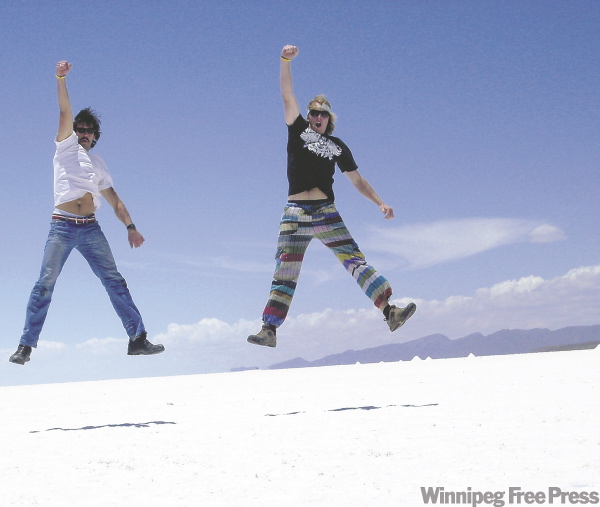
BRETT’S ODYSSEY: Bolivia –Anything but easy
Bolivia offers travellers life in raw format
Advertisement
Read this article for free:
or
Already have an account? Log in here »
To continue reading, please subscribe:
Monthly Digital Subscription
$1 per week for 24 weeks*
- Enjoy unlimited reading on winnipegfreepress.com
- Read the E-Edition, our digital replica newspaper
- Access News Break, our award-winning app
- Play interactive puzzles
*Billed as $4.00 plus GST every four weeks. After 24 weeks, price increases to the regular rate of $19.95 plus GST every four weeks. Offer available to new and qualified returning subscribers only. Cancel any time.
Monthly Digital Subscription
$4.99/week*
- Enjoy unlimited reading on winnipegfreepress.com
- Read the E-Edition, our digital replica newspaper
- Access News Break, our award-winning app
- Play interactive puzzles
*Billed as $19.95 plus GST every four weeks. Cancel any time.
To continue reading, please subscribe:
Add Free Press access to your Brandon Sun subscription for only an additional
$1 for the first 4 weeks*
*Your next subscription payment will increase by $1.00 and you will be charged $16.99 plus GST for four weeks. After four weeks, your payment will increase to $23.99 plus GST every four weeks.
Read unlimited articles for free today:
or
Already have an account? Log in here »
Hey there, time traveller!
This article was published 26/09/2009 (6057 days ago), so information in it may no longer be current.
As so many times before, the camera is pointed out the window of a moving bus, watching in real time as a red sun pokes its head over a dusty, vast, undisturbed desert.
It’s the start of another Bolivian morning and, scanning bits of garbage clinging cape-like to small shrubs, the camera pivots inward and falls upon not two, but three gruff-looking characters.
At this point, Noble and I had been joined by a Camel-smoking philosophy major named Francisco, who hailed from Portugal and who, like us, was interested in checking out the highest navigational lake in the world, Lago Titicaca.

The bus dropped us off in the tiny town of Copacabana and, after dropping our inconvenient amounts of gear at the cheapest place we could find, a swanky mansion, we set out to explore this elevated sea.
With waters cold, dark and downright intimidating compared to Caribbean varieties, Titicaca presents traditional modes of life, ancient ruins and a segmented landscape splattered across its many islands.
I remember the ship crawling through narrow openings and listening to Francisco, while effortlessly shooting Camel smoke from his nostrils, tell us of how he’d entered Bolivia via El Tren de la Muerte, or "The Train of Death". He said this name was derived from the fact that a) the route covered the bumpiest stretch of track in the world and took between 16 and 30 hours to complete, b) there were many horrible, biting insects constantly attacking the passengers and c) people routinely fell from the locomotive’s roof while trying to either escape the cabin heat or sneak across the border.
Given the poverty I’d already recorded in this landlocked country, a small part of me could understand these seemingly bizarre logistics.
The next morning we left el lago alta and made a move. Christmas was only a few days away and the promise of a turkey dinner in La Paz called out strongly. En route, Francisco was finishing the book Marching Powder, and on a particularly interesting rest stop (we were waiting for our bus to be delicately barged across a river) he explained that the novel was based on a true story and set in a prison in La Paz.

And what’s more, he said, with a reasonable fee one could visit this prison — the bribe, sorry, tour fee, being used to pay off the guards and equip you with a guide and a bodyguard, both of whom were inmates. All you had to do was stand in the plaza opposite the prison and wait for somebody to approach you.
In our case, this process took roughly 10 seconds and moments later we were through the gates of San Pedro Prison and meeting our guide, who, much to Francisco’s dismay, was Portuguese.
"Six months in South America and the only other person from Portugal I meet is doing time for cocaine trafficking. Goddamn."
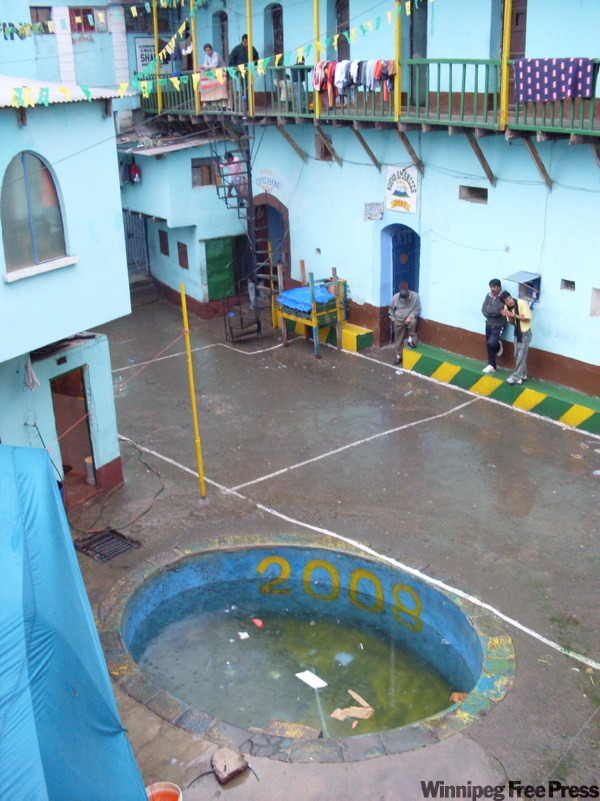
Our bodyguard, on the other hand, was a local Bolivian man condemned for reasons unclear, but who followed our path accurately as, for approximately three hours, we traced the book’s shocking, enlightening tale through makeshift staircases, and damp corridors. There were even restaurants owned and operated by inmates since, unlike western jails where standard incarceration is supported by vast sums of government money, this prison mirrors the outside world.
For instance, upon being sent to San Pedro, each inmate is required to buy his cell (which comes with an accompanying property deed, by the way), with six different barrios on offer ranging from sheer hell to relative comfort. If an inmate can’t afford to buy a cell, he has to rent one. If he can’t afford to rent one, he has to do chores in exchange for accommodations.
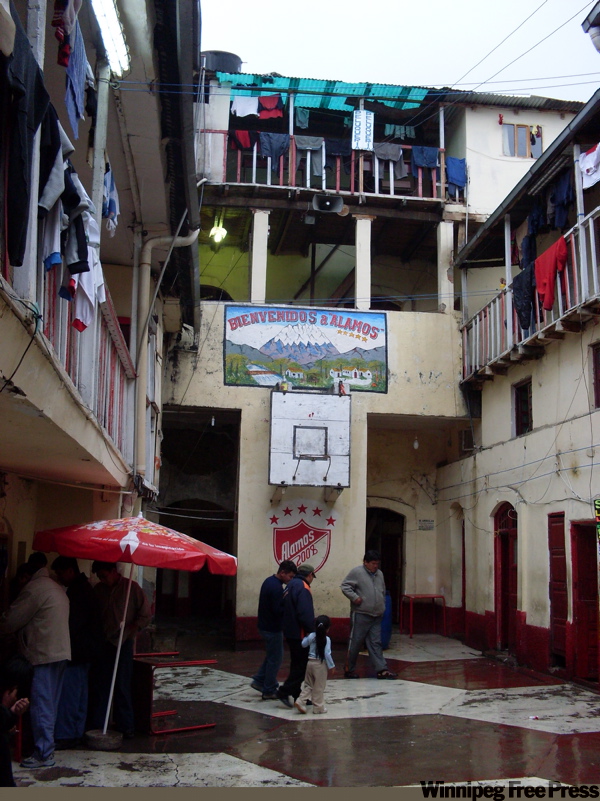
But, walking through the surly gates, what really floored us was seeing children running about with their friends, smiles stretched from ear to ear, because when Daddy gets locked up, Mommy and kids come along too. Where else do they have to go?
San Pedro prison would make your head spin. It isn’t a world you know, It’s a world so poor that money shouts louder than law, religion, morality, anything. The feeling I had walking out was indescribable, one of those times when a usually talkative group struggles for something, anything, to say.
Good thing we had Christmas dinner to look forward to. Otherwise we might still be sitting in that dingy tavern on the far side of the plaza, watching Francisco smoke Camels and wondering what just happened.
I’ve come to realize that scenes such as this are a part of visiting "poor" countries; that is, you’re given a glimpse of life in raw format.
From salt flats that resemble frozen great lakes to the eyes of our prison guide, seared with pain and regret, Bolivia is a grand spectrum. It’s got all the highs and lows: the biggest peaks, the deadliest road in the world (which, for a small sum, you can roll the dice and mountain-bike down), a dictator who apparently pays peasants to support him, the hilly streets which every six seconds make your chest feel like it’s being attacked by razor blades … the list goes on.
And the funny part is, all these seemingly gnarly conditions are what attract many travellers to this place. They want to be shocked at the sight of people relieving themselves at the side of the road. They want to feel the way your head can bounce off a schoolbus window on a potholed dirt road.
Call it the opposite of the all-inclusive resort experience. Call it adventure travel.
It’s the ‘I-don’t-want-there-to-be-anything-easy-about-this’ travel mentality, and Bolivia’s got a bunch to offer on that score.
Brett Logan chronicles his South American adventures in a regular series in the Free Press Travel section.