A Sacred Mayan Journey
Advertisement
Read this article for free:
or
Already have an account? Log in here »
To continue reading, please subscribe:
Digital Subscription
One year of digital access for only $75*
- Enjoy unlimited reading on winnipegfreepress.com
- Read the E-Edition, our digital replica newspaper
- Access News Break, our award-winning app
- Play interactive puzzles
*Billed as $5.77 plus GST every four weeks. After 52 weeks, price increases to the regular rate of $19.95 plus GST every four weeks. Offer available to new and qualified returning subscribers only. Cancel any time.
Monthly Digital Subscription
$4.99/week*
- Enjoy unlimited reading on winnipegfreepress.com
- Read the E-Edition, our digital replica newspaper
- Access News Break, our award-winning app
- Play interactive puzzles
*Billed as $19.95 plus GST every four weeks. Cancel any time.
To continue reading, please subscribe:
Add Free Press access to your Brandon Sun subscription for only an additional
$1 for the first 4 weeks*
- Enjoy unlimited reading on winnipegfreepress.com
- Read the E-Edition, our digital replica newspaper
- Access News Break, our award-winning app
- Play interactive puzzles
*Your next Brandon Sun subscription payment will increase by $1.00 and you will be charged $17.95 plus GST for four weeks. After four weeks, your payment will increase to $24.95 plus GST every four weeks.
Read unlimited articles for free today:
or
Already have an account? Log in here »
Hey there, time traveller!
This article was published 19/12/2009 (5994 days ago), so information in it may no longer be current.
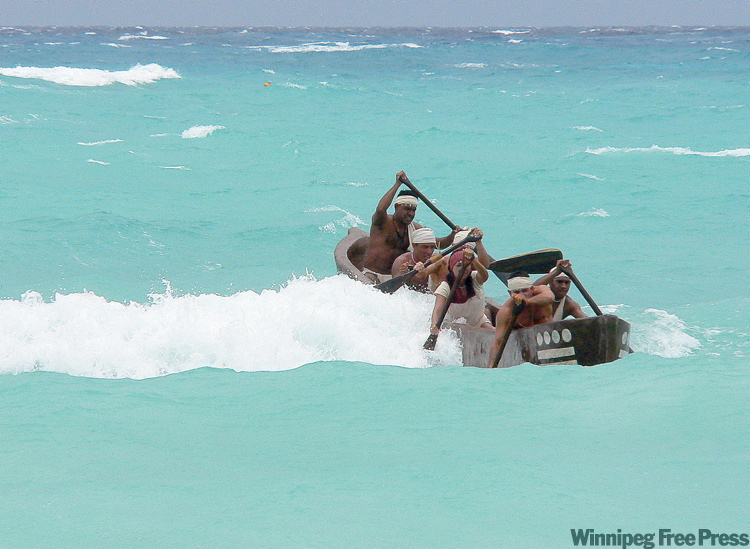
PLAYA DEL CARMEN, Mexico — At first it was just a speck on the horizon of the turquoise Caribbean Sea. Then we could see the first of the native dugout canoes with four men in loincloths and one woman in a Mayan dress paddling steadily in the choppy ocean.
Slowly they carved a path through the waves toward the golden sands of Mamitas Beach at this resort city an hour south of Cancun on the Yucatan peninsula’s Riviera Maya.
Metres from the beach the canoe tipped over and other paddlers rushed into the surf to help.
When the exhausted paddlers finally made it to shore they were embraced by family and friends while hundreds of onlookers cheered and applauded.
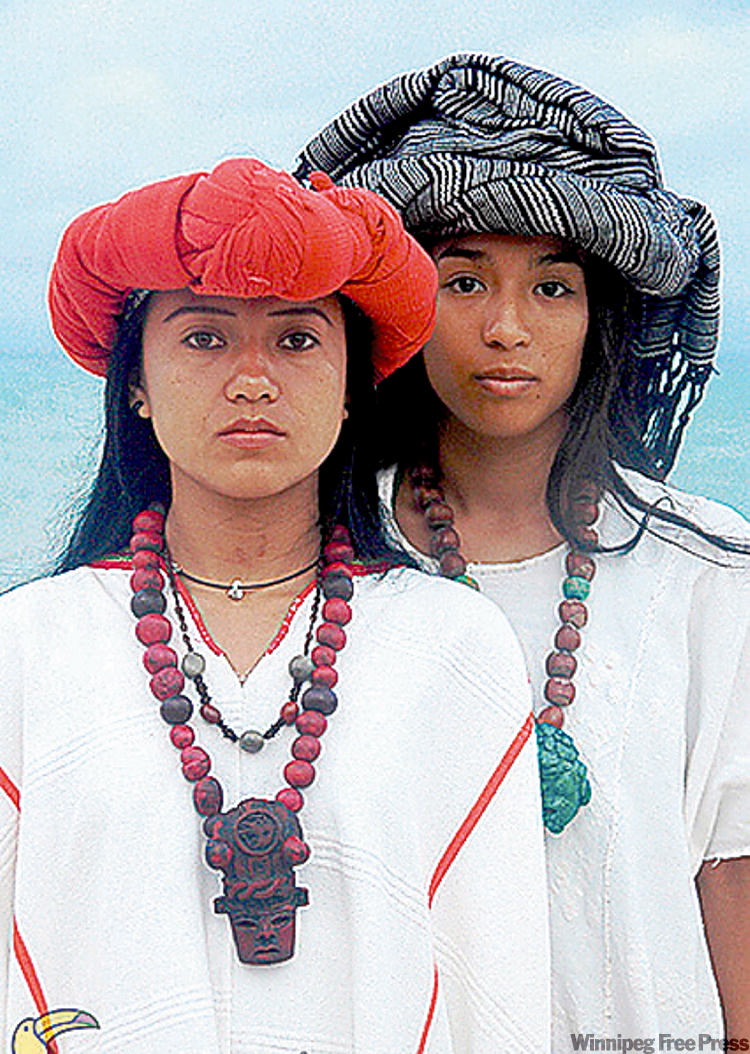
Two more boats arrived for the closing ceremonies of a remarkable cultural, spiritual and theatrical experience called the Sacred Mayan Journey, the recreation of an ancient annual pilgrimage by canoe to the island of Cozumel that was lost for more than 500 years after the Spanish colonized the area. Women had been required to be pilgrims there at least once in their lives to ask for fertility.
Local officials plan to continue the event every year, helping this area make its mark as more than a sun-and-sand destination. For tourists, it’s a window to the customs and practices of a people who built an elaborate, complex civilization here many centuries ago.
The focus of the journey was to honour Ixchel (EeshCHEL), the Mayan goddess of the moon, with prayers and offerings for four reasons — fertility of the soil, good weather, health and the continuity of life — and to bring back her message.
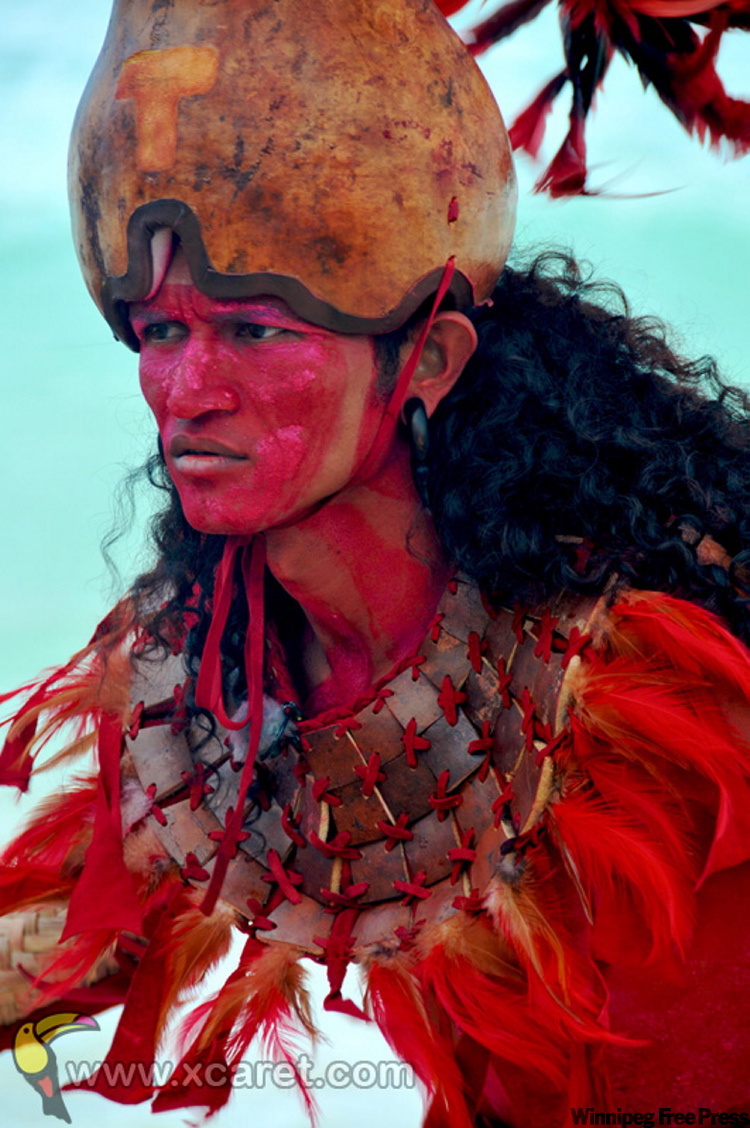
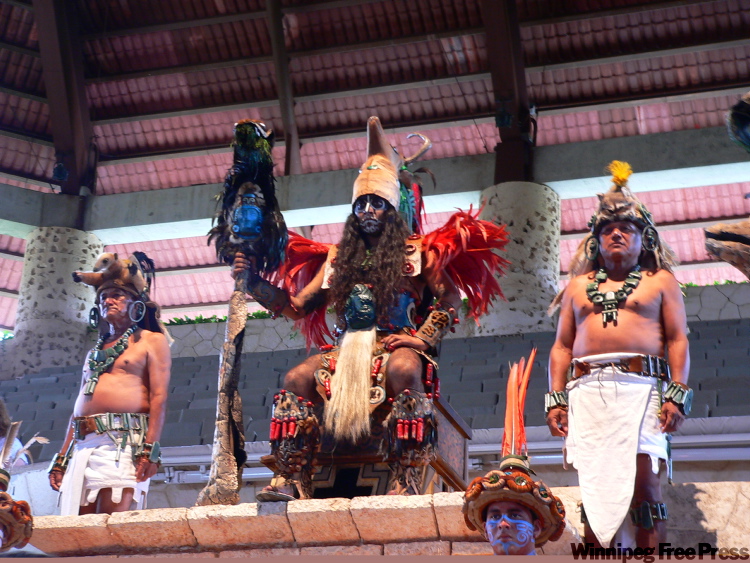
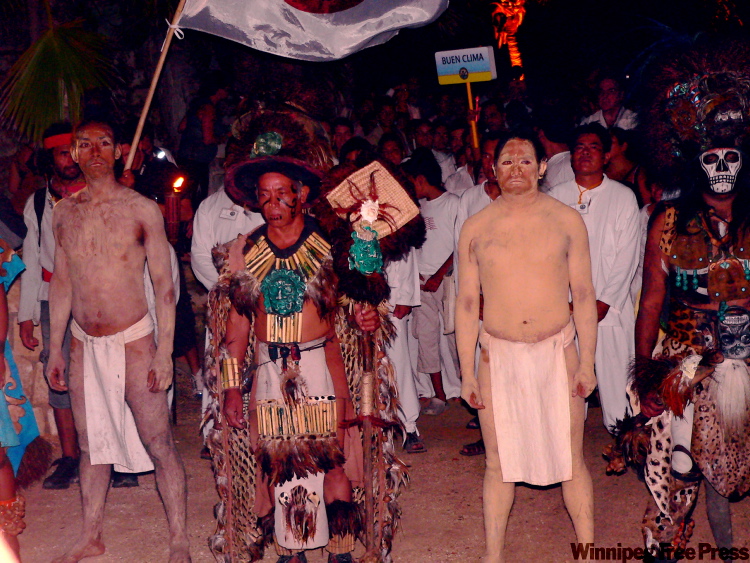
Our press-tour group of invited journalists witnessed colourful ceremonies, dances, music, and purification rites that began near midnight on May 30 at the eco-archeological Xcaret (shcarET) Park and ended more than 36 hours later. At the start, hundreds of Mayan villagers arrived singing in processions.
Teams of paddlers in Playa Del Carmen and on Cozumel trained for months to make the challenging crossing, 150 of them in 30 eight-metre canoes going over and another 150 coming back.
At least, that was the plan. The weekend was all about Ixchel but a couple powerful guys, the Mayan rain god Chac and Tropical Storm Arthur, stole her thunder. Torrential rains and fierce winds swept through the coastline.
The 18-kilometre canoe crossing to Cozumel was cancelled, a huge disappointment for the participants. In the morning, in a tranquil Xcaret Park lagoon fringed with Mayan huts, we witnessed paddlers circling their canoes without taking on the wild waters.
We crossed in a large ferry, rested and freshened up at Cozumel’s waterfront Coral Princess Hotel and Resort, and bussed to Chankanaab National Park to see the evening dances and rituals. Here we found another serene lagoon with a recreated Mayan village and temple platform.
Early the next morning, the seas had calmed considerably and three canoes that were transported over from the mainland for readied for the crossing while a fourth held five women in red dresses, their faces painted in vertical turquoise stripes. Representing phases of the moon, they were paddled around the lagoon under the gaze of four men painted head to foot in brilliant colours portraying spirits of the four ways of the cosmos.
A chilam or priest blessed the three canoes and they paddled away. Two of them made it to the other side in just over three hours while the third capsized and the paddlers were rescued. Mexican Navy vessels were on hand to help.
Meanwhile, 12 canoes left Xcaret Park for the nine-km journey up the coast to Mamitas Beach. Nine had to turn back in the worsening waves, including one that capsized four times and waited a half-hour for rescue.
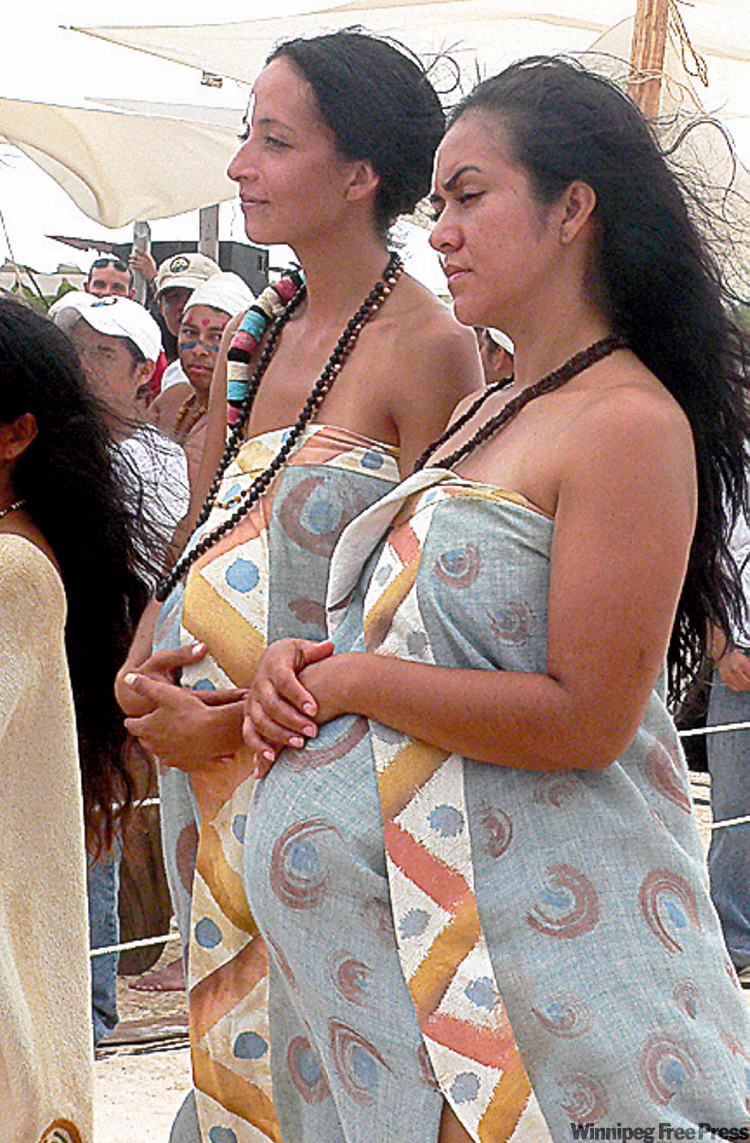
The three from Xcaret that made it delivered Ixchel’s message to the local Mayan leader amid dances and celebrations.
The event was initiated by Xcaret Park, the launching point of the ancient pilgrimages, and organized with local municipalities. Two years of research involved the National Institute of Anthropology and History, the Maya Centre of the National Council for Culture and the Arts and the Research Institute of Philology of the National Autonomous University of Mexico. A choreographer, a composer, and makeup and costume artists helped make it a crowd-pleaser.
The Riviera Maya features other Mayan ruins and villages well worth seeing. I visited Tulum, a magical Mayan city from the 13th to 15th centuries an hour’s drive south of Playa Del Carmen. The Palace of the Frescoes features a mural of Ixchel and the main pyramid rises above a high cliff over the beach.
Life is not all history. The Riviera Maya attracts with modern-day cultural events, including two film festivals in the fall and the annual jazz festival Nov. 29-Dec. 1.
For some distilled culture, take in the Expo Tequila Aug. 16-19 on the main shopping street of Playa Del Carmen. There’ll be food delights, mariachi bands, and tequila tasting. No historical study needed. Just raise a glass and say “salud!”.
IF YOU GO
• Travel info at www.rivieramaya.com.
• Sacred Maya Journey info at www.travesiasagradamaya.com.mx/index_eng.htm
• Cozumel info at www.islacozumel.com.mx/
• I felt well-prepared with Lonely Planet’s Yucatan guide.
• More words and images at www.lornemallin.blogspot.com