

Nicaragua, naturally
Gritty country developing into ecotourism destination
Advertisement
Read this article for free:
or
Already have an account? Log in here »
To continue reading, please subscribe:
Monthly Digital Subscription
$1 per week for 24 weeks*
- Enjoy unlimited reading on winnipegfreepress.com
- Read the E-Edition, our digital replica newspaper
- Access News Break, our award-winning app
- Play interactive puzzles
*Billed as $4.00 plus GST every four weeks. After 24 weeks, price increases to the regular rate of $19.95 plus GST every four weeks. Offer available to new and qualified returning subscribers only. Cancel any time.
Monthly Digital Subscription
$4.99/week*
- Enjoy unlimited reading on winnipegfreepress.com
- Read the E-Edition, our digital replica newspaper
- Access News Break, our award-winning app
- Play interactive puzzles
*Billed as $19.95 plus GST every four weeks. Cancel any time.
To continue reading, please subscribe:
Add Free Press access to your Brandon Sun subscription for only an additional
$1 for the first 4 weeks*
*Your next subscription payment will increase by $1.00 and you will be charged $16.99 plus GST for four weeks. After four weeks, your payment will increase to $23.99 plus GST every four weeks.
Read unlimited articles for free today:
or
Already have an account? Log in here »
Hey there, time traveller!
This article was published 03/11/2012 (4919 days ago), so information in it may no longer be current.
After spending time in beautiful and gritty Nicaragua, it’s easy to understand why North Americans clamour to go back.
Though still a developing country and about two decades behind Costa Rica’s thriving tourism industry, over the past 20 years, Nicaragua has transformed itself into one of the safest and fastest-growing countries in Latin America.
In one day, you can drive past miles of verdant rainforests, rows of active volcanoes, freshwater lakes and wild coastline.
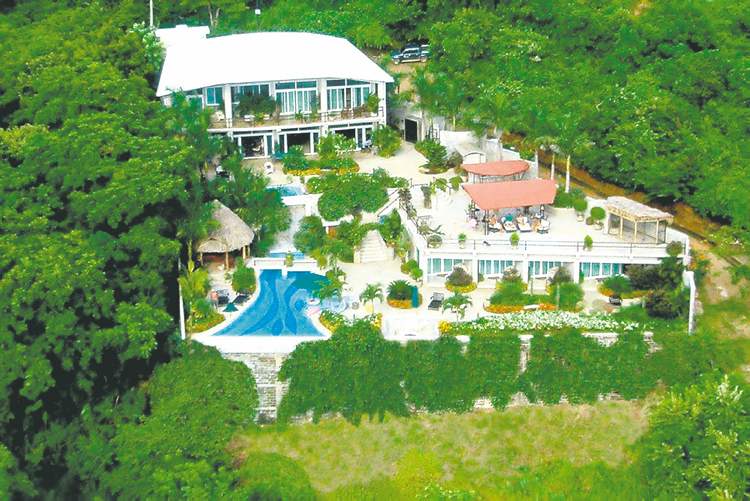
The country has all the classic flora and fauna that lures visitors to the tropics, yet Nicaragua is much more than nature — it’s also culturally rich and it offers some of the best cuisine in Central America.
Most tourists congregate in the Pacific coast towns of San Juan del Sur and Las Pe±itas, where the surf rides high and the beaches are seemingly endless. They stop along the way for a bit of culture in the historically rich colonial cities of Granada and León.
Nicaragua is fast making its mark in the ecotourism sector, especially its eco-lodges. But these aren’t the lodges of yesterday, where you might have slept surrounded by mosquitos on beds made of recycled corn husks. Today’s green accommodations are just as stunning as some of North America’s five-star resorts and have the added benefit of being located amid some beguiling natural surroundings.
These five luxury retreats are committed to conservation and offer a little solitude with a lot of style.
Jicaro Island Ecolodge
jicarolodge.com
A 30-minute boat ride gets you to Jicaro Island Ecolodge on Grenada Isletas in Lake Nicaragua, a secluded island getaway. The luxury eco-resort seems to blend right into the natural beauty that surrounds it. Guests stay in one of nine private casitas overlooking the lake. Each one has a canopy bed, private bathroom and veranda.
Both the casitas and the furniture are locally made with Rainforest Alliance-certified wood. While at the lodge, you can choose to relax and indulge in the jungle-like surroundings, do a yoga class or have a massage in an open-air treatment room. The food is amazing and so are the views.
PRICE: May to October, double occupancy is $380 a night, which includes three gourmet meals a day and non-alcoholic beverages.
Morgan’s Rock
morgansrock.com
Located 20 minutes north of San Juan del Sur, Morgan’s Rock is on a crescent-shaped beach with an estuary leading into an exotic rainforest. Visitors cross a suspension bridge over a canyon to get to the rustic wood and stone bungalows overlooking miles of private beach, each open to ocean breezes on three sides. As part of its eco-mission, Morgan’s Rock has its own farm for an authentic Nicaraguan breakfast — guests are invited to milk the cows and collect eggs for their meal.
You can a horse through the forest and down to the beach.
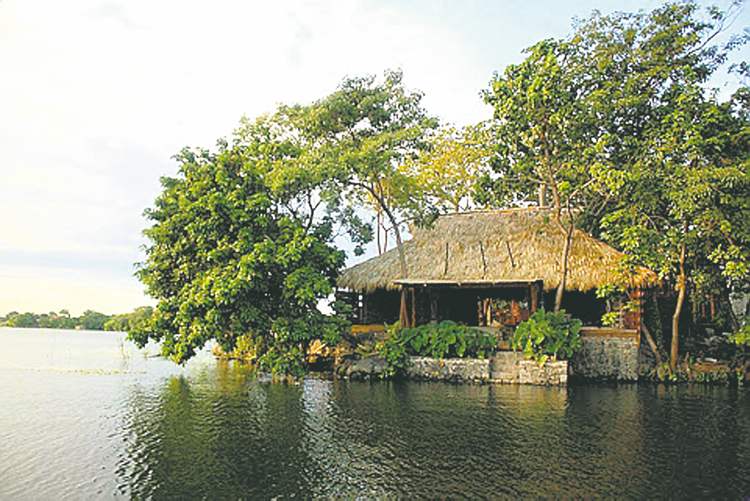
The grounds and beach are home to howler monkeys, sloths, giant sea turtles and a variety of birds native to the region.
PRICE: May to October, double occupancy starts at $195 a night, which includes breakfast and dinner with tropical fruit drinks. It also offers weekly all-inclusive packages.
Aqua Wellness Resort
aquanicaragua.com
Situated on its own pristine white-sand beach on Redonda Bay, this eco-lodge blends in with the trees and natural landscape of the bay. With an hour to roam before dinner, we decided to go for a quick jog along the trails, past the howler monkeys attempting to camouflage themselves in the gnarly tree branches. Soon, we are at the fishing village of Gigante.
The blues of the ocean waters and the white light of the moon replace the final glow of the sun. The sounds of people walking the beach are replaced by the sounds of the howling monkeys as they leap from tree branch to tree branch and the waves lapping against the sandy beach.
The resort was founded by California native Dr. Daniel Rubano, who first visited Arenas Bay in 2000.
He envisioned a place where people could come together and reconnect with each other, themselves and the earth through yoga, meditation and other wellness therapies. Rubano succeeded. Set atop the trees high above the forest floor, experience eco-luxury as it should be.
PRICE: Its Forest View Rooms come with different amenities, starting at $185, double occupancy.
Orquidea del Sur
orquideadelsur.com
After an exhilarating morning horseback riding on the Pacific Coast beach made famous by Survivor: Nicaragua, we went for a long, leisurely lunch at Orquidea del Sur. Tucked away above the stunning shores of Nicaragua’s Playa Yankee, one of the country’s premier surfing spots, this eco-lodge is a unique, intimate boutique retreat.
Amenities include an 18-metre-long infinity pool with a whirlpool, a five-metre waterfall, a fire pit, lounge and library, several indoor and outdoor dining areas and a two-storey gourmet kitchen. The hotel can arrange for ecotourism, deep-sea fishing, surfing and kayaking excursions, as well as in-room spa treatments and transportation to the Managua International Airport.
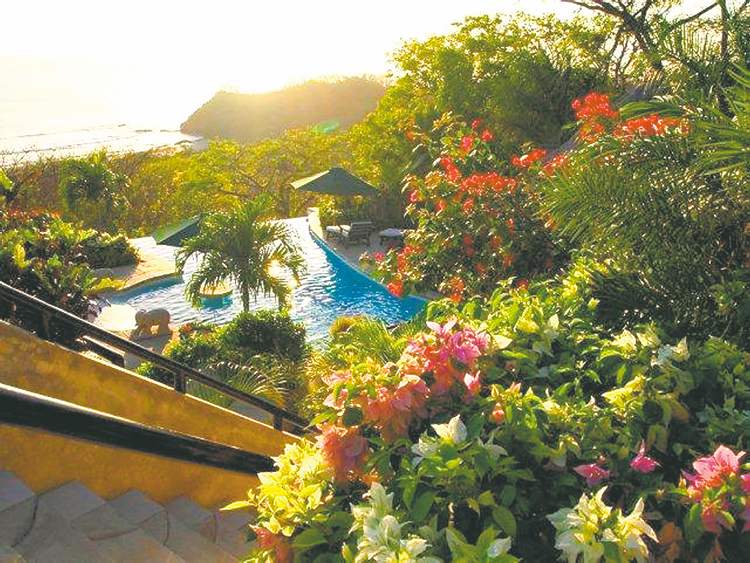
The resort has enacted a number of eco-friendly initiatives, such as a facility to capture rainwater for watering the plants and a rooftop garden, where a variety of herbs are grown to ensure fresh organic ingredients for the Orquidea cuisine.
PRICE: Four nights in an Ocean View Suite, round-trip ground transfer to and from Managua International Airport, three meals a day, half-day horseback ride on the beach and half-day ponga-boat excursion for $749.50 per person double occupancy.
Pelican Eyes Resort and Spa
pelicaneyesresort.com
After a sightseeing tour of the quaint little town of San Juan del Sur, we head up the hill to our home for the night — the Pelican Eyes.
We are greeted with a delicious mango drink and as we toast each other, we take in our surroundings. Imagine this scene: The sun is setting and we overlook San Juan del Sur and the Pacific Ocean. Directly in front of us is an infinity pool. Heaven.
Guests can choose from among five types of lodging — haciendas, cabinas, studios, townhouses and casas. We stayed in our own private white casa, a two-storey, fully equipped villa, complete with its own colourful hand-painted sink and tiles.
The hotel is constructed and operated using environmentally friendly materials and fair trade practices.
PRICE: Rates start at $180, double occupancy per night.
— Postmedia News