

Rail baron’s castle of dreams
Banff Springs Hotel has lured visitors to its 'patch of green' since 1888
Advertisement
Read this article for free:
or
Already have an account? Log in here »
To continue reading, please subscribe:
Monthly Digital Subscription
$1 per week for 24 weeks*
- Enjoy unlimited reading on winnipegfreepress.com
- Read the E-Edition, our digital replica newspaper
- Access News Break, our award-winning app
- Play interactive puzzles
*Billed as $4.00 plus GST every four weeks. After 24 weeks, price increases to the regular rate of $19.95 plus GST every four weeks. Offer available to new and qualified returning subscribers only. Cancel any time.
Monthly Digital Subscription
$4.99/week*
- Enjoy unlimited reading on winnipegfreepress.com
- Read the E-Edition, our digital replica newspaper
- Access News Break, our award-winning app
- Play interactive puzzles
*Billed as $19.95 plus GST every four weeks. Cancel any time.
To continue reading, please subscribe:
Add Free Press access to your Brandon Sun subscription for only an additional
$1 for the first 4 weeks*
*Your next subscription payment will increase by $1.00 and you will be charged $16.99 plus GST for four weeks. After four weeks, your payment will increase to $23.99 plus GST every four weeks.
Read unlimited articles for free today:
or
Already have an account? Log in here »
Hey there, time traveller!
This article was published 08/06/2013 (4693 days ago), so information in it may no longer be current.
In early 20th-century books, it was described as a “stately pile” and “a most sumptuous affair,” before being christened the Castle in the Rockies.
When first built in 1888, the Victorian-styled structure looming above the Bow River was an anomaly in Banff, which only had a few log structures, dirt streets and mountain men eking out a living as best they could.
One British writer who worked on the railway in 1883 and returned four decades later went so far as to say it didn’t seem real.
Morley Roberts recounted seeing the hotel for the first time in his memoir On the Old Trail: Through British Columbia After Forty Years.
“The truth is that I could not take beautiful Banff seriously. I dreamt it… On a pine-covered bank or bluff above the crystal foam of the Bow I came to a gigantic castle. It had no business to be there.”
Roberts, who spent years tramping across the West in Canada and the U.S., wrote how he went into the hotel where he caught the eye of another old-timer.
“So when Bill Potts and I shook hands I said, after a look at him and a look around the hall, ‘I don’t believe it.’ And people may believe it or not when I say that he replied at once, ‘No more do I.’ “
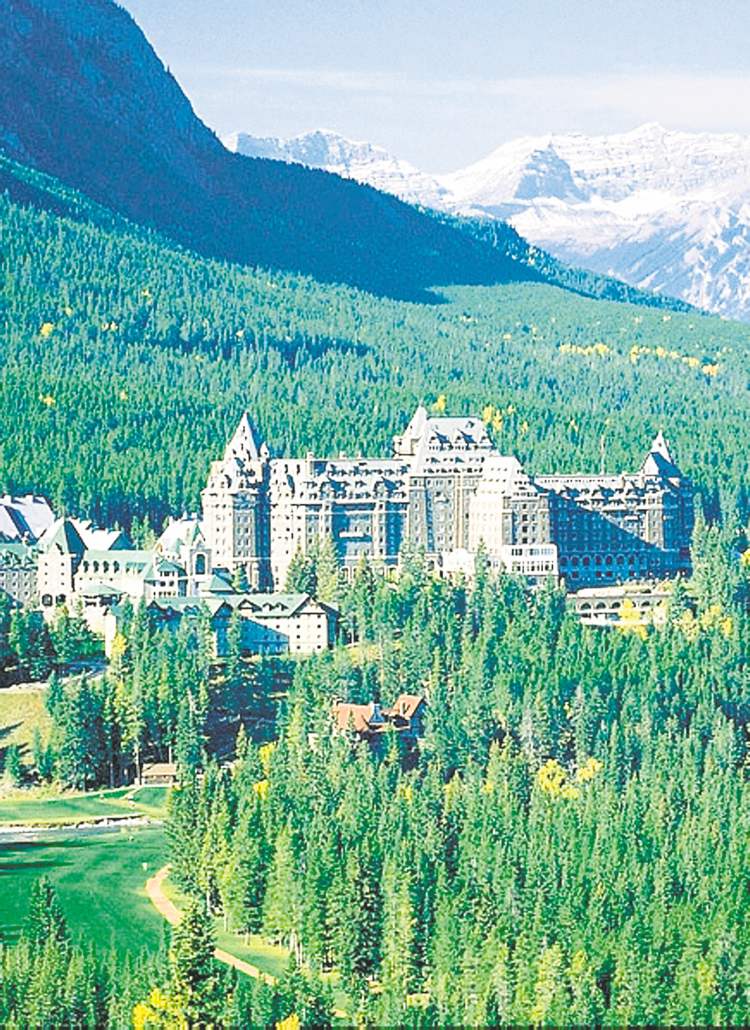
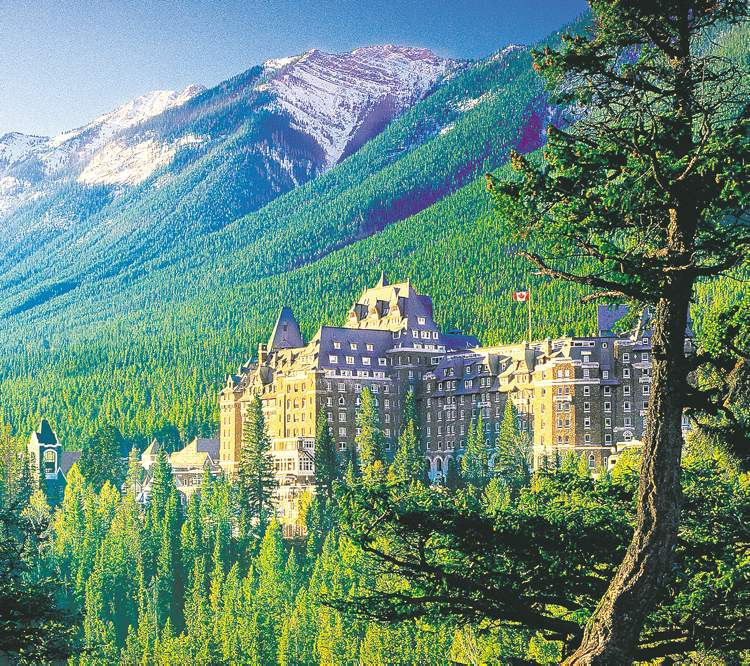
Indeed, the Banff Springs Hotel still seems dreamlike 125 years after it first rose majestically out of the forest, surrounded by the towering peaks of the Rocky Mountains.
But it wasn’t a dream which created the hotel, but rather a canny decision by the general manager of the CPR to capitalize on the tourism potential of the West.
“If we cannot export the scenery, we will have to import the tourists,” Sir William Cornelius Van Horne is reported to have said. He was responsible for a series of railway dining halls and hotels being built across the country, including Hotel Vancouver and the Ch¢teau Frontenac in Quebec City.
In the West, Van Horne instigated construction of the Mount Stephen House, the Fraser Canyon Hotel and the Glacier House at Rogers Pass.
But Van Horne’s grandest vision was reserved for Alberta’s Banff Springs.
He hired Bruce Price, a New York architect (and father of etiquette author Emily Post), who also designed the Frontenac. Construction of the $250,000 structure began in 1887, but a builder’s mistake caused it to face away from the mountains. It opened on June 1, 1888.
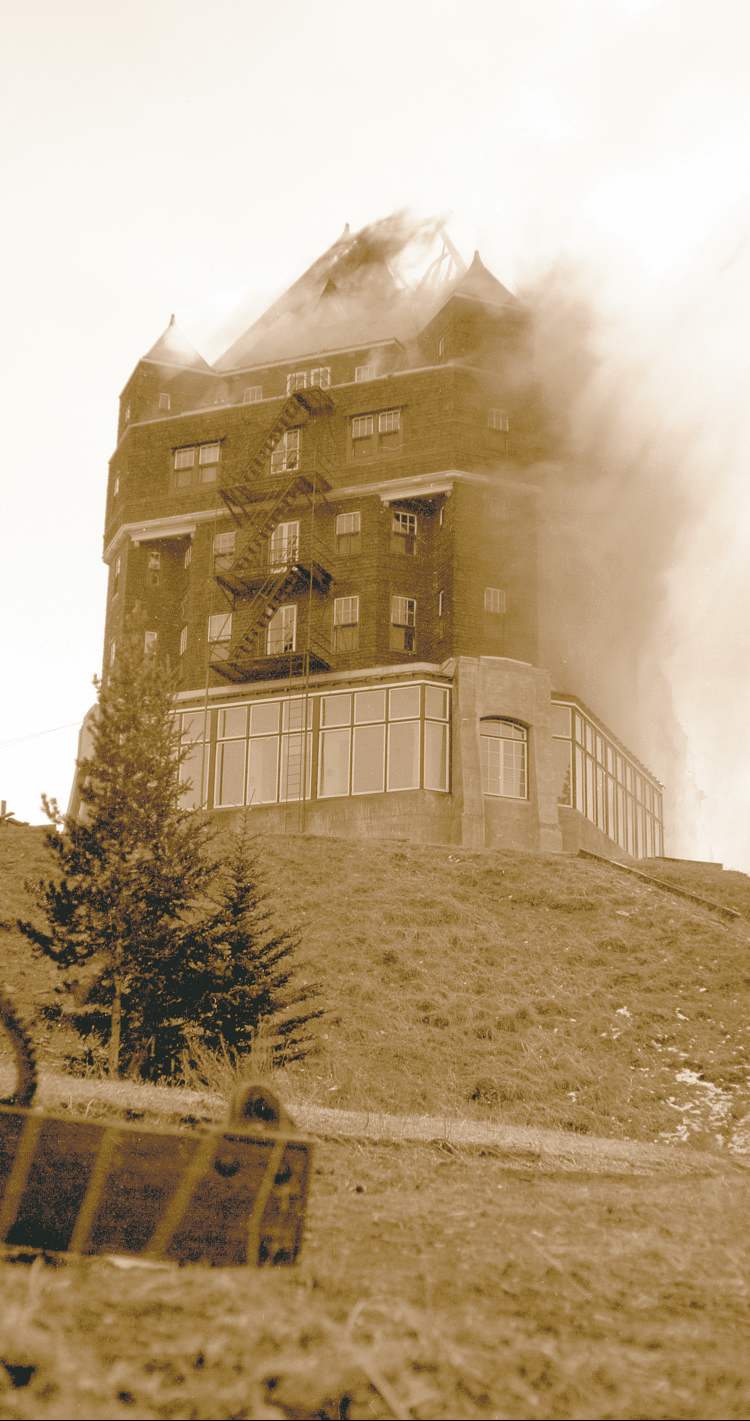
But this wasn’t the grand stone castle that stands today at the confluence of the Bow and Spray rivers. The original was a four-storey wooden structure with 250 rooms, each costing $3.50 a night. The first season saw 1,503 guests. That grew to 22,000 by 1911, leading to a series of renovations and expansions. What was left of the original chalet burned in 1926 and the new hotel, which resembled both a Scottish castle and a French ch¢teau, opened in 1928.
Right from the start in 1888, tourists from Eastern Canada and the U.S. began pilgrimages on the CPR, bringing Van Horne’s railway dream to life.
Visitors wanted to experience the mountains and the local culture, which included First Nations.
They got their wish each year during Banff Indian Days.
Resource materials at the Whyte Museum of the Canadian Rockies in Banff indicate the annual event got its start in 1894 when spring floods washed away the rails and stranded tourists. The hotel manager asked local guide Tom Wilson for help entertaining the guests, The guide rode out to the Stoney First Nations reserve near Morley and asked if they would demonstrate their dancing and riding skills. They settled on a fee and the event was a hit. It carried on until the late 1970s.
Those early pioneering guests, some staying as long as a month, evolved into a sophisticated clientele by the 1930s and ’40s.
Actors, politicians and dignitaries made the rounds, including Prime Minister William Lyon Mackenzie King, King George VI and his daughter and heir presumptive Elizabeth in 1939, Helen Keller, Bing Crosby and Ginger Rogers.
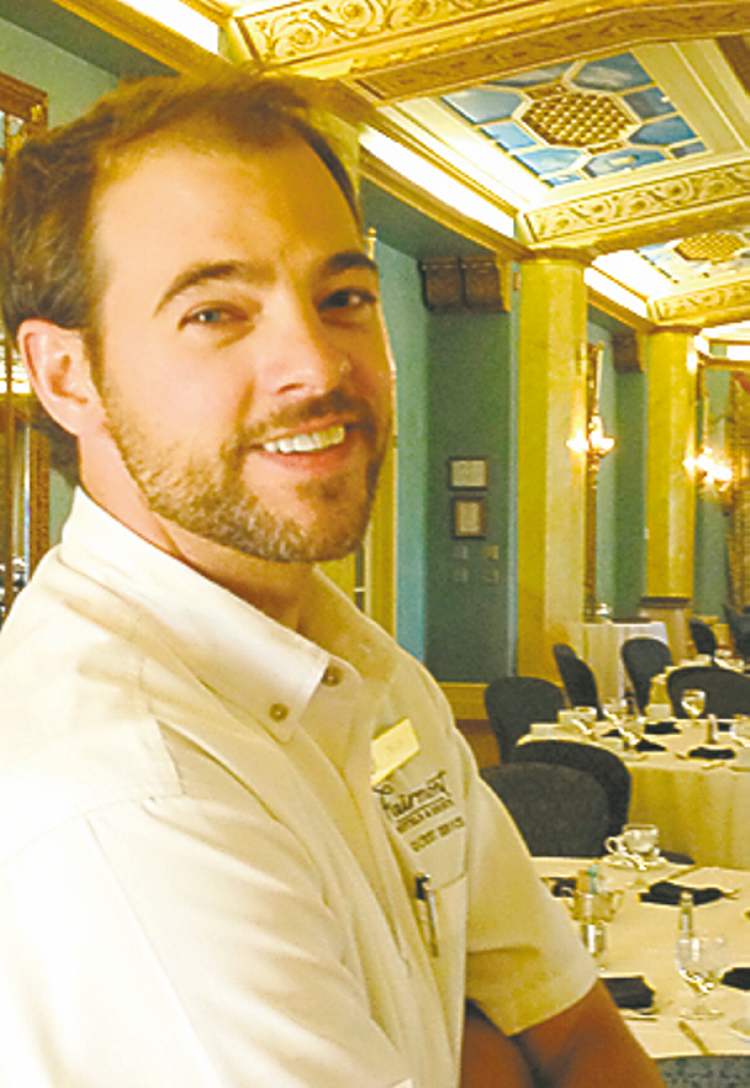
“It’s Canada’s Castle in the Rockies and it has that intrigue,” says Dave Moberg, one of the hotel’s longest serving employees with 51 years’ service.
“This hotel is not about celebrities or movie stars. It’s about our guests, the staff who’ve worked here and the people who become passionate about the hotel.”
There wasn’t much excitement about it in the 1940s, however, when Banff Springs went through a period of neglect amid low tourist traffic. The hotel closed between 1942 and 1945, freeing up thousands of employees for the war effort, said Deon Klatt, who helps lead the hotel’s history tour.
“In the 1950s, it opened in a state of disrepair. It was a rundown summer hotel. There was even talk of tearing it down.”
A weeklong visit by Hollywood’s biggest star brought back a touch of that early glamour.
Marilyn Monroe stayed at the hotel in 1953 while filming River of No Return.
A British man who was her driver at the time returned to the hotel for a visit a few months ago, said Moberg.
“I met this gentleman in the lobby. He was a big tall gentleman with rosy cheeks. He said he used to work here in 1953. I asked what he did and he said he was Marilyn Monroe’s chauffeur.”
When Monroe was filming, another movie starring Alan Ladd and Shelley Winters was also being made nearby. The chauffeur was asked to take the two directors out on the town one night.
“He said they asked him, ‘Can you take us to the nearest cat house?’ And he, being a naive British student, took them to the veterinarian.”
More Hollywood stars followed in the years after, but the hotel struggled to find its footing. Banff Springs began to focus on short-stay tourists, bus and rail tours and an emerging conference trade.
In 1971, Ivor Petrak became general manager and kicked off a period of restoration. “He had the vision to change it from that to a year-round, world-class alpine ski resort,” said Klatt.
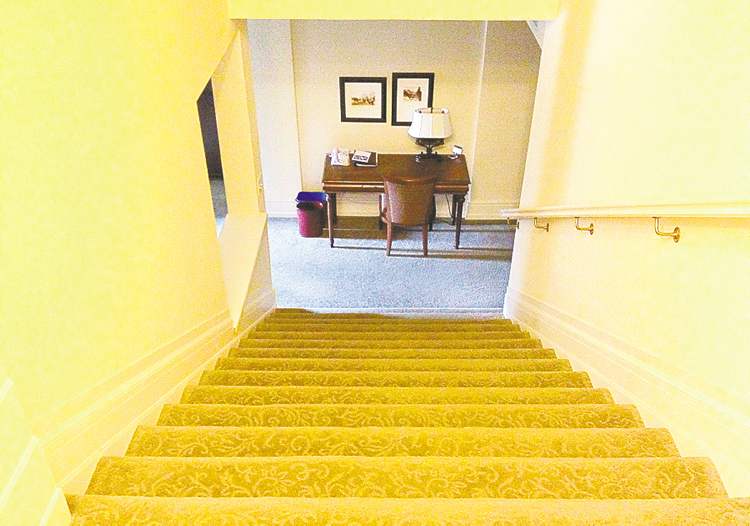
But some of the renovations through the years left some strange results. Staffers tell of a “lost room” that got covered over by the first renovations 100 years ago. Another reno created an unusual suite on the fourth floor with the bathroom behind the door and the bedroom at the bottom of a wide staircase.
Other changes include refurbishing the infamous staff annex to create 245 extra rooms in time for the 1988 Olympic Games.
A new manager in the 1990s brought a renewed sense of luxury. Two rooms that really reflect that sense of glamour are also staff favourites. Klatt loves the Cascade ballroom which hosted big band leader Moxie Whitney and Fred Astaire. Stepping inside is like a time warp; the room is painted in elegant hues, with crystal chandeliers and rich fabrics.
Mount Stephen Hall is also a nod to the past. Not much has changed in this expansive room where many weddings occur, including those of hockey players and figure skaters.
“I remember one wedding where they spent over a million. It had full security, a cinematography team and even a railway line built along the walkway to hold the cameras,” said Klatt, who declined to identify the bride and groom, saying only they weren’t celebrities.
Tourism and events have become big business for Banff Springs and a $25-million conference centre was added in 1991. A year later, the hotel was declared a national historic site. In 1995, the $12-million Solace Spa opened and it became known as a Fairmont property in 1999 when Canadian Pacific Hotels bought Fairmont Hotels.
Today, the hotel boasts 768 guest rooms, a 27-hole golf course, 12 seasonal restaurants and up to 1,200 employees.
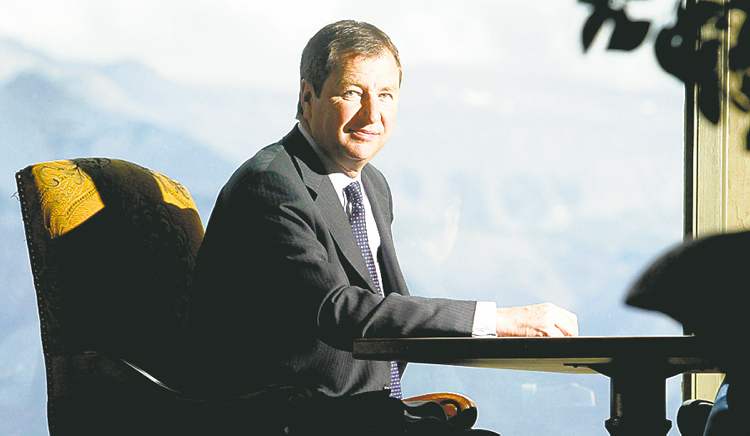
The hotel’s newest manager believes it’s well-positioned for the next 125 years.
“I have seen a tremendous amount of the world that is overpopulated and overbuilt,” said David Roberts, who managed Banff Springs for three years before being transferred to the Middle East. He’s been back now for about six weeks.
“As all of the countries get wealthier and look to find a patch of green grass, they’re going to look at the national parks of Canada as a choice that’s even more important.
“(The Canadian tourism slogan) of moose, mountains and Mounties hasn’t gone away and I think it will never go away.”
— Postmedia News