

Mamma mia!
Relive ABBA's glory days of disco at Stockholm museum
Advertisement
Read this article for free:
or
Already have an account? Log in here »
To continue reading, please subscribe:
Digital Subscription
One year of digital access for only $1.44 a week*
- Enjoy unlimited reading on winnipegfreepress.com
- Read the E-Edition, our digital replica newspaper
- Access News Break, our award-winning app
- Play interactive puzzles
*Billed as $5.77 plus GST every four weeks. After 52 weeks, price increases to the regular rate of $19.95 plus GST every four weeks. Offer available to new and qualified returning subscribers only. Cancel any time.
To continue reading, please subscribe:
Add Free Press access to your Brandon Sun subscription for only an additional
$1 for the first 4 weeks*
- Enjoy unlimited reading on winnipegfreepress.com
- Read the E-Edition, our digital replica newspaper
- Access News Break, our award-winning app
- Play interactive puzzles
*Your next Brandon Sun subscription payment will increase by $1.00 and you will be charged $17.95 plus GST for four weeks. After four weeks, your payment will increase to $24.95 plus GST every four weeks.
Read unlimited articles for free today:
or
Already have an account? Log in here »
Hey there, time traveller!
This article was published 13/07/2013 (4712 days ago), so information in it may no longer be current.
“Is ABBA big in Canada?” inquires a 20-something staffer at the entrance to ABBA the Museum when I mention I’m from Vancouver.
“Well, sure,” I respond. It’s hard to find a place where Sweden’s 1970s disco-era giants aren’t beloved, considering they’ve sold close to 400 million records worldwide.
Minutes later, I even discover some Canadian content at the long-awaited museum, which opened on May 7 as part of the new Swedish Music Hall of Fame in Stockholm. In a section featuring ABBA’s clothing, there’s a 100-per-cent wool Hudson’s Bay Company coat with the trademark green, red, yellow and blue stripes. Delightfully retro, it says “ABBA Vancouver 79 and Perryscope Concerts.” Now that rocks.
From a Vancouver hockey fan’s perspective, the Toronto Maple Leafs jersey keyboardist-songwriter Benny Andersson once sported at a Maple Leaf Gardens concert might be more divisive.
Yet overall — unless you truly hate ABBA’s catchy, kitschy music and can’t understand why they received (though also declined) a $1-billion offer to reunite in 2000 — there’s something here for music fans from every nation in the 470-square-metre museum on the downtown island of Djurg*rden.
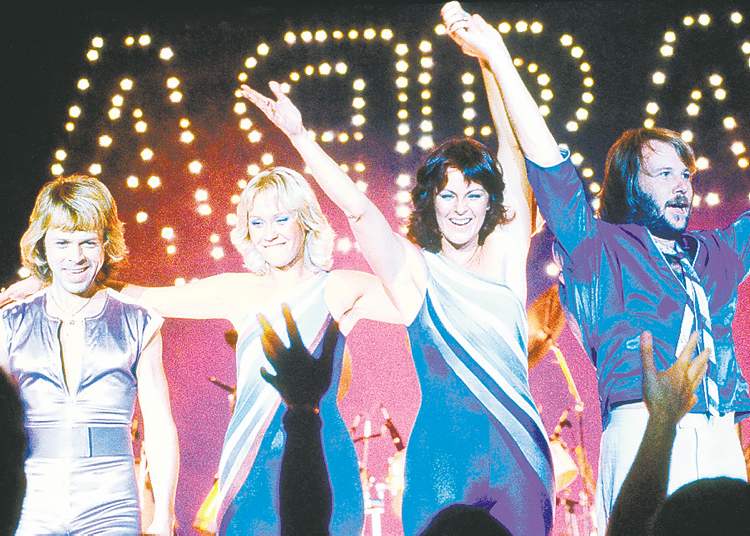
After entering past the iconic ABBA sign that adorned their concert stage (made out of light bulbs and old tin cans, it turns out), there’s an introductory film that evokes the band’s peak years. Disco lights, limos, screaming crowds, hotel rooms and other images are punctuated by snippets from classic hits such as Dancing Queen and Waterloo.
I get that “browsing through an old high school yearbook” feeling in the Folkparken section, dedicated to the early years of the four band members. They came up playing 1960s outdoor summer concerts in Sweden.
Gorgeous blond singer Agnetha F§ltskog has a charming gap between her front teeth in black-and-white teenage photos, with her playing the piano or posing with bow-tie-wearing musicians from the Bernt Engharts Orchestra.
Fellow vocalist Anni-Frid ‘Frida’ Lyngstad looks more self-possessed with ’60s pin-up glamour.
Guitarist-songwriter Bjrn Ulvaeus is shown playing wholesome folk music with the Hootenanny Singers, while Andersson rocks out with what was “Sweden’s wildest pop band,” the Hep Stars. Remarkably, the two men met in 1966, six years before ABBA officially formed.
You can use an audio guide, but I skip that since the English interpretive text is excellent.
Visually, the displays are tremendous fun. I volunteer to take a picture of a female visitor who sat down on a park bench in between a blown-up image of Andersson kissing Lyngstad — the two met in 1969 — and Faltskog staring straight ahead while Ulvaeus oddly leafs through a pamphlet on antibiotics. Faltskog and Ulvaeus married in 1971.
The museum documents how ABBA was despised by Swedish national TV and radio, which were dominated by left-wingers and favoured folk-influenced “prog” bands that sang about social issues. But, of course, the band became impossible to ignore on April 6, 1974, when they won Eurovision in Brighton with the powerfully infectious anthem, Waterloo. A big video screen relives the heady fun of that moment.
Exquisite dioramas recreate some of the creative hot spots ABBA used in its heyday. I admire a replica of Polar Studios — also famed for recordings such as Led Zeppelin’s In Through the Out Door or Genesis’s Duke. Another diorama depicts Andersson’s and Ulvaeus’ songwriting cabin in the Stockholm archipelago. A simple white piano overlooks the water as seagulls call on the breeze.
Nearby, a self-playing piano is connected to Andersson’s real-life piano in Stockholm’s Skeppsholmen neighbourhood, so you can hear it if he’s jamming at home. Things get more interactive as you get deeper into the exhibits. I duck into a vocal recording booth, where I thoroughly butcher the wistful The Winner Takes It All. Since I’ve scanned my ticket electronically, my ghastly rendition is available for (private) Internet downloading later on.
Thankfully, I do better with what one staff member called “the world’s most advanced karaoke machine,” singing Mamma Mia onstage alongside fun, cartoony holograms depicting each band member. I reward myself with a photo op inside the full-sized helicopter cockpit that graced the cover of 1976’s Arrival.
Memorabilia abounds. There’s an ABBA ticket for Glasgow’s Apollo Theater in 1977 and a gold-plated cassette commemorating 25,000 sales of The Best of ABBA in the Netherlands. I also gape at fan mail, trading cards, band dolls and even an ABBA Rubik’s Cube.
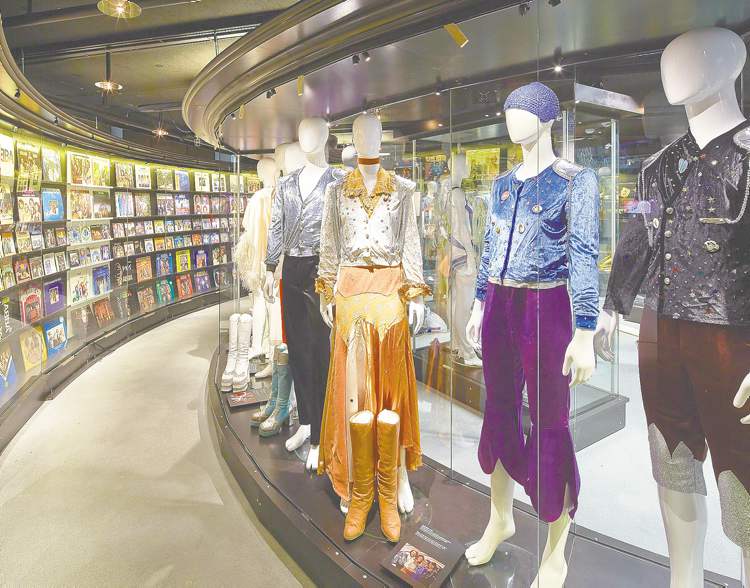
Yet naturally, it doesn’t get any better than gawking at ABBA’s stage costumes, which pack the circular Gold Room. From Faltskog’s trademark white jumpsuit to Lyngstad’s jade green dress from the When All Is Said and Done video, it’s a blur of happy retro fun. Even though ABBA hasn’t performed live since 1982, it’s easy to understand the globe-conquering success of both the 1999 Mamma Mia musical and the 2008 movie version with Meryl Streep and Pierce Brosnan.
In the gift shop, two unusual initiatives stand out amid the ABBA T-shirts, magnets, jewelry and coffee table books. First, you can only pay with a credit card, because of the band’s belief that a “cashless society” will reduce crime in the long term. Second, if you’re intent on spending big, you can email guitar maker Goran Malmberg to order a replica of the star-shaped guitar Ulvaeus played at Eurovision. No price is listed.
Speaking of money, money, money, an estimated 250,000 visitors will hit the museum this year. Mamma mia, here we go again. ABBA’s fame continues.
— Postmedia News