

Halifax’s ‘secret’ neighbourhood
Africville Museum tells tale of removal
Advertisement
Read this article for free:
or
Already have an account? Log in here »
To continue reading, please subscribe:
Monthly Digital Subscription
$1 per week for 24 weeks*
- Enjoy unlimited reading on winnipegfreepress.com
- Read the E-Edition, our digital replica newspaper
- Access News Break, our award-winning app
- Play interactive puzzles
*Billed as $4.00 plus GST every four weeks. After 24 weeks, price increases to the regular rate of $19.95 plus GST every four weeks. Offer available to new and qualified returning subscribers only. Cancel any time.
Monthly Digital Subscription
$4.99/week*
- Enjoy unlimited reading on winnipegfreepress.com
- Read the E-Edition, our digital replica newspaper
- Access News Break, our award-winning app
- Play interactive puzzles
*Billed as $19.95 plus GST every four weeks. Cancel any time.
To continue reading, please subscribe:
Add Free Press access to your Brandon Sun subscription for only an additional
$1 for the first 4 weeks*
*Your next subscription payment will increase by $1.00 and you will be charged $16.99 plus GST for four weeks. After four weeks, your payment will increase to $23.99 plus GST every four weeks.
Read unlimited articles for free today:
or
Already have an account? Log in here »
Hey there, time traveller!
This article was published 14/09/2013 (4584 days ago), so information in it may no longer be current.
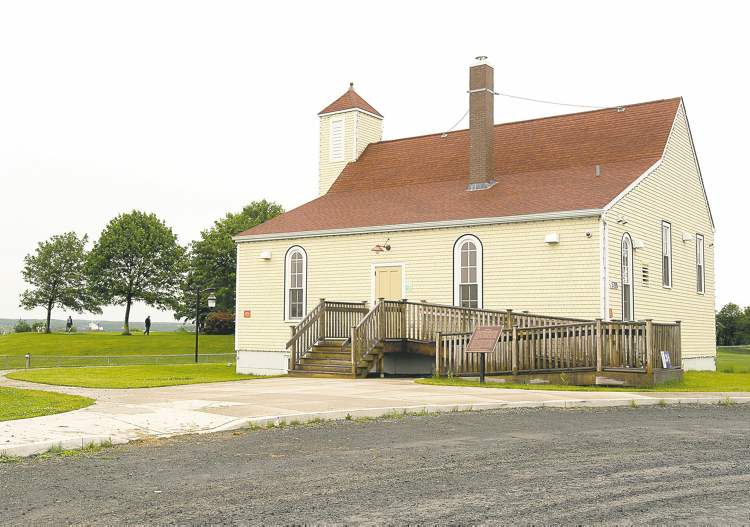
HALIFAX — Nestled on the edge of the Bedford Basin is a small wooden church — a replica that represents the survival of a once-thriving African Nova Scotian community that endured years of racism from the city that encompasses it.
The Seaview African United Baptist Church was once the heart of Africville, but was abruptly demolished in the 1960s by the City of Halifax to make way for new development.
Now, the pale yellow, red-roofed replica church in Halifax’s north end serves as an exhibition of the community’s trials and tribulations over the past 150 years.
While a little off the typical tourist track in Halifax, the Africville Heritage Trust Museum relates the largely untold story of the oppressed village, said Tracey McCallum, assistant to the museum’s executive director.
“It’s an extremely important and rich part of Halifax’s history, but it’s kind of ‘the secret,’ ” McCallum said in a recent interview at the museum. “Well, we’re here to talk about it. It’s an inspiring story.”
During the mid-19th century, the church acted as an epicentre for the hundreds of families living on the banks of the basin, some of whom could trace their roots there back to the 1700s.
But during the mid-1900s, Africville became a dumping ground for unwanted public facilities — a prison, a landfill and an infectious disease hospital to name a few — in the hopes of driving the self-sustaining community away, said McCallum.
The village — its houses, post office, shops and iconic church — were eventually destroyed.
The city argued the dislocation would make way for the A. Murray MacKay Bridge and a container pier, but a swath of grass and brush where parts of the community once stood remain untouched by the so-called urban expansion, said McCallum.
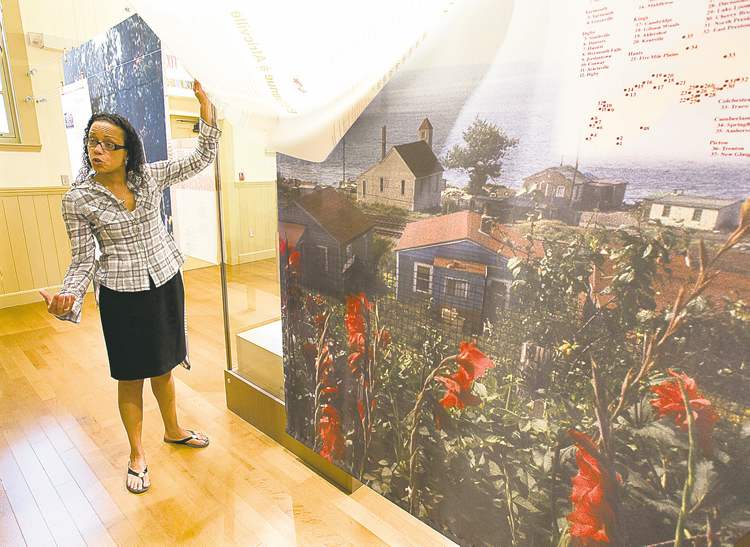
“They were a community and they were tight-knit,” she said below a salvaged sign inscribed with the phrase, “God is Love.”
“What was done to them was an atrocity and it was right here in the City of Halifax.”
In 2010, Africville received an apology for the destruction of the community from then-mayor Peter Kelly, which was backed by the allocation of land and $3 million to rebuild the church.
About a year later, the museum officially opened and has since welcomed school groups and tourists from as far away as California, eager to hear the community’s story of oppression.
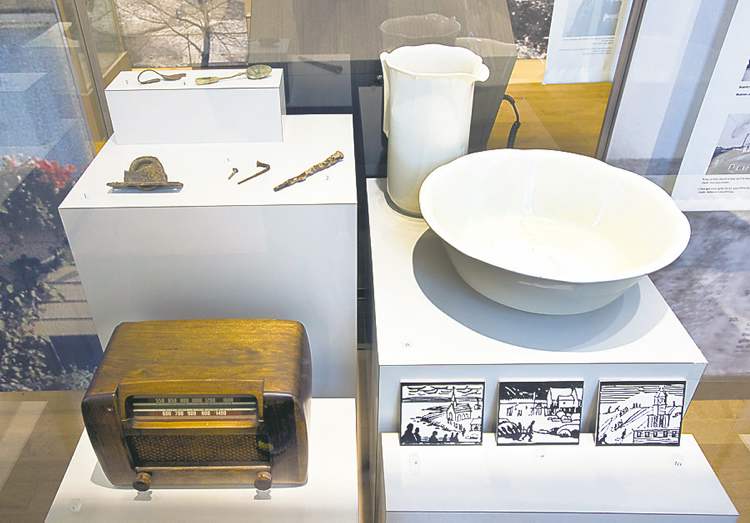
The centre features a number of artifacts salvaged from the dislocation. Several colourful marbles enclosed in a glass case sit near a wooden pulpit from the original church.
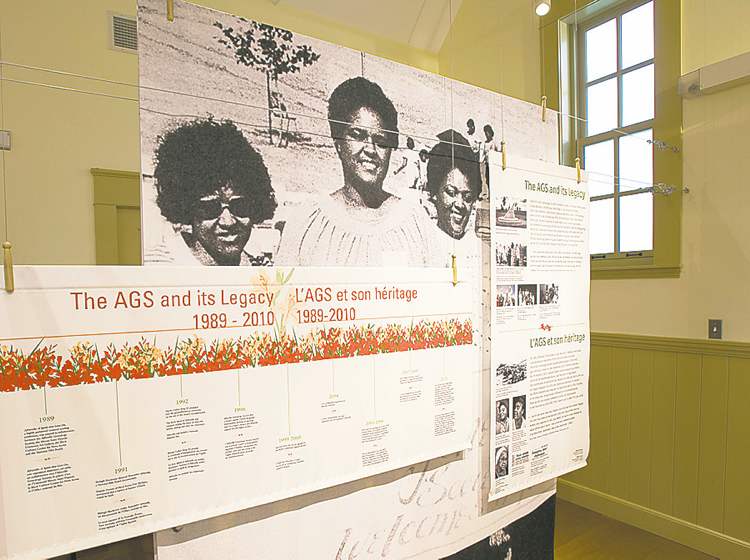
Nearby is a sign that reads, “Please boil this water before drinking and eating.” Although the residents paid taxes, they never received water services from the city, McCallum explained.
Visitors can also hear stories from former Africville residents on one of several interactive screens.
One of those residents, 67-year-old Eddie Carvery, still lives on the shores outside of the museum in protest of the dislocation and occasionally assists workers with tours, offering a unique first-hand account of the village’s history, said McCallum.
“He loves talking to kids,” she said as Carvery’s dog barked in the distance. “He’s definitely a big part of our museum.”
McCallum said the replica church is only the beginning of a larger project that will eventually see the construction of an interpretive centre and a walking tour throughout the area.
“We have a lot of great ideas, but at this point we’re just beginning, so that’s a few years down the road.”
— The Canadian Press