

Hunting and photography not mutually exclusive
Advertisement
Read this article for free:
or
Already have an account? Log in here »
To continue reading, please subscribe:
Monthly Digital Subscription
$1 per week for 24 weeks*
- Enjoy unlimited reading on winnipegfreepress.com
- Read the E-Edition, our digital replica newspaper
- Access News Break, our award-winning app
- Play interactive puzzles
*Billed as $4.00 plus GST every four weeks. After 24 weeks, price increases to the regular rate of $19.95 plus GST every four weeks. Offer available to new and qualified returning subscribers only. Cancel any time.
Monthly Digital Subscription
$4.99/week*
- Enjoy unlimited reading on winnipegfreepress.com
- Read the E-Edition, our digital replica newspaper
- Access News Break, our award-winning app
- Play interactive puzzles
*Billed as $19.95 plus GST every four weeks. Cancel any time.
To continue reading, please subscribe:
Add Free Press access to your Brandon Sun subscription for only an additional
$1 for the first 4 weeks*
*Your next subscription payment will increase by $1.00 and you will be charged $16.99 plus GST for four weeks. After four weeks, your payment will increase to $23.99 plus GST every four weeks.
Read unlimited articles for free today:
or
Already have an account? Log in here »
Hey there, time traveller!
This article was published 29/10/2016 (3441 days ago), so information in it may no longer be current.
Are hunting and wildlife photography incompatible? I don’t think so, and I see no inherent reason why they should be, yet it’s an argument that comes up often enough that it warrants reflection.
In the aftermath of last year’s incident with Cecil the lion, a popular meme showing wildlife photographers with the phrase “this is how real men shoot animals” on top of the image made its way around the internet, with the help of celebrity anti-hunting activist Ricky Gervais, among others.
When hunters describe the outdoor recreation benefits of a hunt, such as getting into the back country, connecting with nature and gaining a better understanding of what makes wildlife tick, non-hunters can appreciate that, but very often come to the perfectly reasonable question, “Why can’t you just shoot it with a camera instead?” I’ve been personally asked that in media interviews, and I’ve heard others asked the same.
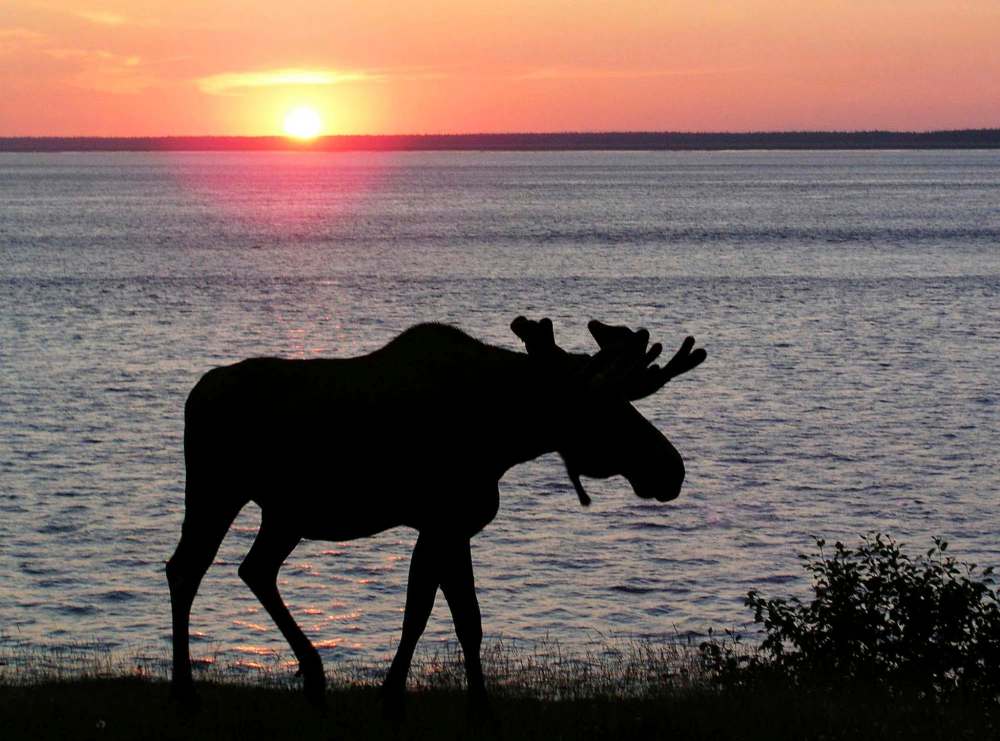
One obvious answer is “you can’t eat a photo,” but that isn’t always well-received, and also doesn’t dig deeply enough into the issue. The answer I’ve always given is that it doesn’t have to be an either-or situation. There’s no reason why photography and hunting have to be mutually exclusive activities.
I am a hunter, and I have absolutely no beef with wildlife photography. In fact, I’m a fan. I have the Canadian Parks and Wilderness Society calendar on the wall in my office, and this month’s photo is a fantastic one of a bull moose treading through a colourful, swampy area. I marvel at it every time I glance at the calendar. I have also seen many great photos taken by hunters while out on a hunt, including many of live animals. It may surprise some non-hunters to learn that we don’t always harvest the first thing that walks by and we, too, can appreciate their beauty.
Anyway, that same respect is not always afforded in reverse.
Photographers are no different than any other group of people, in that they’re all individuals with their own values and ethics. That means some of them are probably vegetarians or are not comfortable with hunting, but as far as I know, no one is attempting to force these people to hunt. Unfortunately, some of them actively try to discourage others from hunting, with the suggestion that photography is not just an alternative or complimentary activity, but a morally superior option.
Take for example a recent comment from “Peabody_here,” who was the one and only person to leave an online comment on my last column in this space three weeks ago. In the column I explained that the opportunity to harvest is undeniably what brings hunters to the bush, but that it’s really only the icing on the cake, and that the true value is in the wilderness experience. They commented:
“I’ve many times had exactly the same experiences… and more. Hearing moose or elk battling in the dead of night. Watching puffs of warm air as a bull elk bugles and grunts as he stares at me, just 30 yards away. Hearing a wolf pack’s howling as they move down the hills beyond the campsite. Hearing the whistling of wings of Canada geese as they pass over the campfire’s light. The only difference is that the forest remains as it was, after I leave. I hunt only with a Canon; somehow I don’t need ‘icing’ to enjoy the full measure of the forest.”
The one thing Peabody left unsaid — although I can read between the lines — is “so therefore I am a better person than you.”
It’s worth reiterating that I take Peabody’s comments for what they are: the opinion of an individual. I do not wish to paint all wildlife photographers with the same brush, just as I would hope no one would paint all hunters with the same brush.
None of us is perfect. There are poachers who break hunting and wildlife protection laws, although they’re in the extreme minority. There are also photographers who are less than scrupulous, as evidenced by the fact that Parks Canada banned the use of telemetry receivers in some national parks this past summer and imposed a $25,000 fine for doing so, after discovering that some photographers were using the devices to hack into the radio collars of bears, wolves and elk, so they could more easily locate them to take pictures. They too, of course, are in the extreme minority, and are no more a reflection of the larger wildlife photography community than a poacher is of the larger hunting community.
The point is, wildlife photography is simply an activity carried out by individuals. Just like hunting. If you think you’re a morally superior person because you shoot photos instead of harvesting an animal, then I’d suggest that has more to do with your own personal view of the world than it does with any perceived conflict between photography and hunting. Both are noble and rewarding activities, so can’t we all just get along?
Paul Turenne is executive director of the Manitoba Lodges and Outfitters Association.