

A trip through time
Visiting York Factory is a step back into Canada's past
Advertisement
Read this article for free:
or
Already have an account? Log in here »
To continue reading, please subscribe:
Digital Subscription
One year of digital access for only $1.44 a week*
- Enjoy unlimited reading on winnipegfreepress.com
- Read the E-Edition, our digital replica newspaper
- Access News Break, our award-winning app
- Play interactive puzzles
*Billed as $5.77 plus GST every four weeks. After 52 weeks, price increases to the regular rate of $19.95 plus GST every four weeks. Offer available to new and qualified returning subscribers only. Cancel any time.
To continue reading, please subscribe:
Add Free Press access to your Brandon Sun subscription for only an additional
$1 for the first 4 weeks*
- Enjoy unlimited reading on winnipegfreepress.com
- Read the E-Edition, our digital replica newspaper
- Access News Break, our award-winning app
- Play interactive puzzles
*Your next Brandon Sun subscription payment will increase by $1.00 and you will be charged $17.95 plus GST for four weeks. After four weeks, your payment will increase to $24.95 plus GST every four weeks.
Read unlimited articles for free today:
or
Already have an account? Log in here »
Hey there, time traveller!
This article was published 04/02/2017 (3422 days ago), so information in it may no longer be current.
HUDSON BAY LINE — Riding the Hudson Bay Line in a sleeper car, your eyes closed, you feel the train rock unevenly from side to side.
Mostly it rocks soothingly, but sometimes it lurches, like a kick save, then another kick save, then a diving stop by the train-turned-acrobatic-goalie, before returning to calm jostling again.
In addition, the train bounces up and down, never just one bounce but in a series of diminishing bounces.
These two forces — rocking side to side and bouncing up and down — collide arrhythmically through the night. You concentrate and try to follow the movements… before you conk out.
Someone should invent a vibrating bed that imitates the random jostling of the Hudson Bay Railway.
Until then, you’ll have to climb aboard VIA Rail and head north, in this case to Gillam, and then by boat to York Factory.
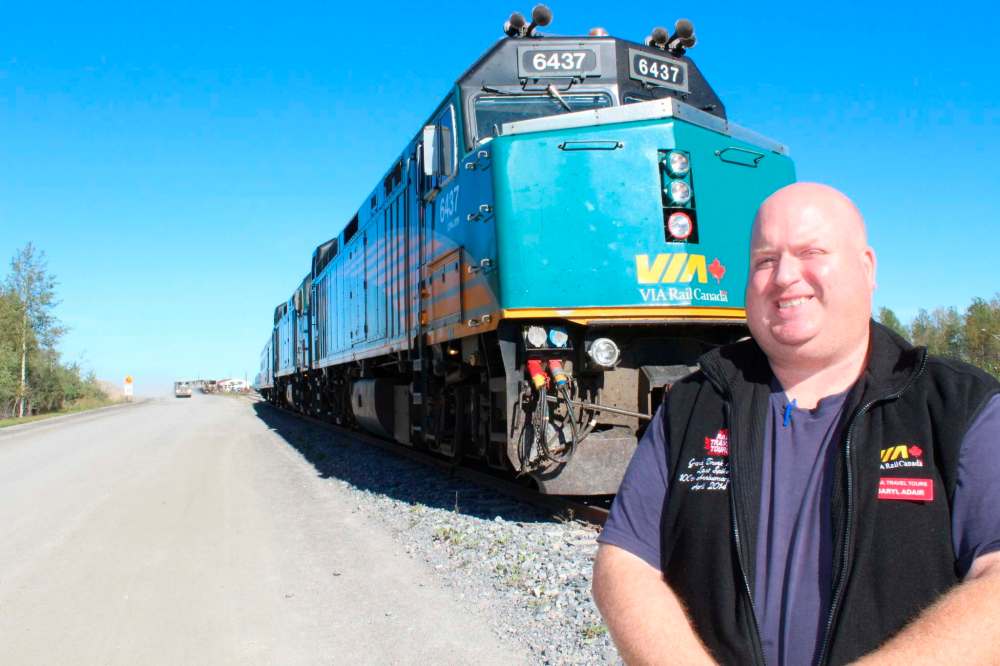
It’s the latest tour cooked up by Daryl Adair of Winnipeg-based Rail Travel Tours, just in time for Canada’s 150th birthday.
Adair famously tries to work rail travel into anything. Like to see the fall colours? Adair runs an annual rail trip through the Qu’Appelle Valley. Interested in Churchill’s beluga whales? Rail Travel Tours lets you travel like 19th-century railway baron William Van Horne to get there. Got a doctor’s appointment next week? Have you thought of taking a train?
Now Adair has his sights set on York Factory. It was once the hub of the Canadian fur industry. The fur trade post was opened by Hudson Bay Company in 1684 and only closed 273 years later in 1957. The Selkirk Settlers landed at York Factory in 1811 while on their way to the Red River Settlement, and all their supplies came via the fort until 1860.
It is now a national historic site staffed by Parks Canada staff. The problem has always been this amazing locale is too remote for most people to access, except by canoe expedition or float plane.
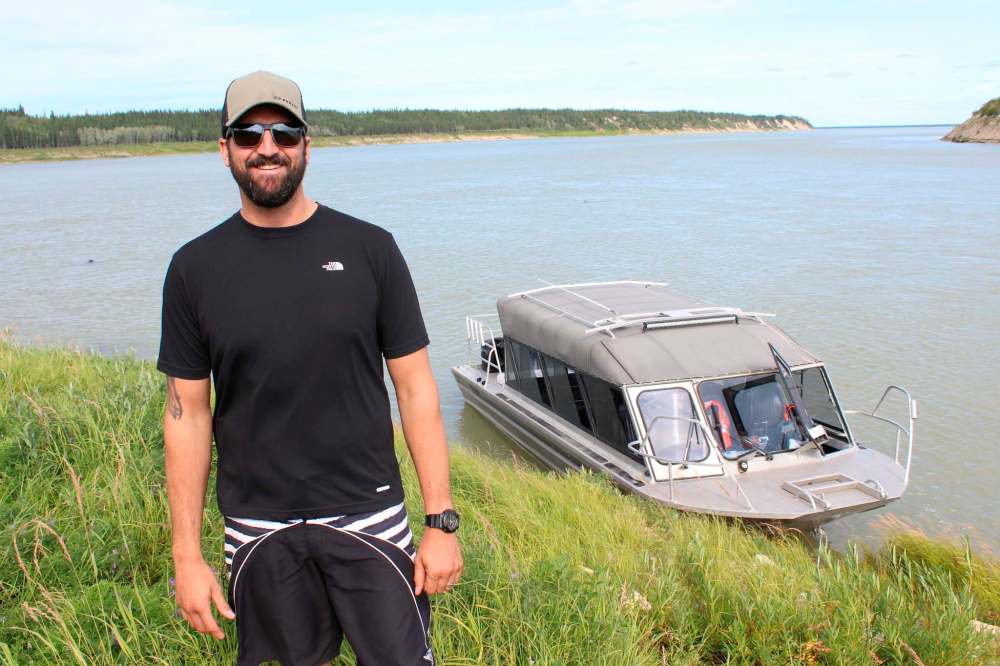
Until now. Nelson River Adventures, run by Clint Sawchuk, a farm kid from Inglis, has begun ferrying people by jet boat from Gillam to York Factory and back, a 350-kilometre round trip.
Rail Travel Tours gets you to the Nelson River. The advantage to travelling by train is it puts you in a historic mood. The Free Press joined the tour late last summer.
Every Rail Travel Tour starts with a visit to the Winnipeg Railway Museum in the VIA Rail building, and it’s especially informing for northern travel. You get a chance to bone up on the incredible story of the construction of the Bay Line (officially called Hudson Bay Railway), built through 800 km of taiga forest, swamp and muskeg. The Bay Line runs from Hudson Bay Junction in Saskatchewan to Churchill. We will be getting off where the line elbows north at Gillam.
Travelling by rail, you learn the stories of fellow passengers. On our trip, everyone had an underlying reason for seeing York Factory.
One couple from Ottawa travelled to Churchill last summer and kayaked with the beluga whales. That honed their appetite to see more of Manitoba’s north.
Another couple, Irene and Don Gordon, were along to support a book Irene was writing on Letitia Hargrave, nee McTavish, the wife of HBC chief factor, James Hargrave. James was stationed at York Factory from 1827 to 1851. He once described life at York Factory as “nine months of winter varied by three of rain and mosquitoes.”
Scott and Peter, two friends from Williamsburg, Va., who share season tickets to the Washington Capitals hockey games, were enthusiasts of Canada’s north and the fur trade. Scott, a retired lawyer in the energy industry, had fallen in love with the fur trade history from reading Pierre Berton’s, The Arctic Grail, about the search for the Northwest Passage; and later Peter Newman’s Company of Adventurers: How The Hudson Bay Empire Determined The Destiny Of A Continent. (Trip leader Adair kept calling us “Company of Adventurers” throughout our journey.)
Two spirited sisters from Saskatchewan were inspired to make the trip because their Metis roots trace back to the Red River settlement.
Finally, Wendy and Ed, a couple from Steinbach, were traveling so Wendy could see where her great-great-grandmother, a Cree country wife, had once lived. I made a point to look at her as we strolled through the fort’s cemetery and saw her very moved by the experience.
In train travel, you learn all this over breakfasts, lunches and dinners in the dining car, or while watching the Northern Lights in the dome car. Major stops included Dauphin, and the historic Dauphin train station; the Pas, but in the middle of the night; and Thompson, for several hours in the afternoon. The train travels no more than 40 km/h after The Pas, as the line becomes more rickety due to permafrost. Our last stop was Gillam.
The aurora borealis still blanketed one side of the night sky when we arrived in Gillam at 11:30 p.m., almost 36 hours after our departure. There is none of the city’s light pollution to diminish the majesty of the northern spectacle.
You’ve got to be a little forgiving in the north, and everyone in our party was. The Kettle Inn in Gillam looked a little worse for wear in spots, but made up for it with clean, quiet rooms and northern hospitality. A trip to York Factory isn’t likely to appeal to prissy sensibilities, after all.
We had to be in the lobby by 6:45 a.m. the next day, which didn’t seem to be a problem for anybody. In future, I would advise an even earlier start.
It’s about a half-hour drive to the boat launch, at the foot of Manitoba Hydro’s Limestone Generating Station. About half Manitoba’s hydroelectric power comes from the five hydro generating stations located on the mighty Nelson River.
We owe a debt of gratitude to Sawchuk of Nelson River Adventures for making it possible to view York Factory. It’s not quite the North West Passage, but Sawchuk has found a way to give the general public passage to this extraordinary tourist destination for the first time.
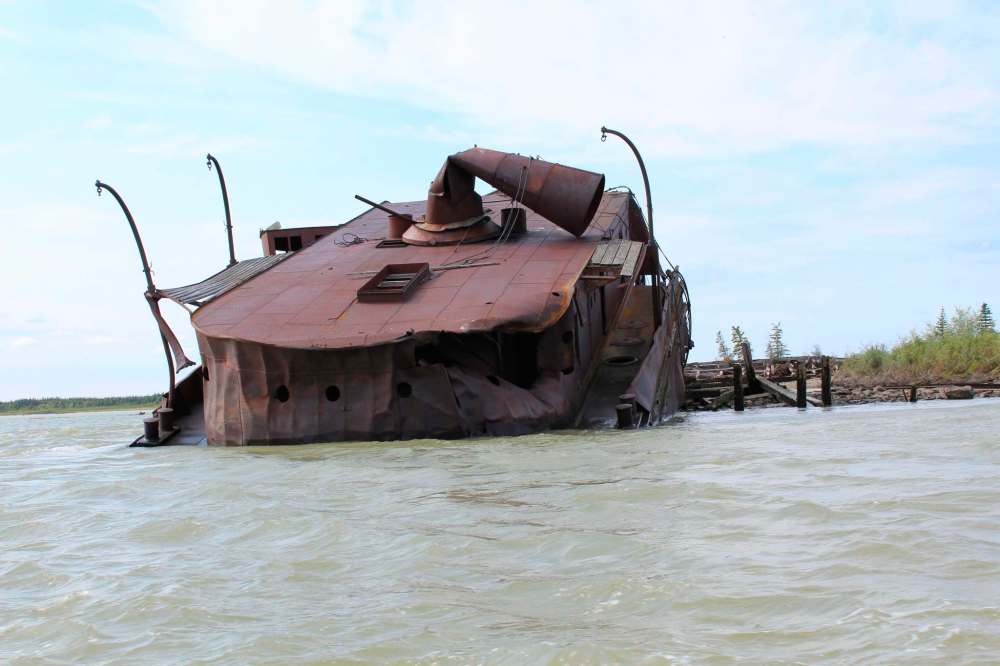
The Nelson is an amazingly wide and powerful river. You can see why Manitoba Hydro has tapped its energy. It’s about 0.8 kilometres wide, or half a mile, draining Lake Winnipeg into Hudson Bay.
There’s no dilly-dallying on the way out to York Factory, as you have cover about 170 kilometres in three hours. That includes navigating the Lower Limestone rapids. The schedule is tight because there is only so much time to view York Factory before the tide pulls out.
There are sure to be wildlife sightings. We spotted harbour seals and one polar bear on shore, but at a distance. However, our most memorable sighting was two polar bears swimming together in the Bay. It underscored what amazing creatures they are. They were five to 10 kilometres from the nearest land. Polar bears are amazing swimmers, using their giant paws as flippers.
Previous travellers have told similar stories, and some got to see beluga whales and caribou.
“People ask me if I get bored,” Sawchuk said. “I don’t. I like watching the shoreline for wildlife and meeting people.”
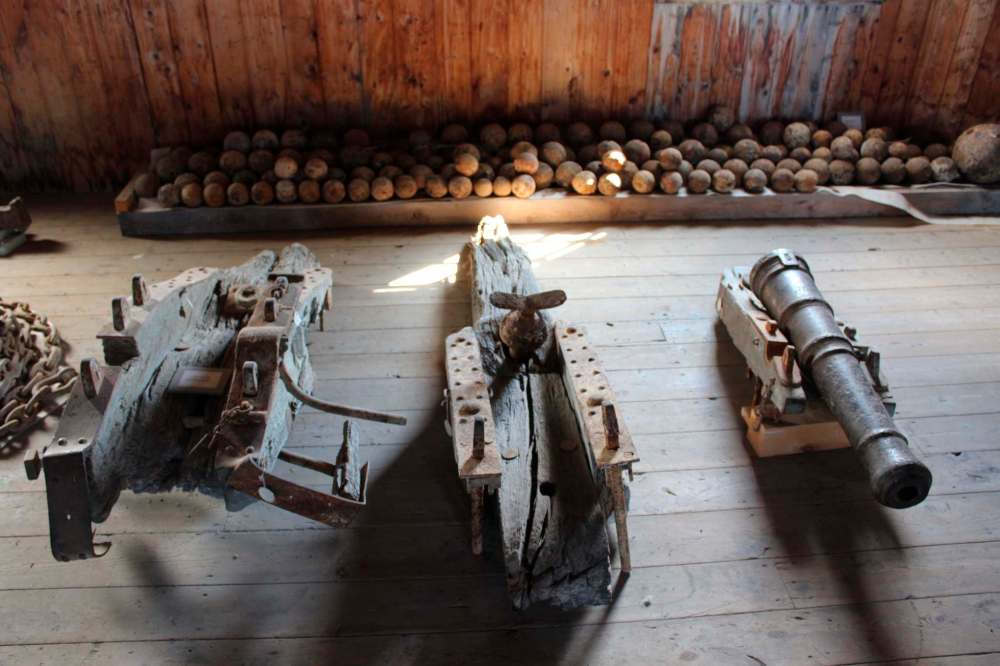
We followed the Nelson to where it empties into Hudson Bay, then looped south into the Hayes River. We traveled up the Hayes for about 10 kilometres to York Factory.
Setting foot on York Factory is like connecting with the nation’s deepest European engagement. An entire village of brave souls once made their life in the most extreme conditions here.
Why was it called a “factory” and not a “fort” or “house”? A house, such as Oxford House, was a small outpost; a fort, like Lower Fort Garry, was a mid-sized post; a factory was the largest operation of all, including the residence of the chief factor who ran the business in Canada. The York Factory walls enclosed more than 50 buildings. Aboriginal people made their residences around the factory exterior.
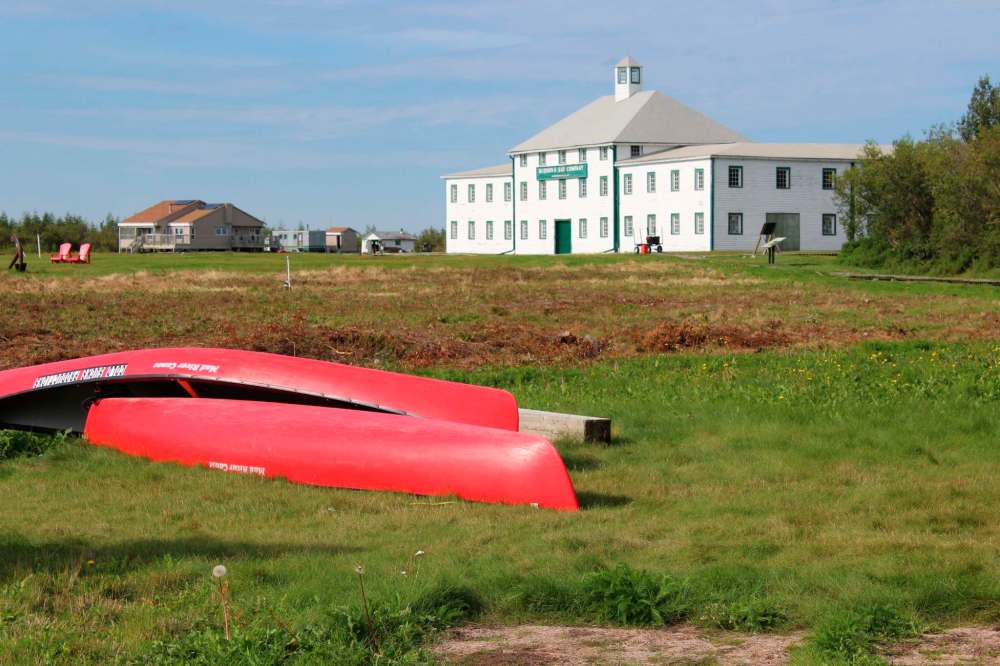
York Factory was the hub of Hudson Bay’s Canadian operations. A three-storey depot built in 1831 — it’s large and box-shaped, like a wooden version of the Bay department store downtown — is still standing, a testament to remarkable workmanship by those early HBC builders. The depot is three floors, plus a cupola on top that served as a lookout.
Supply ships arrived to bring goods required to sustain a village, everything from blankets to tools to rifles to animal traps, and kept them in the historic department store. For example, one room at the depot was just disassembled stove parts. It was the IKEA of two centuries ago where a villager purchased parts for the stove and assembled them at home.
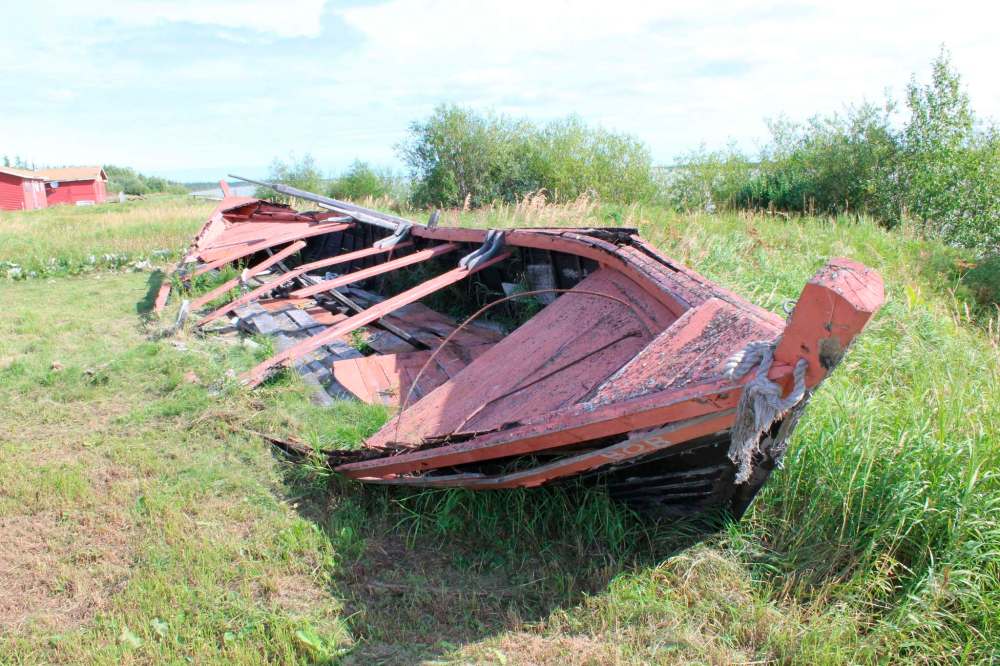
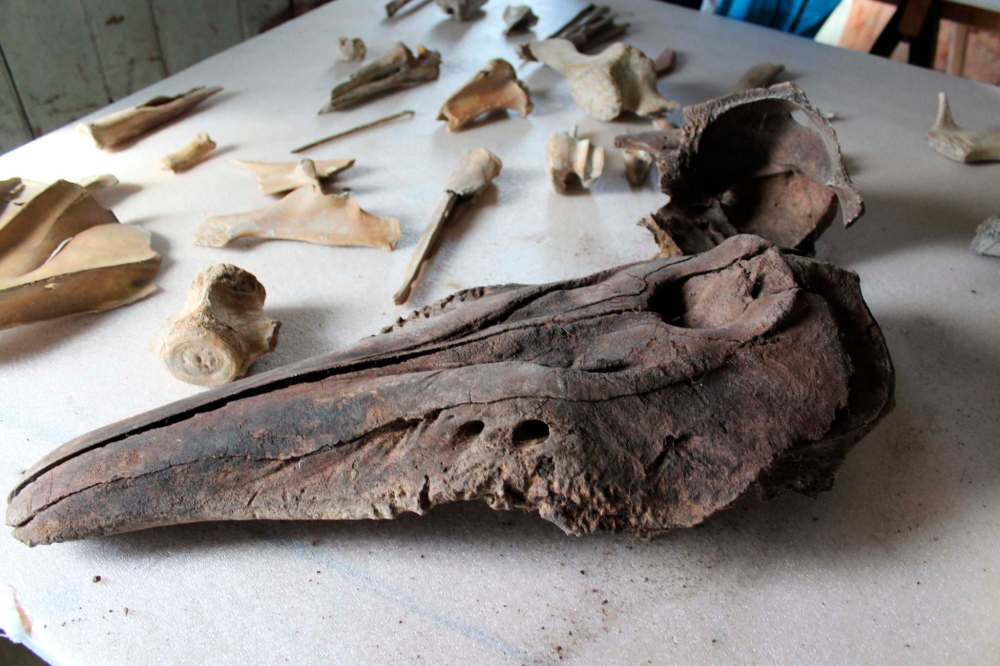
Today, there are fabulous collections of factory artifacts spread out on tables in every room. For example, one table displays rusted barber equipment and various knives. Another table has various skulls found at the fort site, including various dog and beluga whale skulls. There is a big collection of early marine equipment, as well as a ammunition like grape shot and cannonballs.
The depot was built with many windows to reduce the need for artificial light. Flame was banned inside the depot as fire prevention.
Another highlight is the cemetery and its decrepit wood crosses. Fences surround the crosses of important HBC personnel. Moer than 200 graves have been found using ground-penetrating radar, but only about 40 are still marked.
Time goes fast on the York Factory visit. We stretched our visit to 2 1/2 hours, by which time Sawchuk was becoming anxious. We needed to leave before the tide left or we’d be stranded for the night. “When the tide goes out, it’s like someone pulled the plug,” Sawchuk said.
Two issues surfaced on our trip last year. First, York Factory was not prepared for the type of traffic Sawchuk is providing. It used to receive 25 to 30 visitors per year. In 2016, thanks to Sawchuk and his jet boat, the number was almost 300.
A dedicated interpretive guide is needed. You wouldn’t tell that to the men stationed there to their faces, as they pack rifles over their shoulders to protect visitors from polar bears.
But the truth is York Factory is a fantastic story and it’s not being told as well as it could be. Parks Canada knows this and was exploring the possibility of providing a dedicated interpretive guide when we visited last year.
Second issue: washrooms. Parks Canada had only one outhouse when we arrived, the other two were out of order. How outhouses can be broken is a mystery but it has something to do with propane systems that make for ultra-sanitary conditions to meet national park standards. When time is limited, you don’t want to waste it standing in line for 20-minute washroom breaks.
Biffies are needed elsewhere, too, probably on Gillam Island, another stop on our tour.
Gillam Island has a plaque dedicated to Captain Thomas Buttons, who sailed into Hudson Bay in 1612 and overwintered.
We returned to Gillam. On the train ride back, we had plenty of time to reflect on what we’d seen. It’s one thing to ride a train in anticipation of your destination. It’s another to ride the rails after the trip’s climax. Both are good.
That was another day-and-a-half trek. The train was late arriving in Winnipeg but no one seemed to care. Nobody was in any hurry to return to the 21st Century.
As Peter from Virginia described our return, in a later email exchange: “Seemed like time travel going to remote York Factory, and I was a little off balance being back in 2016 so abruptly.”
bill.redekop@freepress.mb.ca

IF YOU GO

York Factory and Fur Trade Explorer
The tour to Northern Manitoba by rail and the isolated York Factory is scheduled to take place round trip starting from Winnipeg, Tues. Aug. 22, to Sat. Aug. 26, and is limited to a maximum of 10 guests. There also plans to visit to Lower Fort Garry on the day before the train’s departure for those on the tour to meet and learn more about the fur trade in the southern most point that the York Boats once travelled the waterways of Manitoba. All meals and added presentations are included, along with space on the train in private sleeping car cabins with access to the train’s domed observation car and the Rail Travel Tours information kit with maps route guides and historical background of the places the guests will visit. From $3,395 per person based on double occupancy.
Canada Day Weekend Rail Tour
Rail Travel Tours has put together a Canada Day weekend circle rail tour to take place, roundtrip from Winnipeg, on the 150th Anniversary of Confederation (appropriately since railways were instrumental in the formation of Canada) that supports the Winnipeg Railway Museum. Starting on July 1 the package will fittingly travel on the train called the Canadian on Canada Day (through the Qu’Appelle Valley over the Uno trestle) to Melville, Sask. to check into our hotel and after enjoying the fireworks overnight here. Then on July 2 the group will visit by bus area attractions including the Western Development Museum, the museums of Canora, Sask., and a ride on the privately owned narrow gauge train before overnighting at a hotel in Yorkton, Sask. On July 3 the group will travel from Canora, Sask., on the Churchill to Winnipeg train past some scenic areas including the headwaters of the Assiniboine River and views of Riding Mountain National Park and a planned visit to the Dauphin Railway Museum before the scheduled late afternoon return to Winnipeg. The tour includes all meals and some added experiences enjoying the heritage of the Canadian Prairies from $745 per person based on double occupancy.
Contact Rail Travel Tours to reserve or for more details at 204-897-9551 or toll free at 1-866-704-3528 or railtraveltours.com
Advertisement Advertise With Us
Advertisement Advertise With Us