The many faces of Hamburg
Germany's second-largest city is a bustling metropolis
Advertisement
Read this article for free:
or
Already have an account? Log in here »
To continue reading, please subscribe:
Monthly Digital Subscription
$1 per week for 24 weeks*
- Enjoy unlimited reading on winnipegfreepress.com
- Read the E-Edition, our digital replica newspaper
- Access News Break, our award-winning app
- Play interactive puzzles
*Billed as $4.00 plus GST every four weeks. After 24 weeks, price increases to the regular rate of $19.95 plus GST every four weeks. Offer available to new and qualified returning subscribers only. Cancel any time.
Monthly Digital Subscription
$4.99/week*
- Enjoy unlimited reading on winnipegfreepress.com
- Read the E-Edition, our digital replica newspaper
- Access News Break, our award-winning app
- Play interactive puzzles
*Billed as $19.95 plus GST every four weeks. Cancel any time.
To continue reading, please subscribe:
Add Free Press access to your Brandon Sun subscription for only an additional
$1 for the first 4 weeks*
*Your next subscription payment will increase by $1.00 and you will be charged $16.99 plus GST for four weeks. After four weeks, your payment will increase to $23.99 plus GST every four weeks.
Read unlimited articles for free today:
or
Already have an account? Log in here »
Hey there, time traveller!
This article was published 08/07/2017 (3193 days ago), so information in it may no longer be current.
HAMBURG, Germany — It’s a mild and sunny spring evening in this northern Europe port city and the locals are out enjoying the pleasant weather. One of their favourite spots to do this is along the shores of the Außenalster — or Outer Alster — Lake; the larger of two significant artificial bodies of water within the city limits.
Some folks are just sitting, leaving the stressful day behind them as they relax in the shade of the trees; some are out in a boat, canoe or kayak enjoying the calm water; many are out for an evening run or walk. Plenty of young people are sharing stories; some cuddled together in a spring romance; others laughing and poking fun at one another; Hey! Pass auf! Die Polizei kommt!!! a trio of young men jokingly bark at a few of their fellow Hamburgers (that’s right folks — and people from Frankfurt are Frankfurters) who enjoying a beverage from a bag on the Alster shores.
And then, there are the swans.
The swans of Alster have been bred and cared for here for hundreds of years. At the beginning of the 19th century, Hamburg appointed a ‘Schwanenvater’ — father of the swans — to be responsible for the 170 birds that reside on the Alster in spring and summer. In late autumn, the swans are collected and taken to ice-free winter quarters where they are fed and cared for until the spring. When one falls ill or is injured they are treated at the medical station.
In 1264, the senate of Hamburg enacted a law to protect the swans and anyone who dared to beat to death, insult, shoot or eat a swan would be severely punished.
The idea goes back to a myth that as long as one swan lived in the Free and Hanseatic City of Hamburg, it would prosper.
The setting is all rather incongruous — like dropping a scene from some village in European lake country into the middle of a large and bustling industrial metropolis. That’s not, however, surprising as incongruity is a trait that could be used to best describe Hamburg.
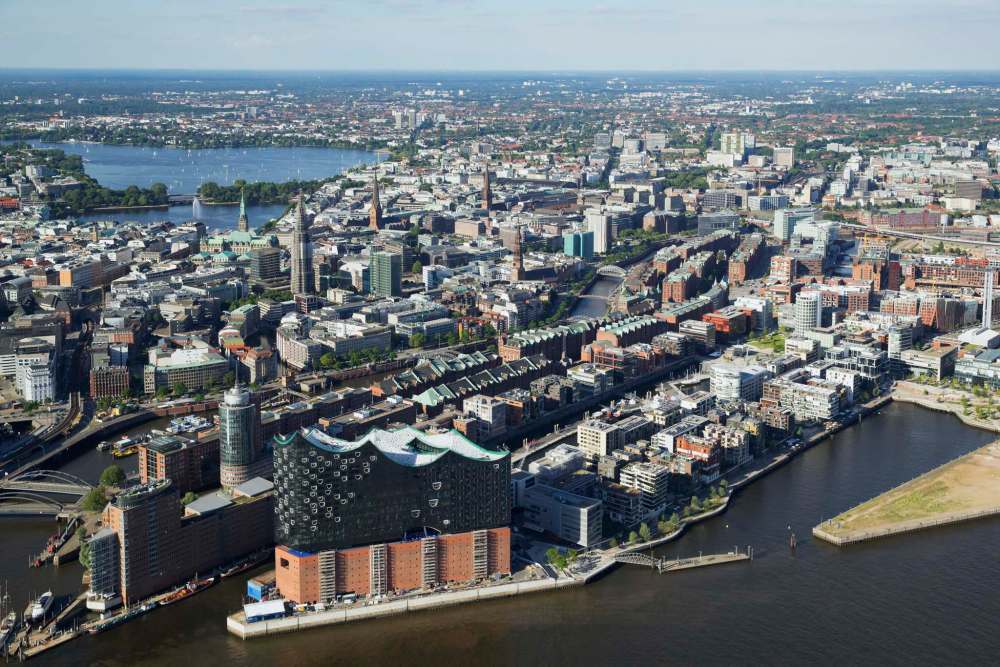
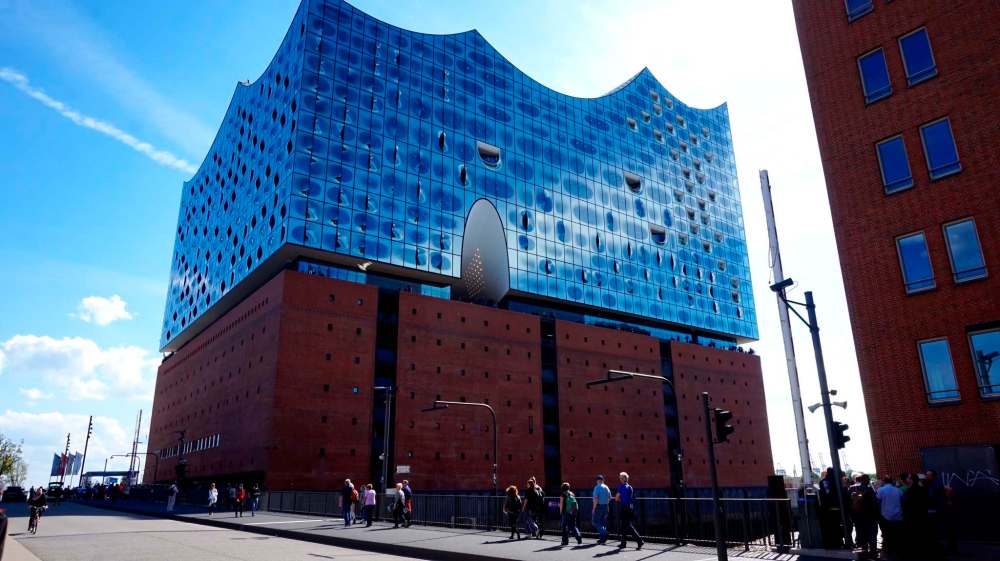
On the one hand you have a glistening new concert hall — the Elbphilharmonie — on the banks of the Elbe River and adjacent to the steel and metal of Europe’s second-busiest port. In the same neighbourhood there is the mega-project Hafencity, a residential laboratory that is sprouting up next to the Speicherstadt, the city’s historic warehouse district that was recently named a World Heritage site.
There is the Lange Reihe area of St. George with its trendy shops and restaurants just a few blocks over from Steindamm street that is not under police control and mostly roamed by the dubious type.
A museum in the crypt of St. Nikolai church chronicles the horrors of Operation Gommorah — a bombing campaign by the Allied Forces in the Second World War that levelled much of Hamburg and killed over 40,000 civilians and a few blocks away there is the Chocoversum, where you can make your own chocolate bar and learn about Hamburg being one of the world’s largest importers of the cocoa bean and the Germans love affair with all things chocolate.
While it is the second-largest city in Germany with a population of nearly four million people in the metropolitan area, Hamburg has a skyline devoid of high-rises or skyscrapers but instead is dominated by church spires and it has the Reeperbahn, where The Beatles cut their chops before invading the world, but would certainly rival, if not exceed, Amsterdam’s Red Light District or the Pigalle in Paris for its debauchery.
Hamburg also has a metro system based on the honour system; amazing food; more parks than most cities in the world — it’s known as the green metropolis — and quaint neighbourhoods, including one with a familiar name to Manitobans — Altona.
The American theologian Reinhold Niebuhr — he is credited with composing the Serenity Prayer — once said “The final wisdom of life requires not the annulment of incongruity but the achievement of serenity within and above it.”
Or perhaps you prefer the words of Christian Wolff, the Ben Affleck character in the movie The Accountant: “I like dogs playing poker because dogs would never bet on things; so it’s incongruous. I like incongruity.”
There is roughness to Hamburg’s edges, but an inner beauty worth taking the time to let it impress itself upon you — if you can find some serenity and intrigue in the incongruity.
Skyline of spires…
St. Nikolai is one of five principle churches that dominate the Hamburg skyline. The first church, a 14th century Gothic basilica, was destroyed by the Great Fire of Hamburg in 1842 and the latest building, a Gothic Revival completed in 1874, was at one time — from 1874-76 — the tallest building in the world (147.3 metres). During the Second World War the Allied air forces used it as an orientation marker for their night-time air raids (Operation Gommarah), leaving only its magnificent tower largely intact.
Today, the church attracts visitors to its 76-metre high viewing platform inside the tower to enjoy a panoramic view over Hamburg and to its museum in the church vault.
St. Nikolai Memorial deals with war and dictatorship from 1933-45 and offers a unique perspective on the air battles over Europe during that time.
Prior to my visit, the question I heard most often from folks was: ‘Why Hamburg?’ I would explain that I had watched a travel show featuring the opening of St. Nikolai Memorial and how the theme of the exhibits focused on how choices and actions by Germany and the people of Hamburg resulted in the Allied air raids. The museum chronicles how a decision by the citizenry of Hamburg to support the German Third Reich in the early 1930s and then the subsequent air raid campaigns by the Luftwaffe at Coventry and Rotterdam resulted in the retaliation by Allied forces on Hamburg. Owning the consequences of our own actions was a moral that drew me to Hamburg and the museum and the displays inside the crypt leave an indelible impression.
Other churches worth a visit include: St. Petri — Hamburg’s oldest church that is first mentioned in records in 1195 as a market cathedral; St. Jacobi — built originally in the 14th century but rebuilt in 1963 after incurring considerable damage during the air raids; St. Katharinen — built in the 13th century its spire has some of the oldest stonework in Hamburg; and St. Michaelis — Hamburg’s largest church and one the most famous landmarks of the city. Its defining feature is the 132-metre-tall copper spire that once guided ships on the river Elbe beneath. The St. Michael’s at Night tour allows visitors to ascend the tower for panoramic views of the city.
Is there sin in a little chocolate?…
Studies this decade report that Europeans account for nearly half of all the chocolate the world eats, with the Germans ranking first or second with Switzerland as the leading consumers, eating between 16 and 19 pounds per year per person.
The Port of Hamburg is one of the world’s leading importers of the cocoa bean — from South America and West Africa — and there are a number of large chocolate manufacturers in the area.
While originally introduced to the world in York in 1935, the Kit Kat bar later hit the European market with manufacturing commencing in Hamburg. While it is now also produced in Malaysia, India, China, Bulgaria, Russia, Turkey and Venezuela, Hamburg continues to be a leading producer and distributor of the tasty wafer treat.
But, if you really want the scoop on chocolate — and who doesn’t? — the Chocoversum by Hachez in Hamburg offers a 90-minute tour providing details on how it’s produced — from bean to bar — including the opportunity to invent and produce your very own chocolate bar. And yeah, you get to take it home with you.
There is one English tour a day on Mondays, Thursdays and Fridays — two on Saturdays and Sundays.
Hachez, the second-largest German chocolate manufacturer (after Lindt), was founded by the Belgian-born Joseph Emile Hachez in 1890 and prides itself on producing a high-quality product while being mindful of protecting the sustainability of the cocoa bean and work conditions for the cocoa farm workers. Considerable concern has been raised in recent years over child and slave labour in the harvesting of the cocoa bean in West African countries like Ivory Coast and Ghana. Hachez imports the majority of its beans from Ecuador and Venezuela.
I learned two valuable lessons at the Choversum: not all chocolate is created equal and not all chocolate is created equitably.
Also be sure to check out…
After a number of delays and cost over-runs, the Elbphilharmonie finally opened in January of 2017 with a final estimated construction cost of 789 million Euros. Perched atop an old warehouse building — it is 354-feet tall — on the banks of the Elbe, the ‘Elphi’ is a site to behold. Landing tickets to a show at one of the largest and most acoustically inclined concert halls is next to impossible at this time, but for a small fee (3 Euros), you can tour the plaza and stroll around the building on the wrap-around observation deck that offers terrific views of Hamburg and the Elbe. There is also a Westin hotel that has rooms between the ninth and 20th floors.
Sometimes referred to as die sundigste Meile (the most sinful mile), the Reeperbahn is lined with restaurants, night clubs, strip clubs, sex shops, brothels and similar businesses.
In the early 1960s, the Beatles played in several clubs in the area and John Lennon was once quoted as saying “I might have been born in Liverpool, but I grew up in Hamburg.”
Unlike the juvenile frat-boy atmosphere of Amsterdam’s Red Light District or the contrived neon-aided sleaziness of The Pigalle, the Reeperbahn has an authenticity to its edge that perhaps is best described as hard core.
Interestingly, one of the area’s most famous landmark’s is the Davidwache, a police station on the south side of the Reeperbahn. Paul McCartney and Pete Best reportedly once had to spend a night there — you might want to try to avoid that experience.
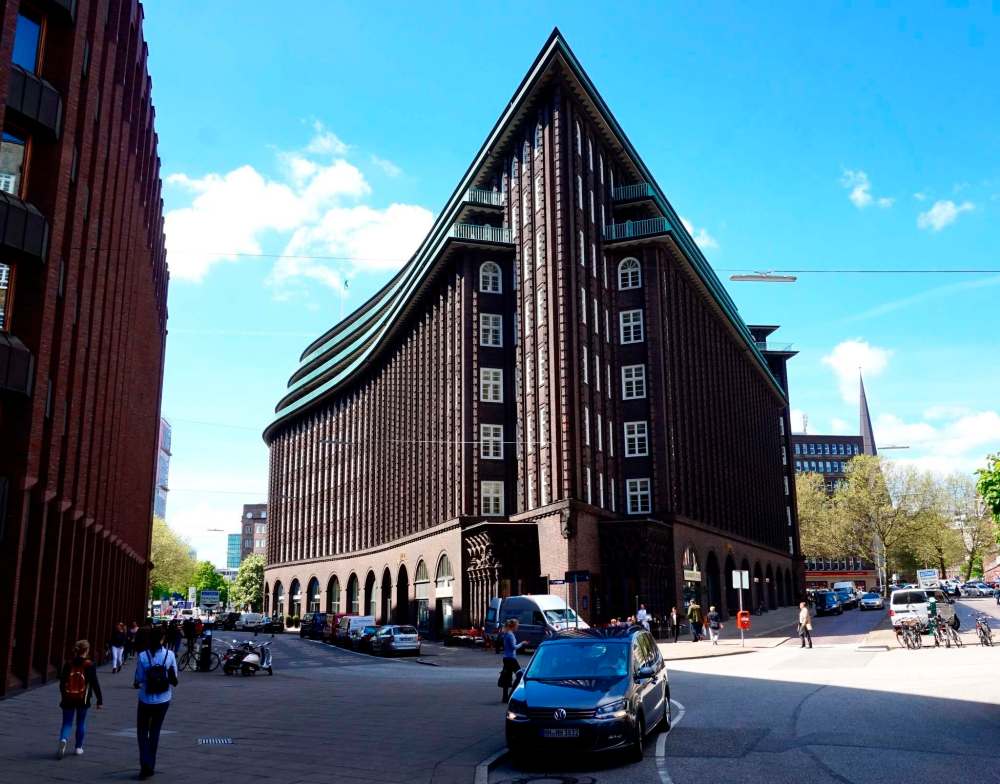
Joining such sites as the Taj Mahal and the Great Pyramids of Giza, in 2015 the Speicherstadt and Chilehaus were added to the UNESCO World Heritage List as ‘masterpieces of human creation with outstanding universal value.’
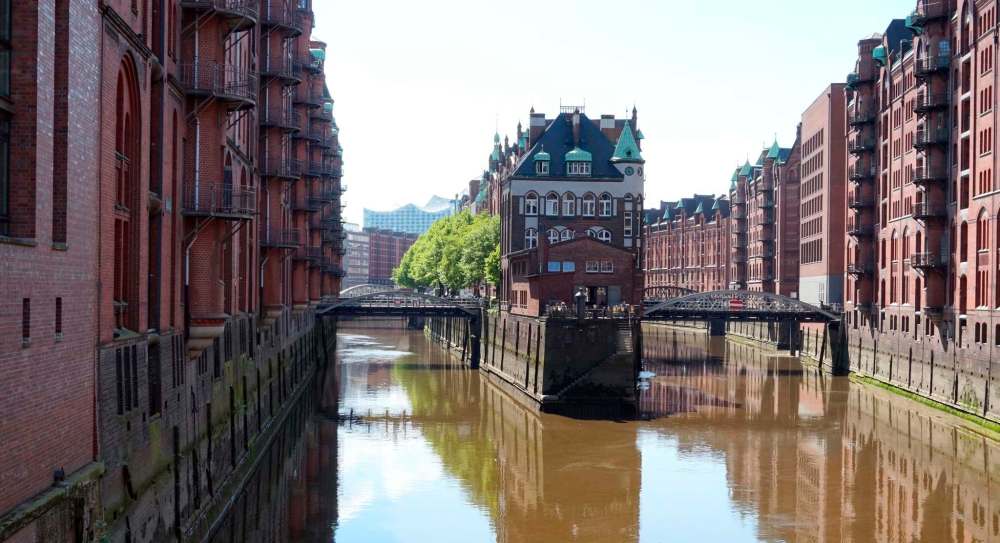
The Spiecherstadt (meaning city of warehouses) was built from 1883-1927 as a free zone to transfer goods without paying customs. Today it still warehouses goods like cocoa, coffee, spices, teas and one-third of the world’s carpet production, but it also has several museums — Miniatur Wunderland (the largest model railway in the world) and the Hamburg Dungeon, an interactive history of the city’s dark past.
Its quaint canals and tiny bridges make for a pleasant afternoon stroll. It should be noted that Hamburg in fact has approximately 2,500 bridges; more than London, Amsterdam and Venice combined and more canals than Amsterdam and Venice combined.
The Chilehaus, located across the street from the Chocoversum, is an architectural marvel. Shaped like a ship, the brick facade is dotted with over 2,800 windows.
Lange Reihe was at one time rather sketchy but today the street offers an eclectic mix of multicultural shops, restaurants, supermarkets, boutiques and bars. Having dinner at a terrific sidewalk table on the first night in town, the manager was kind enough to warn a couple of naive tourists to keep their bags on the inside. In search for the perfect dessert to end a day of walking in the city, it was found at Cafe Gnosa, known for its excellent home-made cakes.
A familiar name…
The westernmost urban borough of Hamburg on the right bank of the Elbe, Altona is known for its Fischmarkt, which has seen early birds and night owls barter over wares on Sunday mornings since the 18th century; its new docking station for cruise ships; and its bohemian and multicultural identity. Four hundred years of Jewish history and culture in Hamburg are on display at the Jewish Cemetery in Altona. In the cemetery are tombs of what was once the largest Jewish community in Germany, with unusually ornate tombs in the Sephardic section and numerous tombs of famous rabbis in the simpler Ashkenazi section, making the cemetery a strong candidate for future inclusion as a UNESCO World Heritage Site.
Part of Denmark until 1864, Altona merged with the Free and Hanseatic Ciy of Hamburg in 1938. The area is easily reached by S-Bahn and worth the trip to experience yet another side of the city.
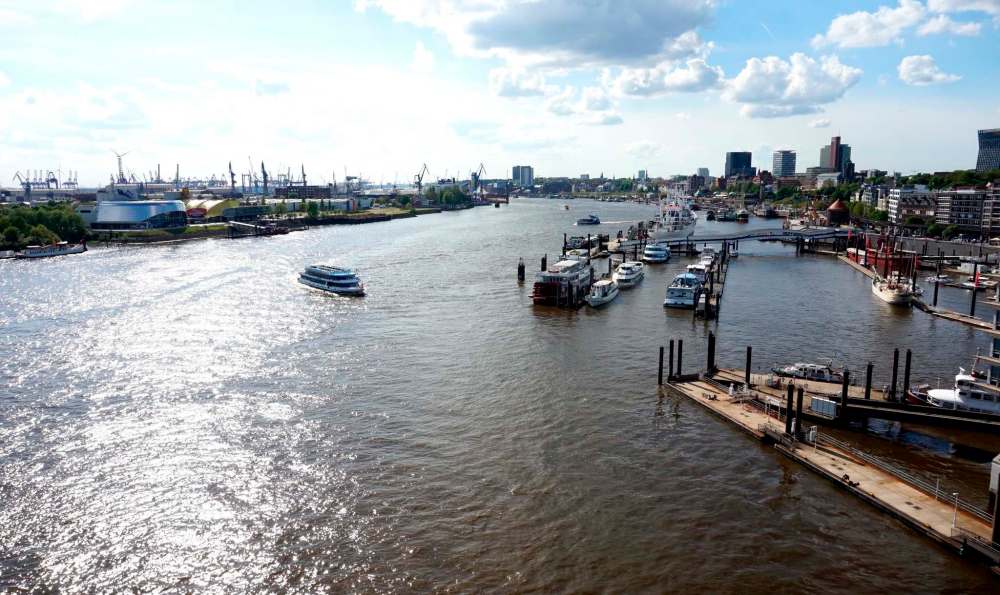
Once outside the Altona train station, stroll the streets and sample some amazing German desserts — highly recommend a streusel or two from one of the many small bakeries — and make your way to the Altonaer Balkon (Altona’s Balcony), a park terrace that provides views of large stretches of the Elbe and is one of the best spots in Hamburg to admire the ships passing through the harbour.
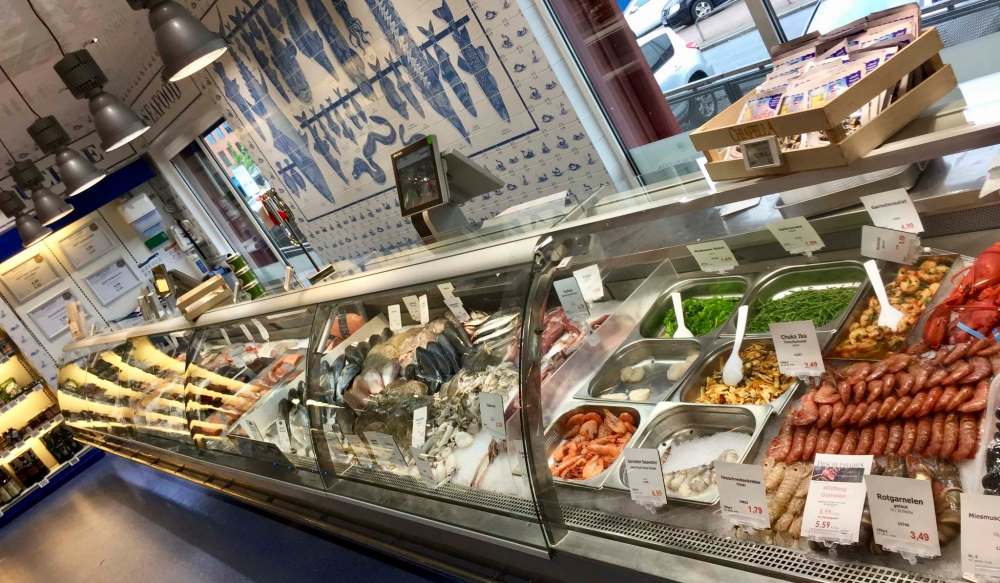
From the balcony, a path will lead you along the green link that runs parallel with the Elbe and provides a peaceful walk along the harbour, interrupted only by numerous small bistros serving up fresh fish and one of the most amazing grocery stores I’ve ever stumbled on — Frische Paradies, where restauranteurs and private customers can find over 12,000 delicacies from more than 70 countries. A cosy little wraparound counter will serve up one of the freshest lunches you’ll ever enjoy.
Not surprisingly this gem is tucked away on a warehouse-like street along the docks of the Elbe. In Hamburg, where else would it be.
steve.lyons@freepress.mb.ca