

Life on the line during the Second World War
Advertisement
Read this article for free:
or
Already have an account? Log in here »
To continue reading, please subscribe:
Digital Subscription
One year of digital access for only $1.44 a week*
- Enjoy unlimited reading on winnipegfreepress.com
- Read the E-Edition, our digital replica newspaper
- Access News Break, our award-winning app
- Play interactive puzzles
*Billed as $5.77 plus GST every four weeks. After 52 weeks, price increases to the regular rate of $19.95 plus GST every four weeks. Offer available to new and qualified returning subscribers only. Cancel any time.
To continue reading, please subscribe:
Add Free Press access to your Brandon Sun subscription for only an additional
$1 for the first 4 weeks*
- Enjoy unlimited reading on winnipegfreepress.com
- Read the E-Edition, our digital replica newspaper
- Access News Break, our award-winning app
- Play interactive puzzles
*Your next Brandon Sun subscription payment will increase by $1.00 and you will be charged $17.95 plus GST for four weeks. After four weeks, your payment will increase to $24.95 plus GST every four weeks.
Read unlimited articles for free today:
or
Already have an account? Log in here »
Hey there, time traveller!
This article was published 10/11/2017 (3131 days ago), so information in it may no longer be current.
As the end of 1944 approached, the Allies in Europe were making significant advances on the Nazi armies and victory seemed imminent.
But for Lewis Gallant, from the small town of Angusville in western Manitoba, the war was only about to begin.
He was on his way overseas for training as a private in the Lake Superior Regiment.
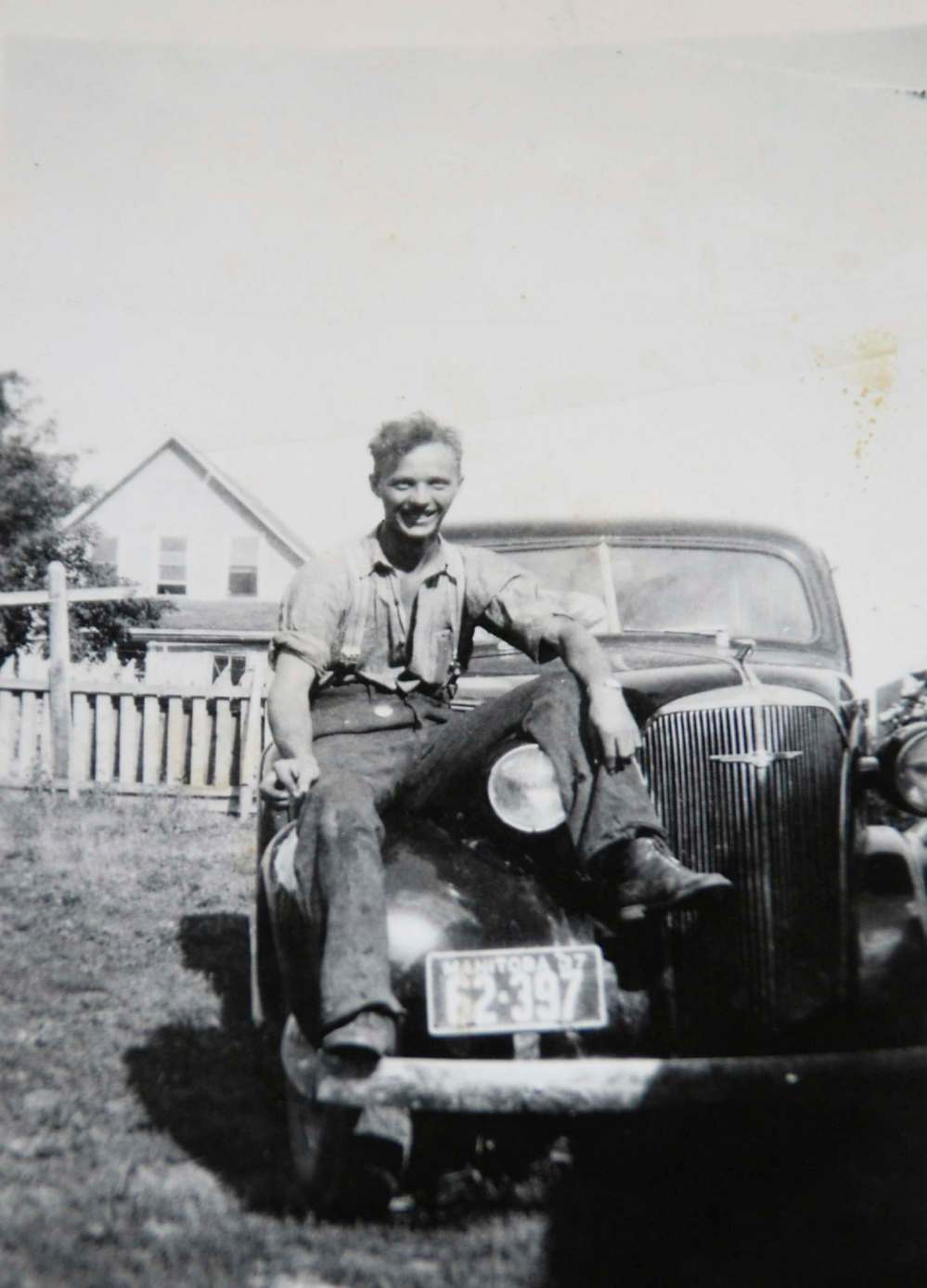
Newly married, he vowed to keep writing regularly to his parents and younger sister, as well as his new wife.
Gallant was my uncle and I now have most of those letters. They represent some of my most treasured possessions. I have shared them with my children and more recently my grandchildren.
His words have helped give them an understanding of what most soldiers went through during those years. And a poignant appreciation for the impact on their families in the aftermath of war.
Excerpts from those letters, which I share with you today, cast a light upon the difficult days of training, and the emotions the soldiers went through, even as the conclusion of the war drew closer.
Near the end of November of 1944, Pte. Gallant wrote about his first health assessment: “We had a medical by 20 doctors and they went through 70 of us in about ¾ hour. I told them about my side and they never even looked at it. Just like they never heard me. All they did was look in my mouth and hind end and say, you may go. I bet a horse doctor knows more than they do.”
While training in Scotland in January of 1945 he described the food situation in his facility and the country in general: “When we were walking down the street the kids came running asking us for candies and gum. I guess it’s a long time since they were able to buy any.” And later, “I sure hate the food here… and a person can’t get a meal downtown because you have to have coupons to get food. I guess I will lose lots of weight.”
On Jan. 19, 1945 he described his sleeping conditions: “Well, I never slept on a straw mattress before, but I sure am now. And wooden homemade beds. By morning I feel every bone in my body sore as heck. And another thing, they are too short for me.”
He asked about his newborn nephew, and closed on a positive note, “Please don’t worry for everything will be OK and I will get home soon.”
In February, in the cold of winter, he volunteered to give blood: “Wednesday morning I donated some blood to the Red Cross. At the end when she took out the needle, my blood wouldn’t stop. She had to bandage my arm. After noon we went on parade and my knees were very weak. But I stayed on parade and just about fainted, as everything was getting dark in my eyes and I could hardly speak… but I felt better the next day.”
On March 4 his letter home again closed on a hopeful note: “Well the news is getting better again. I only hope they finish this darn thing before I have to go over on the other side, (meaning the front lines) and I sure mean it… my shoulders feel sore today so I guess I will have to get some more straw in my good old mattress… I always think of my nice white bed. When I get home I will stay in it for about a whole week.”
He often wrote about how much he liked the people of Scotland. He frequently came back to the pain in his side that seemed to bother him continually. And in so many of his letters he expressed concern about other people in his hometown community, his uncles, brother-in-law — and mostly his mother, who was suffering from her own health issues.
But loneliness, and a desire to return home, was clearly on his mind a lot when he wrote many of these letters.
Victory may have been close at hand, but the soldiers on the battlefields were not always so certain. His letter from the front lines in Germany at the end of March reinforced that: “I sure would like to be home now. But that day will come around soon. Yet hard to say when. I hope it’s at least by Christmas, and that’s too darn long to suit me anyway. But I think it will be before then.”
My uncle, Pte. Gallant, did not return home.
On April 9, 1945, only 25 days before troops began leaving Europe to return home victoriously, he was killed in a skirmish in Sögel, Germany.
The only other soldier from the regiment lost that day was another Manitoban, private John MacDougall.
They were interred in a makeshift cemetery in Sögel until after the war, when their bodies were repatriated. They are buried beside one another in the Canadian War Cemetery in Holten, Holland.
He and those thousands of others who died in battle, before and after him, fought to protect freedoms we take for granted. They cannot be forgotten.
Tomorrow, please stop and think about these heroes — and offer a silent prayer of thanks for what they have sacrificed, so we can have what we have today.
Read Ron’s blog thattravelguy.ca. Listen to Ron’s latest podcasts via his website, or on demand on iTunes.
pradinukr@shaw.ca