

Rebuilt city of Arras is awash in history
French community makes an excellent accommodation for those visiting Vimy Ridge
Advertisement
Read this article for free:
or
Already have an account? Log in here »
To continue reading, please subscribe:

Digital Subscription
One year of digital access for only $205*
- Enjoy unlimited reading on winnipegfreepress.com
- Read the E-Edition, our digital replica newspaper
- Access News Break, our award-winning app
- Play interactive puzzles
*First annual payment billed as $205.00 + GST for one year. This annual subscription will automatically renew at $233.00 + GST every 52 weeks (10% off the regular annual price of $259.35). Offer available to new and qualified returning subscribers only. Cancel any time.
To continue reading, please subscribe:
Add Free Press access to your Brandon Sun subscription for only an additional
$1 for the first 4 weeks*
- Enjoy unlimited reading on winnipegfreepress.com
- Read the E-Edition, our digital replica newspaper
- Access News Break, our award-winning app
- Play interactive puzzles
*Your next Brandon Sun subscription payment will increase by $1.00 and you will be charged $17.95 plus GST for four weeks. After four weeks, your payment will increase to $24.95 plus GST every four weeks.
Read unlimited articles for free today:
or
Already have an account? Log in here »
Hey there, time traveller!
This article was published 25/11/2017 (3183 days ago), so information in it may no longer be current.
My first impression of Arras, France, was that, with its old buildings and large squares, it was a lovely, typically French community situated in Northern France along what was the Western Front in the First World War.
Like cities in other areas of France and Europe, its personality was defined by the historic buildings in the centre of the original city, likely protected by city bylaws keeping developers from erecting large office towers and apartment buildings. Beautiful, but not entirely unique in Europe.
It was only when I learned that by the end of The Great War, as it is called, Arras had been reduced nearly to rubble, with more than 70 per cent of its buildings destroyed by bombs in that four-year period.
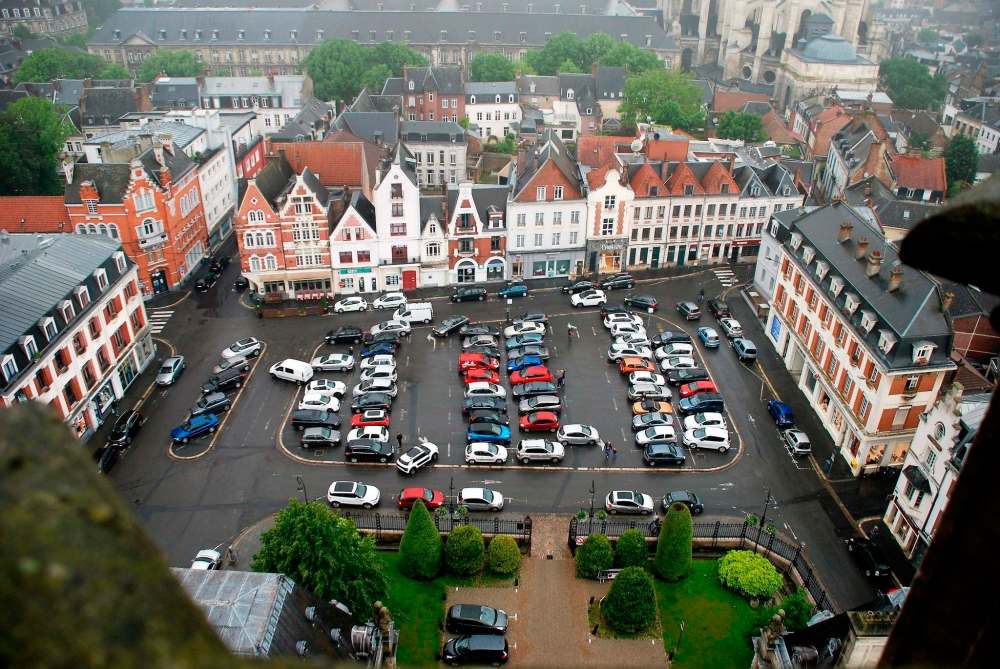
After the war, with so little left, the French government had a major decision to make. Recognize what happened was now the past and move forward developing a new community as best as it could to the modern standards of the day or, at great cost, recreate what the city had been before it was systematically bombarded.
They chose the latter and, in doing so, created a tourist destination that is the pride of that Northern France region.
Arras is situated only 11 kilometres from Vimy Ridge, where Canadian troops gained heroic recognition for their bravery and victory in the famous battle that started on April 9, 1917, which in the end defined Canada as a nation free from the imperial rule of Britain.
But Vimy was part of a larger offensive known as the Battle of Arras. It was mostly British troops who began their offensive on that same day.
While the Canadian troops would win their part of the battle in only a few days, the larger offensive was not so successful. It ended in a stalemate, and resulted in 158,000 British casualties and 130,000 German casualties.
It would take more time to end the war and end the onslaught on Europe. It was this history of which I was unaware when I began my tour of this truly interesting city.
It might seem strange to start a tour of a destination at city hall, but it is here where I really came to appreciate both the impact of that First World War and the resilience that people can have after a calamity of war such as what befell Arras.
The original town hall was a Gothic structure built between 1463 and 1554 which, along with its stately bell tower, were almost completely destroyed. Upon entering city hall, we are greeted by the now famous Giants of Arras.
Based on a tradition of the past, these caricatures stand at least five metres high. Mom and dad, Colas and Jacqueline, along with baby Dede and others consistently draw smiles from visitors as they enter.
But it is more than welcoming giant dolls that make this a UNESCO world heritage site. Visitors can now take a small lift and then walk up about 30 steps to the top of the rebuilt belfry 75 metres up, and then look down upon the Place des Héros, as well as capture the dynamic views of the surrounding countryside.
These above ground views are indeed worth seeing, but what is below the surface of City Hall, as well as much of the rest of Arras, that holds more impactful surprises in the series of tunnels below ground.
Since the 17th century, local residents were building quarries by digging down into the limestone chalk, which forms the foundation of much of the surrounding region.
During the First World War, professional engineers were brought to the front line to connect these quarries into a series of tunnels, running approximately 20 km around the area including Vimy Ridge.
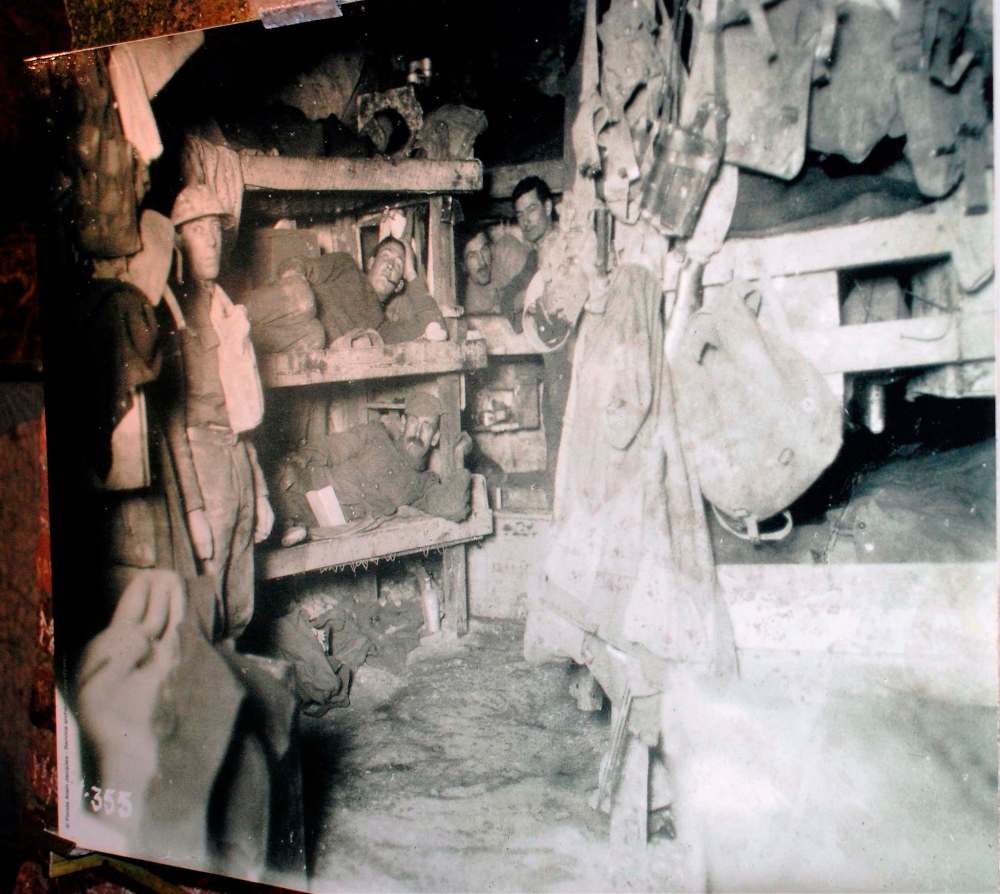
British soldiers, as well as those from other allied nations, would hide in these tunnels preparing for an offensive against the German enemy of the day. Nearer to Vimy they would be the temporary home our Canadian regiment as well.
It was not until 2008 that these tunnels were opened to the public as part of an underground museum. The Wellington Quarry tours guide visitors through a series of these tunnels demonstrating how difficult the living conditions were, as thousands of soldiers waited days and weeks for the signal to emerge from the near dark, and fight the enemy whose power seemed overwhelming at the time.
Graffiti on the walls, and remainders of cans of food and coffee tins are what are left as signs that men once lived there. The guides do an exceptional job of bring the history of the First World War to life, leaving an indelible impression on those of us on the tour.
Today, Arras is a modern city.
While its Vauban Citadel, built in the 17th Century is also a UNESCO world heritage site, it is its art district and dining and entertainment that balance the past with the present.
In addition to the Place des Héros, La Grand Place is the other square whose openness and easy access to shops and restaurants attract locals and visitors to gather.
More than 20,000 Canadians are reported to have been present for the centenary commemorations of the Battle of Vimy Ridge. Until the end of next year, there will still be many other similar ceremonies taking place in the front-line locations of other battles and war cemeteries in the area.
For Canadians who may be travelling in the near of distant future to visit Vimy Ridge, the accommodations in Arras with its near proximity to Vimy make it an excellent base for travelling to it, as well as the other sites of the region.
And Arras is a city well worth exploring as a destination on its own.
If you go:
In Arras, I stayed at the L’Hotel de l’Univers. It was a former Jesuit monastery of the 17th century. It was an interesting place with close access to the restaurants and shopping areas in the city.
I flew there and back on Air France, which offers non-stop flights to France from Toronto and Montreal.
If you wish to go on a Remembrance tour, contact the Northern France Regional Tourist board at northernfrance-tourism.com . For broader travel information about France contact Atout-France at ca.france.fr.
Read Ron’s blog at thattravelguy.ca. Listen to Ron’s latest podcasts via his website, or on demand on iTunes.
pradinukr@shaw.ca