

Castle stay one of many highlights of Ireland visit
Country features rich culture, culinary treats and other pleasant surprises
Advertisement
Read this article for free:
or
Already have an account? Log in here »
To continue reading, please subscribe:

Digital Subscription
One year of digital access for only $205*
- Enjoy unlimited reading on winnipegfreepress.com
- Read the E-Edition, our digital replica newspaper
- Access News Break, our award-winning app
- Play interactive puzzles
*First annual payment billed as $205.00 + GST for one year. This annual subscription will automatically renew at $233.00 + GST every 52 weeks (10% off the regular annual price of $259.35). Offer available to new and qualified returning subscribers only. Cancel any time.
To continue reading, please subscribe:
Add Free Press access to your Brandon Sun subscription for only an additional
$1 for the first 4 weeks*
- Enjoy unlimited reading on winnipegfreepress.com
- Read the E-Edition, our digital replica newspaper
- Access News Break, our award-winning app
- Play interactive puzzles
*Your next Brandon Sun subscription payment will increase by $1.00 and you will be charged $17.95 plus GST for four weeks. After four weeks, your payment will increase to $24.95 plus GST every four weeks.
Read unlimited articles for free today:
or
Already have an account? Log in here »
Hey there, time traveller!
This article was published 19/05/2018 (3045 days ago), so information in it may no longer be current.
The idea of staying in a castle has always interested me — especially if it has some unique stories tied to its history.
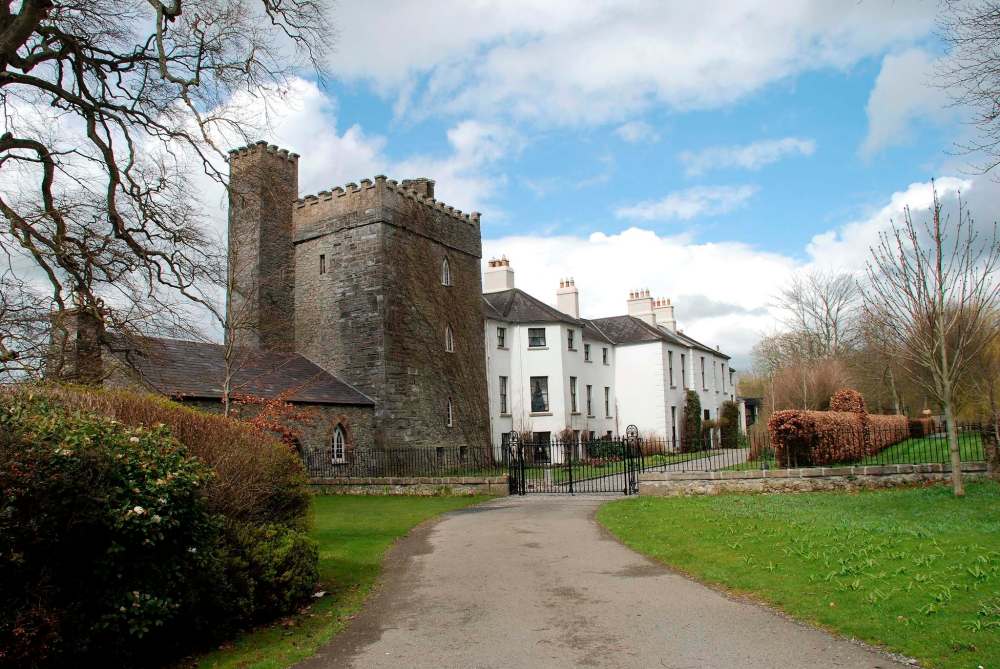
I enjoyed such an opportunity on my recent visit to Ireland, staying at the Barberstown Castle in Kildare, just 60 kilometres from Dublin.
Built in 1288, it has been home to some of Ireland’s foremost families over the centuries. More recently, it was owned by singer Eric Clapton, who used it more as a gathering centre for jam sessions with friends than a hotel.
Ken Healy, who purchased the property from Clapton, said, “Most of the great and the good of the rock music world have stayed here. You could walk in the bar and find Bob Dylan strumming with somebody like George Harrison. Most of the Rolling Stones stayed here at that time, and have subsequently returned.”
Constructed in 1832, the Victorian-style Straffan House is only a few kilometres away. Patterned after a French chateau at Louveciennes, close to Versailles in France, it is now a luxury hotel attached to the K Club golf course, home of the 2006 Ryder Cup.
While the course had its own degree of difficulty, we were defeated after the ninth hole by one of the realities of an early spring visit to Ireland. There is one major reason why the grass in Ireland is truly greener than anywhere else. The rain drove us into the hotel for an early lunch, which proved to be a very satisfactory consolation prize.
If the Irish are known for anything, it is their love of Guinness beer and Irish whiskey. Tours of the original Kilbeggan Distillery and Guinness Storehouse are well worth taking. The Guinness museum tells the story of how it became the brewing powerhouse it is, and provides a truly educational experience on the beer-making process. The section showing the evolution of its advertising over the decades is particularly illuminating, as we can see through the ads how values changed from one generation to the next. We also learned the correct way to fill a glass of Guinness, but no instruction was required on how to drink it.
While dining in our Barberstown Castle was always a culinary treat, most days, when we weren’t touring, were spent in Dublin.
Like most of Ireland, the pubs and restaurants in Dublin serve excellent meals and music seems to follow the Irish no matter where they go.
Not to be passed up is a stop at the most photographed pub in Dublin, the landmark Doheny & Nesbitt. On Baggot Street — close to the House of Parliament, Trinity College and Stephen’s Green, the largest city square in Europe — the public house is a protected example of a traditional Victorian pub with the original features kept intact. The fish-and-chip portions are huge, and the manager, Joe Prizeman, has a way of teasing and cajoling guests in a manner that keeps them laughing.
Dublin may be one of the best cities in the world for fun and frolic, but it is also a city rich in culture. Created around AD 800, the Book of Kells — Latin manuscripts which contain the four gospels of the New Testament — are housed in the Trinity College Library. Described as one of the most complex examples of western calligraphy, this masterwork is held up as one of Ireland’s most cherished national treasures.
Ireland has also produced some of the world’s most prominent authors, whose works and other collections can be seen on display at the Dublin Writers Museum. Learn more about Jonathan Swift, who, in addition to penning Gulliver’s Travels, championed Irish independence from British rule. Or Oscar Wilde, whose 1890 novel The Picture of Dorian Gray was one of the first to feature an implicitly homosexual central character. The poetry of W.B. Yeats and James Joyce’s Ulysses would become standards in literature education classes around the world. Lady Sydney Morgan would become one of the first overtly feminist writers.
Dublin is also an excellent city to wander around in. It is clean, neat and full of surprises. On my first day in Dublin, I took the “Hop on Hop off” bus. From cathedrals to interesting architectural structures, modern shopping streets and the scenic beauty along the River Liffey, walking about presents a kaleidoscope of change and photographic opportunities.
Closer to our accommodations at Barberstown Castle, we would join a tour of the Castletown House. As described by our guide, “it is Ireland’s first and largest Palladium-style home, and most important structure in Ireland’s architectural heritage.” Built between 1722 and 1729 by William Conolly, then Speaker of the Irish House of Commons, Castletown features a collections of paintings, furnishings and objects on the inside that may be as impressive as its architecture.
The parklands around Castletown, with its extensive series of pathways, have become a recreational centre for those living nearby, especially dog owners who have found a perfect place to exercise with their pets.
For visitors, it offers peaceful areas to relax — an inviting place to spend the better part of the day after a tour of the house.
If you would like to follow my Voices of Travel podcasts, you can subscribe to them on iTunes or Google Play.
pradinukr@shaw.ca