

Freshwater drum can be tough to snare
Hard to describe fight big fish puts out
Advertisement
Read this article for free:
or
Already have an account? Log in here »
To continue reading, please subscribe:

Digital Subscription
One year of digital access for only $205*
- Enjoy unlimited reading on winnipegfreepress.com
- Read the E-Edition, our digital replica newspaper
- Access News Break, our award-winning app
- Play interactive puzzles
*First annual payment billed as $205.00 + GST for one year. This annual subscription will automatically renew at $233.00 + GST every 52 weeks (10% off the regular annual price of $259.35). Offer available to new and qualified returning subscribers only. Cancel any time.
To continue reading, please subscribe:
Add Free Press access to your Brandon Sun subscription for only an additional
$1 for the first 4 weeks*
- Enjoy unlimited reading on winnipegfreepress.com
- Read the E-Edition, our digital replica newspaper
- Access News Break, our award-winning app
- Play interactive puzzles
*Your next Brandon Sun subscription payment will increase by $1.00 and you will be charged $17.95 plus GST for four weeks. After four weeks, your payment will increase to $24.95 plus GST every four weeks.
Read unlimited articles for free today:
or
Already have an account? Log in here »
Hey there, time traveller!
This article was published 14/07/2018 (2986 days ago), so information in it may no longer be current.
In the last few years, freshwater drum have really captured the imagination of anglers in this part of the world. One of the reasons might be a rise in the number of fish in our lakes and rivers, along with an increase in overall size of the fish caught.
If you have never caught a large drum, it’s hard to describe the fight that these fish put out. When I caught an absolute monster drum two years ago, it gave me all the battle I could handle on a level wind reel, long rod and stout line. Never mind that it took two guys on the net to get it in the boat. Since that day on Lake Manitoba, I have become fascinated by these fish — and I’m not alone. Hooked contributor Josh Wood spends a lot of angling time each year targeting big freshwater drum. While Josh and his friends have caught their share of trophy fish that they have released, Josh also happens to be an excellent cook and he counts drum as some of the best table fare in Manitoba.
Josh relates that many his friends prefer this species over walleye at the dinner table. Sacrilege, you say! Not so, Josh says.
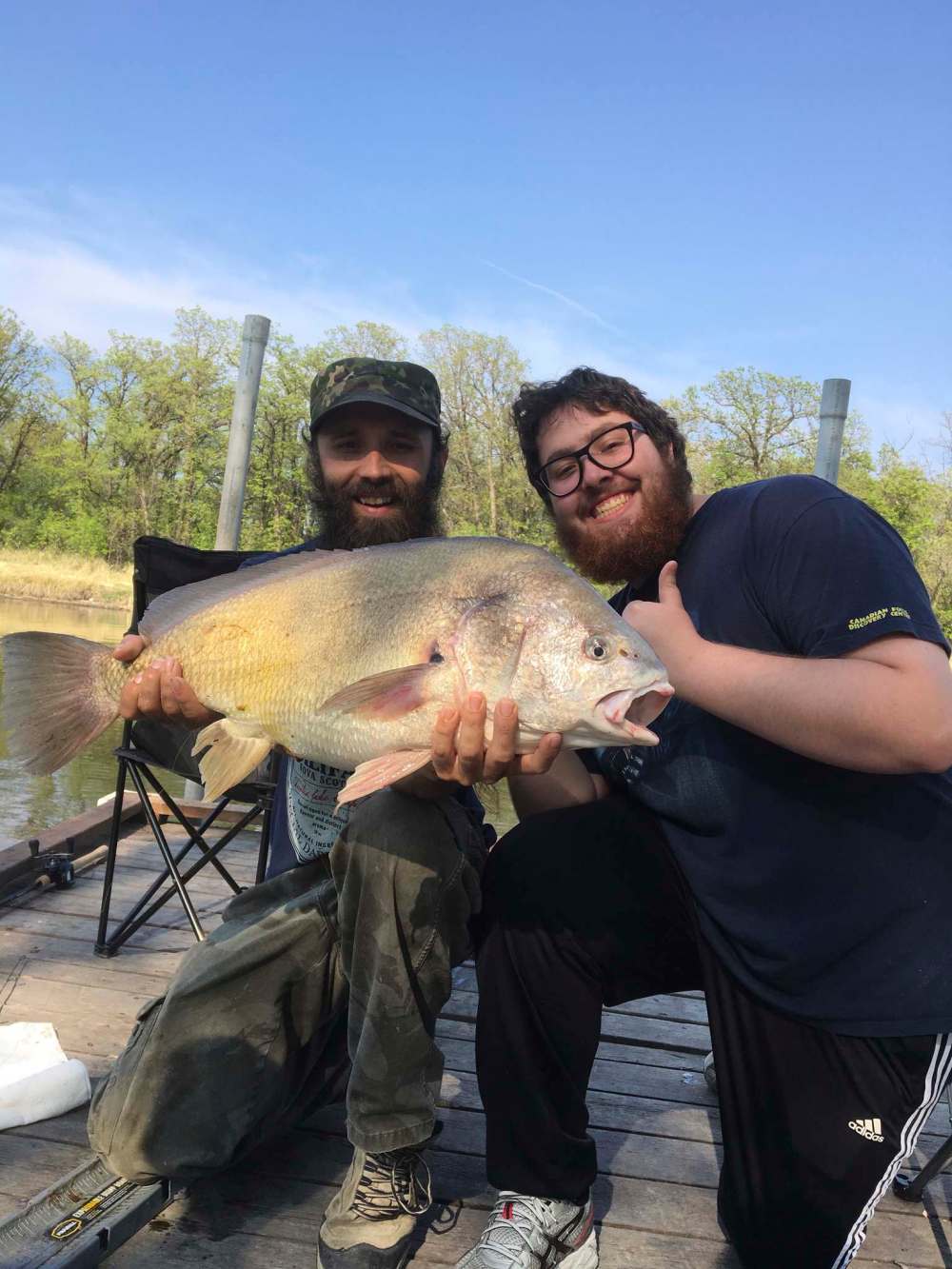
He does have a few important tips to remember when cleaning them for the table though. Josh says the quality of flesh greatly improves if the fish is bled out and put on ice as soon as possible. He also makes sure not keep any of the red meat on the flesh, leaving the belly meat on the skin for sure.
He likes drum smoked, treating it like candied or barbecued salmon with great success. Filleted and beer battered it’s great fried, and as mentioned, most of his friends prefer it over walleye! His favourite way to prepare, though, is by boiling it in good Icelandic tradition.
He puts the water on a low boil and cuts the flesh into one-inch squares. He will cook for about five to six minutes and serve with a butter garlic sauce along with some thin pasta. He will also make up jambalaya with it and a seafood chowder.
FEATURES OF A DRUM
One of the unique features of drum is the ear bone called otolith. They can get very large and have a unique L-shape. Many people harvesting drum will cut out these otoliths and keep them as a “lucky” stone. It’s not recommended to keep larger drum, as these fish tend to be quite old, though there is a bit of research lacking on just how old they can get. Some fish have been reported to live up to 100 years of age. As I have written about in previous articles, freshwater drum also crunch on Zebra Mussels, which is another reason to let those bigger fish go.
SPAWNING SEASON
Drum start getting serious about the spawn in June, but that extends well into July in this part of the world. I can remember vividly to this day, hearing these fish make the unique drumming sound that gives them their name. This sound is produced on purpose, as the fish contract strong muscles on the sides of their air bladder. This occurred one night on the Red River while fishing for catfish. It was like a low hum of distant traffic on a freeway.
Drum lay their eggs in open water and they drift freely, hatching in about 30 hours in water that is at least 21 C. Young drum grow quickly and can reach 13 centimetres in their first year. After that, things slow down a bit and it can be five years before they reach 30 centimetres in length, and 10 years to get to 44 centimetres.
While small drum are limited in their food sources, once the drum gets up in size, they feed heavily on minnows, insects, crayfish — just about anything a walleye might eat.
Many anglers who fish for big drum will hook on crayfish or a nightcrawler or gob on some salted shiners. I prefer trolling small crankbaits for them, and my monster drum was caught on a #5 Berkley Flicker Shad in the natural minnow colour.
If you really want to get serious when you find a school of large drum, you can anchor up and pitch jigs and bait to them. Your arms might get tired after a while, though!
Give drum a try as table fare this summer, making sure you follow all the steps of correct preparation. I don’t think you will be disappointed.
Angler’s Notes: Jeff Gustafson has been fishing Lake of the Woods, and specifically Shoal Lake, since he was 10 years old. That experience paid off last weekend, as he and his partner won the Shoal Lake Bass Invitational. Gustafson says they just ground it out by fishing a lot of spots he had found over the years. “The first day we took advantage of the wind and fished in it, the second day we lost the wind and had to fish in the weeds. It worked out.”
Gustafson and his partner caught the largemouth and smallmouth on a variety of baits, including topwater, chatterbaits, hair jigs and jerkbaits like the new Jackall Rerange 110 in RT Minnow.
dlamont46@gmail.com