

Archaeologists discover ancient mummies south of Cairo
Advertisement
Read this article for free:
or
Already have an account? Log in here »
To continue reading, please subscribe:
Monthly Digital Subscription
$0 for the first 4 weeks*
- Enjoy unlimited reading on winnipegfreepress.com
- Read the E-Edition, our digital replica newspaper
- Access News Break, our award-winning app
- Play interactive puzzles
*No charge for 4 weeks then price increases to the regular rate of $19.95 plus GST every four weeks. Offer available to new and qualified returning subscribers only. Cancel any time.
Monthly Digital Subscription
$4.99/week*
- Enjoy unlimited reading on winnipegfreepress.com
- Read the E-Edition, our digital replica newspaper
- Access News Break, our award-winning app
- Play interactive puzzles
*Billed as $19.95 plus GST every four weeks. Cancel any time.
To continue reading, please subscribe:
Add Free Press access to your Brandon Sun subscription for only an additional
$1 for the first 4 weeks*
*Your next subscription payment will increase by $1.00 and you will be charged $16.99 plus GST for four weeks. After four weeks, your payment will increase to $23.99 plus GST every four weeks.
Read unlimited articles for free today:
or
Already have an account? Log in here »
Hey there, time traveller!
This article was published 28/11/2018 (2593 days ago), so information in it may no longer be current.
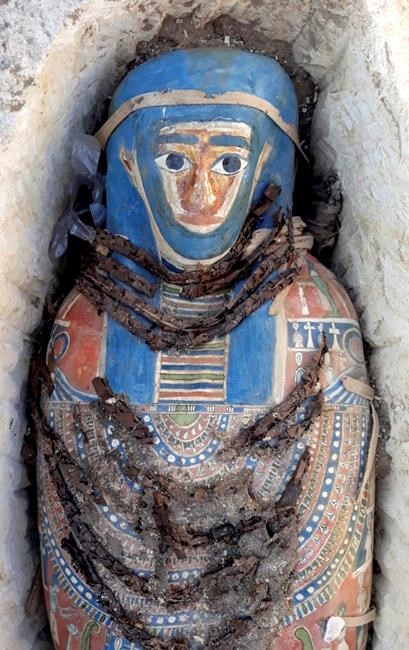
CAIRO – Egypt says archaeologists have discovered eight limestone sarcophagi with mummies inside about 25 miles (40 kilometres) south of the capital Cairo.
The Antiquities Ministry said the mummies dating to the Late Period (664-332 B.C.) are covered with a layer of painted material called cartonnage in the form of a human.
The ministry said late Tuesday that the mummies were found in an area of King Amenemhat II’s pyramid in the Dahshur royal necropolis. The necropolis was the burial site for courtiers and high-ranking officials.
The area is home to what is considered to be some of the earliest pyramids, including Sneferu’s Bent Pyramid and the Red Pyramid.
Egypt hopes such discoveries will spur tourism, which is partially driven by antiquities sightseeing that was hit hard by political turmoil following the 2011 uprising.