

Isle be back
Hecla, and nearby Black Island, combine for a Manitoba getaway you’ll want to return to
Advertisement
Read this article for free:
or
Already have an account? Log in here »
To continue reading, please subscribe:

Digital Subscription
One year of digital access for only $205*
- Enjoy unlimited reading on winnipegfreepress.com
- Read the E-Edition, our digital replica newspaper
- Access News Break, our award-winning app
- Play interactive puzzles
*First annual payment billed as $205.00 + GST for one year. This annual subscription will automatically renew at $233.00 + GST every 52 weeks (10% off the regular annual price of $259.35). Offer available to new and qualified returning subscribers only. Cancel any time.
To continue reading, please subscribe:
Add Free Press access to your Brandon Sun subscription for only an additional
$1 for the first 4 weeks*
- Enjoy unlimited reading on winnipegfreepress.com
- Read the E-Edition, our digital replica newspaper
- Access News Break, our award-winning app
- Play interactive puzzles
*Your next Brandon Sun subscription payment will increase by $1.00 and you will be charged $17.95 plus GST for four weeks. After four weeks, your payment will increase to $24.95 plus GST every four weeks.
Read unlimited articles for free today:
or
Already have an account? Log in here »
Hey there, time traveller!
This article was published 20/08/2022 (1507 days ago), so information in it may no longer be current.
HECLA/GRINDSTONE PROVINCIAL PARK — There’s a feeling of mystery as you peer east from the western shorelines of Hecla Island. The land mass across the two-kilometre strait creates a sense of wonderment. What’s out there?
Approximately 125 square kilometres in size, Black Island is one of the largest islands in Lake Winnipeg and is part of a series of islands between the east and west shores in the uppermost part of the lake’s lower basin.
While currently uninhabited, it has a long history of human exploration.
As far back as 1739, La Vérendrye sent his youngest son to investigate a deposit of hematite or red iron located at Red Rock, on the southeast shore of Black Island.
PHOTOS BY STEVE LYONS / WINNIPEG FREE PRESS The beaches on Hecla Island are among some of the province’s best.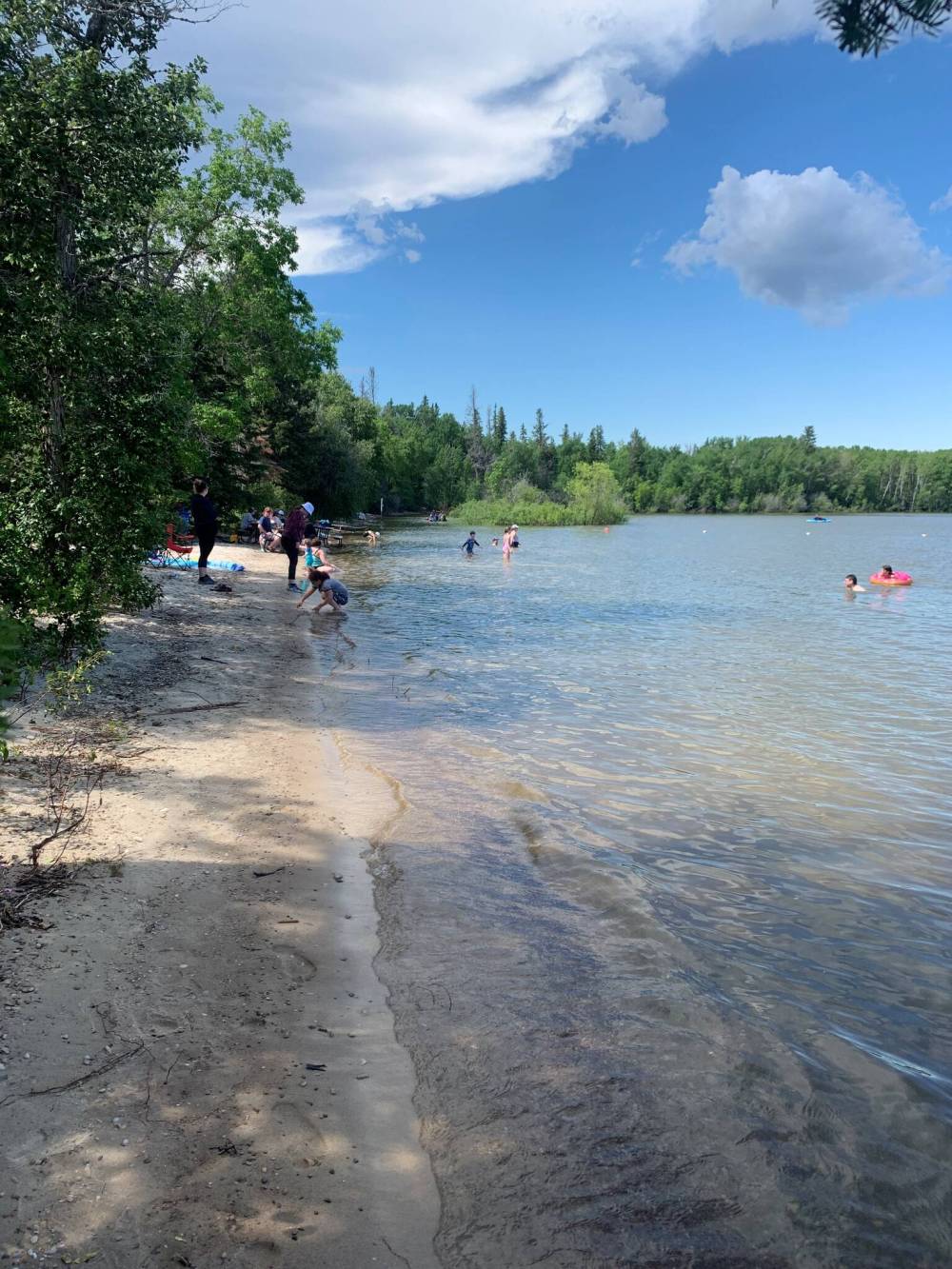
Early inhabitants of the island were the Anishinaabe and it remains an important ceremonial site to the people of Hollow Water First Nation.
For several decades — from the 1920s to the 1990s — Selkirk Silica had a mining operation to extract the silica sand from Black Island and process it in Selkirk for the glass industry. Sandstones of the Ordovician Winnipeg Formation at Black Island are about 454 million to 458 million years old.
The red pine population on Black Island is the most northerly and westerly occurrence of the species in North America. Forestry operations were carried out for a number of years prior to the creation of the provincial park in 1969 — and while extensive areas of the island were cut over and are now covered in new growth, some existing trees are reported to be at least 150 years old.
Its explorers on this particular sunny July day in 2022 are a small group of visitors from Winnipeg, who have been treated to a four-hour boat tour from Gull Harbour Marina that includes about a 90-minute trek around the island — mostly the area that used to be the site of the mine.
It’s an otherworldly experience with a deserted-island feel to it: “It’s like you’re on Mars,” says our captain and guide, Gull Harbour general manager Andrew Meyer.
Your tour of Black Island begins here, at Gull Harbour Marina.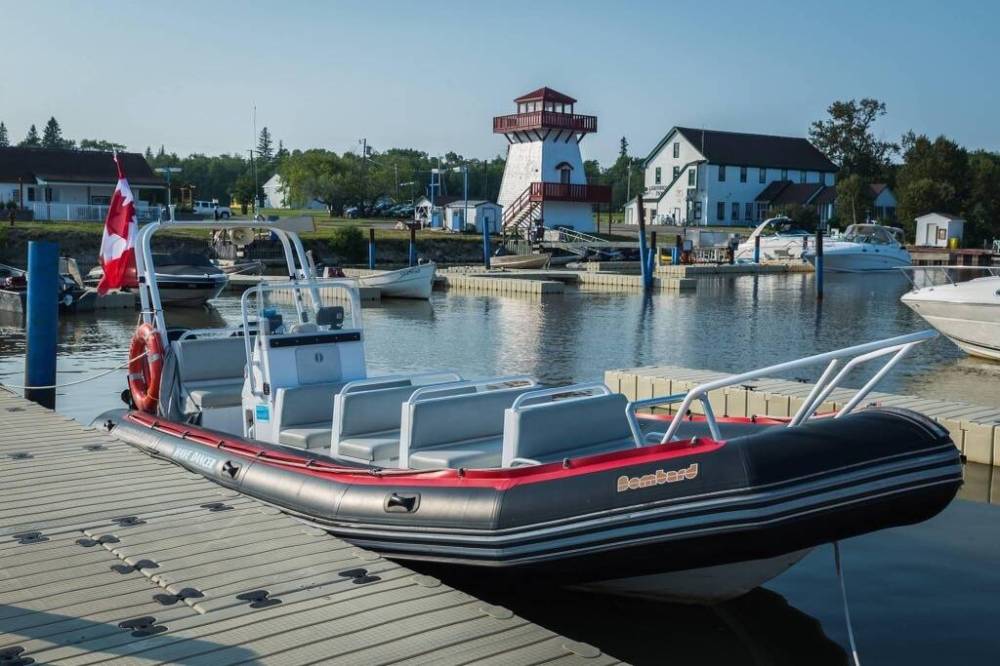
Our stroll has us traverse a number of streams and ponds. The fauna and flora are abundant and unique. The birds are easily heard in the incredible quiet — and Andrew takes us to a spot that has a number of small waterfalls spilling down over the exposed sandstone. The island is covered by coniferous and mixed forests, dominated by white spruce, black spruce, trembling aspen and jack pine.
“I just love it here. I’m enthralled by it,” Meyer says of Black Island. “You see something different every time you visit. It never gets dull.”
At one point in the hike, we spot a small fox, who ducks into a culvert to hide from us interlopers. There are also moose, bears and beavers on the island, and someone later told me that on their visit to the island they spotted wolf tracks.
Meyer is an accomplished boatman: he’s sailed from Rhode Island to Florida; from Lake Superior to Nova Scotia; from Gimli to George Island in Lake Winnipeg’s upper basin.
He’s also worked many years in the service industry and about a year ago was recruited by the new owners of Gull Harbour to be the GM. Originally from southern Ontario, he now makes his home in Winnipeg Beach and says there’s nothing quite like the waters of our grand inland sea.
“If you really want an adventure and to get away from people, Lake Winnipeg is the place to come to,” he says.
Capt. Andrew Meyer leads your tour to Black Island, with many nautical miles of experience under his belt.
After many years of visiting Hecla with scouting trips and then acquiring a cottage on the north shore of the island, David and Lori Janeson purchased Gull Harbour Marina in 2016 from longtime owner Marvin Benson and embarked on a major renovation that was mostly completed in 2019.
Notable in the upgrades is the Lighthouse Inn restaurant, which has a terrific menu and is run impeccably by locals Brayden Picard and his wife Gabriela Gruenke. The seafood chowder, made with local pickerel and smoked goldeye, followed by the fish tacos, is a sure bet for lunch or dinner — and be sure to upgrade to the onion rings; they are truly the best I’ve ever had.
The indoor dining area has floor-to-ceiling screened windows and there is adjoining outdoor deck; both provide spectacular views of the lake.
The resort’s accommodations have been modernized but yet retain a rustic feel. They also have great decks with that same amazing view.
And before you eat and sleep, the Janesons are offering a growing menu of warm- and cold-weather activities, inviting people to get away from the city and appreciate the beauty and harmony of nature.
Having had some success in the online pharmacy business, they are now committed to their investment in Hecla Island.
The deck at the Lighthouse Inn restaurant is a delightful location for an evening meal.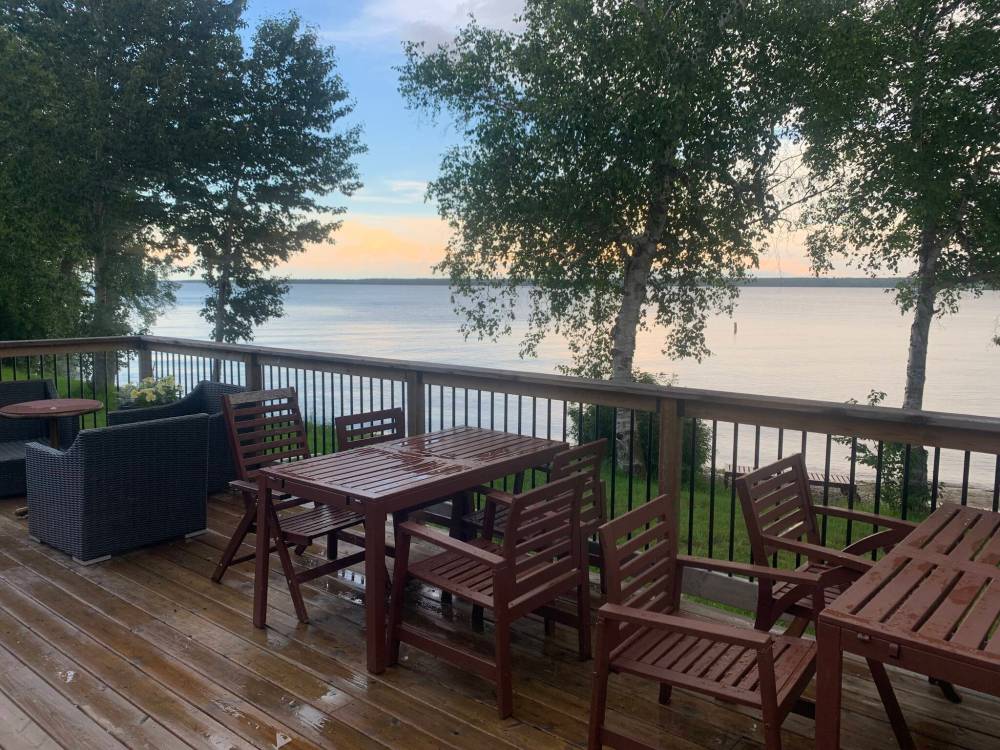
“We are in love with Manitoba and this particular part of Manitoba,” Lori Janeson tells me over a delicious iced coffee made with caramel syrup. “There just wasn’t a lot to do here and we wanted to expand on what Marvin had done over the years.”
Ice fishing, snowmobiling and cross-country skiing are a few of the winter-weather activities increasing in popularity in the area, while the Janesons hope their latest planned upgrade — an expansion to the marina’s docking system — will allow them to increase recreational boating opportunities, like the guided tour we got to enjoy.
“You’re kind of my guinea pigs today,” Meyer chuckled at one point during our voyage.
The Janesons have made a funding application to a program for environmentally friendly initiatives that would see them expand the marina with a natural break wall. It would be planted with indigenous grasses and reeds that would help take phosphorus out of the water and create nesting areas for birds. There are 48 species of migratory birds in the area.
Gull Harbour Marina is used extensively at certain times of the year by commercial fisherman; the additional docking that would be created to go along with the new break wall would open up space for more recreational boating.
Current boat tours include a sunset cruise on the west side of Hecla that Meyer says is special — and there are also Sea-Doos and kayaks available for rent at the marina.
The fish tacos at the Lighthouse Inn are a must-try.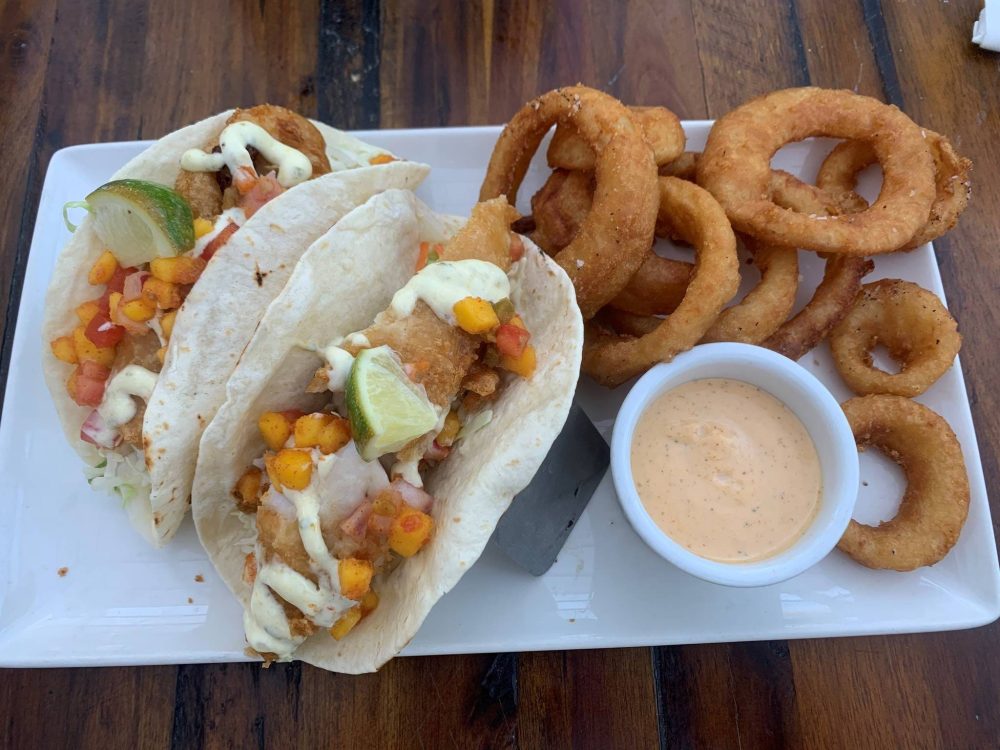
“We really think this will add to what we have here for tourists,” says Lori Janeson. “It’s just a great place to come and relax.”
Named after one of the most famous landmarks in Iceland, the volcano Mount Hekla, Hecla Island itself is 6.5 kilometres wide and 26.5 kilometres long. It became a provincial park in 1969 and the causeway that now connects the island to the mainland was built in 1972. It has a historic village with a self-guided trail, marshes with interpretive kiosks; rocky shorelines, rugged limestone cliffs; and normally some sprawling beaches; the water on the lake this year is about five feet higher that normal which has most of the sandy portion of the swimming areas under water.
And then of course — pardon the pun — there’s the attraction many of us best know Hecla for:
The day I was leaving to make the two-hour drive up to Hecla, I stopped at an ATM close to home. I got to chatting with a fellow who was also making a withdrawal and in our conversation, I mentioned that I was heading up to Hecla. He replied: “Ah yes, going up to play some golf?”
I told him I had retired from the sport a few years ago at the top of my game. He seemed to have a puzzled look on his face; probably wondering why I would do that and perhaps also wondering what else I might be heading up to Hecla for.
For those of you who enjoy chasing around that little white ball, I can attest to the fact that the course at the Lakeview Resort is as fine a track as we have in this province. I have previously played it many times and I will always recall the quietness of the course; you can literally hear the ball land in the middle of the fairway — presuming you hit it there, of course.
But if you are like me and have put down the sticks for unspoiled walks — and other things — I can also vouch for the fact that Hecla has much more to do than fairways and greens.
This article was researched with the support of Travel Manitoba.
retirementrides@gmail.com
Related Articles
Riding into retirement
Advertisement Advertise With Us
Advertisement Advertise With Us