

Farm to table in La Belle Province
Quebec growing gourmet grocery goodness

Advertisement
Read this article for free:
or
Already have an account? Log in here »
To continue reading, please subscribe:
Monthly Digital Subscription
$0 for the first 4 weeks*
- Enjoy unlimited reading on winnipegfreepress.com
- Read the E-Edition, our digital replica newspaper
- Access News Break, our award-winning app
- Play interactive puzzles
*No charge for 4 weeks then price increases to the regular rate of $19.00 plus GST every four weeks. Offer available to new and qualified returning subscribers only. Cancel any time.
Monthly Digital Subscription
$4.75/week*
- Enjoy unlimited reading on winnipegfreepress.com
- Read the E-Edition, our digital replica newspaper
- Access News Break, our award-winning app
- Play interactive puzzles
*Billed as $19 plus GST every four weeks. Cancel any time.
To continue reading, please subscribe:
Add Free Press access to your Brandon Sun subscription for only an additional
$1 for the first 4 weeks*
*Your next subscription payment will increase by $1.00 and you will be charged $16.99 plus GST for four weeks. After four weeks, your payment will increase to $23.99 plus GST every four weeks.
Read unlimited articles for free today:
or
Already have an account? Log in here »
Hey there, time traveller!
This article was published 01/10/2022 (1161 days ago), so information in it may no longer be current.
Farm to table is a trend which has become what some describe as a social movement — and on a tour of southern Quebec I found that nowhere in Canada takes it more to heart than La Belle Province.
It is what separates chain restaurants from local eateries and helps build and sustain local and regional food-service industries. Multiple-outlet national chains have no possibility of incorporating the philosophy from province to province — let alone country to country.
The dedication and support for farm-to-table dining is strong, and scores of Quebec restaurants adhere to the philosophy.
Photos by Ron Pradinuk / Winnipeg Free Press
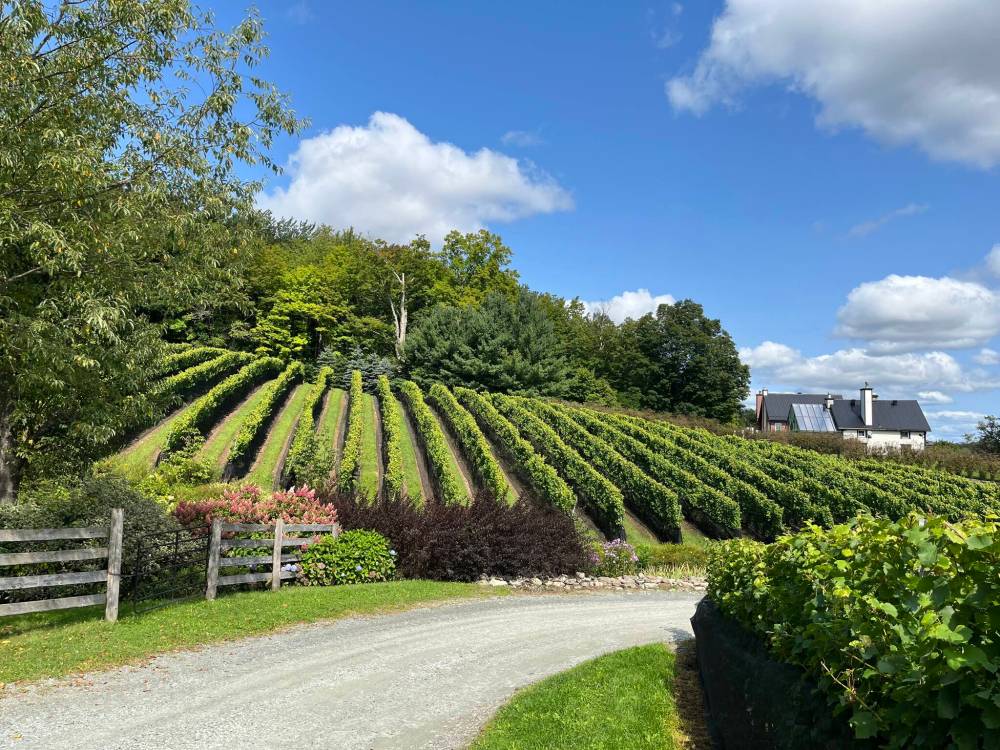
In addition to making its own fine wines, the Vignoble du Ruisseau farm grows its own vegetables and raises cattle and hogs for its restaurant.
While many of the Quebec industry’s farms and producers are small — with only a few of them able to provide quantities for export even to other provinces — some of the quality cheeses they produce have gained national recognition.
Such is the case with La Fromagerie du Presbytère in Warwick, in the southern central Quebec region. Yes, it was a church — and part of it still is.
Jean Morin, a fourth-generation dairy farmer, started making cheese curds for local customers because they expressed their views to him that there were no reliable options nearby.
He explained that cheese curds — such as those used in poutine, Quebec’s own unique specialty product, had a limited quality shelf life. If you did not hear/feel the squeak when bitten into, it was past its best before date.
Warwick residents claim ownership as the creators of the first ever poutine, while another nearby community claims they were, but it is clear — it is this region which introduced the rich tasty treat to Quebecers and beyond.
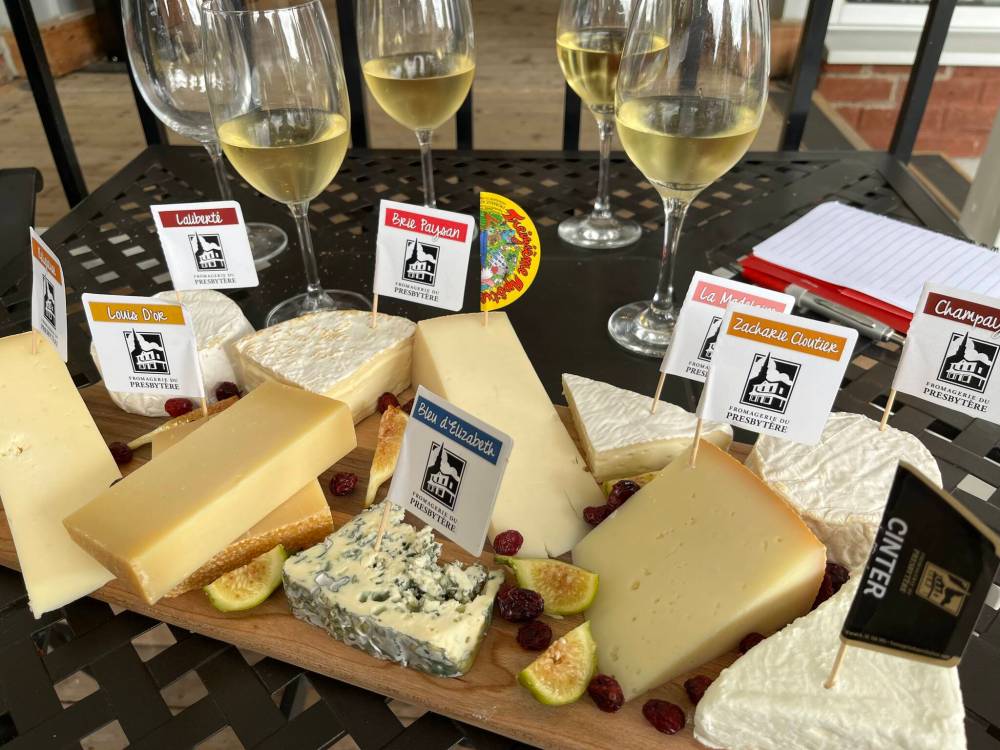
Cheese options at La Fromagerie du Presbytère, including Canada’s Grand Prize winner, Louis D’Or.
Morin’s initial foray into cheese curd production, which he only does on Mondays and Fridays, quickly exploded into a major cottage industry. He has become a destination for tourists and much of Quebec. “Last Friday we had between four and five thousand people here,” said Morin.
After his initial success, Morin added 13 other cheese varieties including his own Alpine-inspired Louis D’Or creation. This year, for the second time, it won Grand Champion Award at the Royal Agricultural Winter Fair.
The Benedictine monks at the St. Benoit-Du-Lac’s Abbey, in the Eastern Townships of Quebec, make their own cheese as well as vegetables and fruits on 215 hectares of land. But most of what they grow and produce is for their own consumption — or for visitors who buy from their gift shop in the Abbey.
While the monks arrived in 1912 and immediately set up a monastery, it was not until 1939 that construction on the magnificent buildings were started.
There are 125 monks still living at the Abbey, spending virtually all of their time in eight-hour segments, praying, working or sleeping. It is one of the few places where you can still hear masses sung in the Gregorian as well as Latin chants. While the view of Lake Memphremagog from the Abbey is excellent, it is its chapel and its intricately multi-coloured design main hallway, which is truly worth seeing.
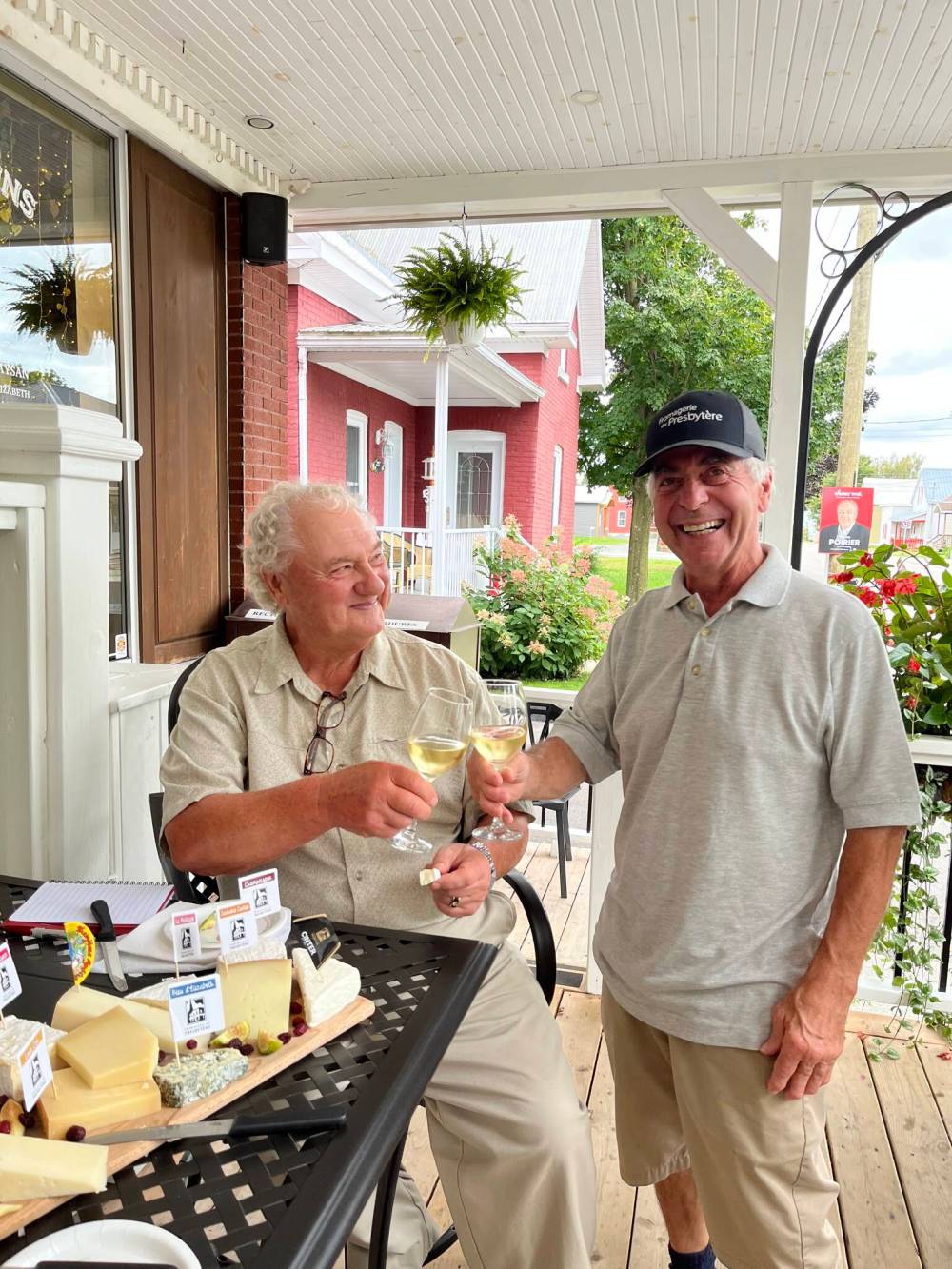
Ron Pradinuk cheese tasting at La Fromagerie du Presbytere with owner Jean Morin.
As many of the farm-to-table restaurants are now doing, the Bistro West Brome draws most of its vegetables from its own garden. Chef Ugo-Vincent Mariotti refined his trade at some of the best restaurants in Montreal. He is now putting his talents into creating a number of spectacular menu options from these gardens, carving his own signature on menu choices like caramelized cauliflower and creamy corn.
One of my favourite appetizers is steak tartare. I was surprised that when my plate arrived, it came with a quail’s egg, apparently the traditional way beef tartare is served in the province.
Travelling with a group of travel writers, we were treated to the six-course table d’hote menu and found each course from appetizer to dessert exceptional.
Down the road from Brome are the communities of Knowlton and Sutton—two villages in the Eastern Townships. Sutton is a small but vibrant town, with a mixture of art galleries and a vibrant cultural life. Two of the town’s frequent famous visitors are Bill and Hilary Clinton, whose most recent holiday week was just a year ago, when they came to visit Hilary’s friend and co-writer Louise Penny, whose home still is in Knowlton. Much of Penny’s early writings were in a rented studio in Sutton.
Wine tastings have become major destination attractions around the world, and Quebec’s offerings are equal to the task. In their large plot of land Vignoble du Ruisseau (translated as The Creek Vineyard) not only grows grapes, but raises cows and pigs, and also farm a huge garden area, where they get most of their produce for the meals they serve in their gourmet restaurant. According to Vignoble du Ruisseau’s Xavier Philibert, “currently 65 per cent of the food we serve is grown or raised here. In two years, we expect to have all of it from right here.”
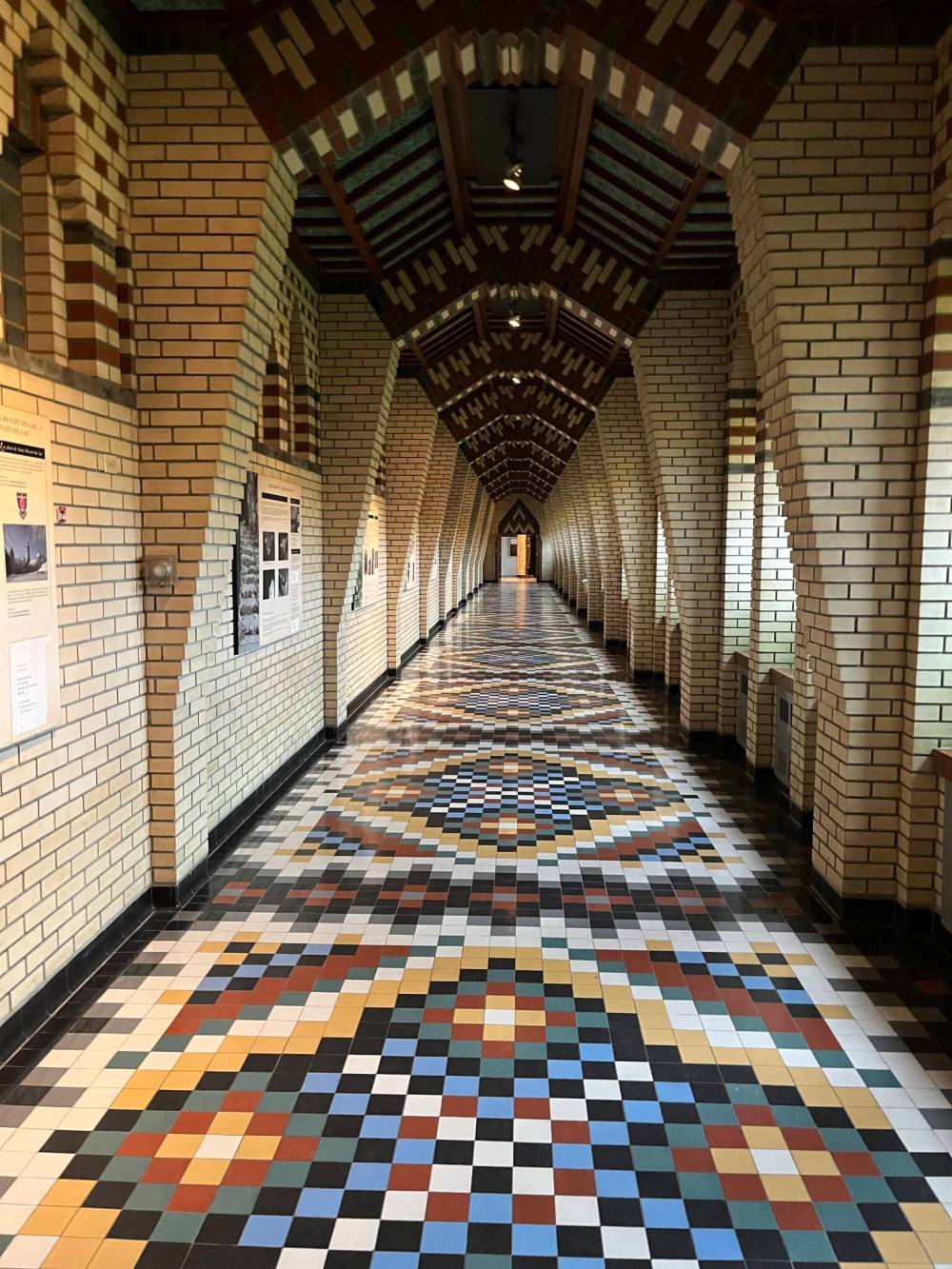
The ornate main hallway in the St. Benoit-Du-Lac’s Abbey.
The ornate main hallway in the St. Benoit-Du-Lac’s Abbey.
The vineyard currently produces Pinot Noir, Merlot, Cabernet Sauvignon, Chardonnay, Riesling, and Gewürztraminer and Vidal, but “has a patent pending technology to grow a large volume of Vinifera grapes varieties in Quebec, all possible due to a geothermal system.”
In an era of food safety, sustainability and freshness, the farm-to-table movement seems here to stay and the province of Quebec is working to take the lead as much as possible.
If you go:
We stayed at the Le Pleasant B&B hotel in Sutton, the community where Louise Penny began her writings. The property is an old historic home run by a couple who seem to make every breakfast an experience. For a shop with just about everything made or grown in Quebec, check out Rose Drummond near Drummondville.
pradinur@shaw.ca
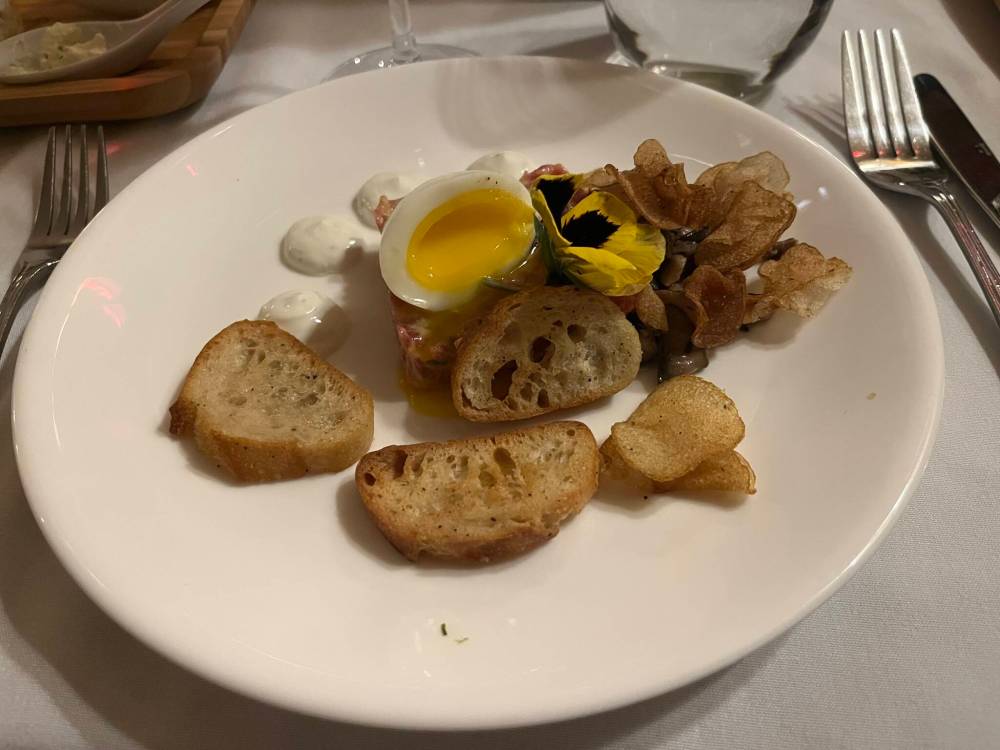
Beef Tartare at Bistro West Brome with the Quebec traditional quail’s egg.
A writer and a podcaster, Ron's travel column appears in the Winnipeg Free Press every Saturday in the Destinations and Diversions section.
Our newsroom depends on a growing audience of readers to power our journalism. If you are not a paid reader, please consider becoming a subscriber.
Our newsroom depends on its audience of readers to power our journalism. Thank you for your support.
A writer and a podcaster, Ron's travel column appears in the Winnipeg Free Press every Saturday in the Destinations and Diversions section.
Our newsroom depends on a growing audience of readers to power our journalism. If you are not a paid reader, please consider becoming a subscriber.
Our newsroom depends on its audience of readers to power our journalism. Thank you for your support.
Advertisement Advertise With Us
Advertisement Advertise With Us