

Wisconsin’s Road America: The National Park of Speed
Advertisement
Read this article for free:
or
Already have an account? Log in here »
To continue reading, please subscribe:
Digital Subscription
One year of digital access for only $1.44 a week*
- Enjoy unlimited reading on winnipegfreepress.com
- Read the E-Edition, our digital replica newspaper
- Access News Break, our award-winning app
- Play interactive puzzles
*Billed as $5.77 plus GST every four weeks. After 52 weeks, price increases to the regular rate of $19.95 plus GST every four weeks. Offer available to new and qualified returning subscribers only. Cancel any time.
To continue reading, please subscribe:
Add Free Press access to your Brandon Sun subscription for only an additional
$1 for the first 4 weeks*
- Enjoy unlimited reading on winnipegfreepress.com
- Read the E-Edition, our digital replica newspaper
- Access News Break, our award-winning app
- Play interactive puzzles
*Your next Brandon Sun subscription payment will increase by $1.00 and you will be charged $17.95 plus GST for four weeks. After four weeks, your payment will increase to $24.95 plus GST every four weeks.
Read unlimited articles for free today:
or
Already have an account? Log in here »
Hey there, time traveller!
This article was published 09/04/2016 (3843 days ago), so information in it may no longer be current.
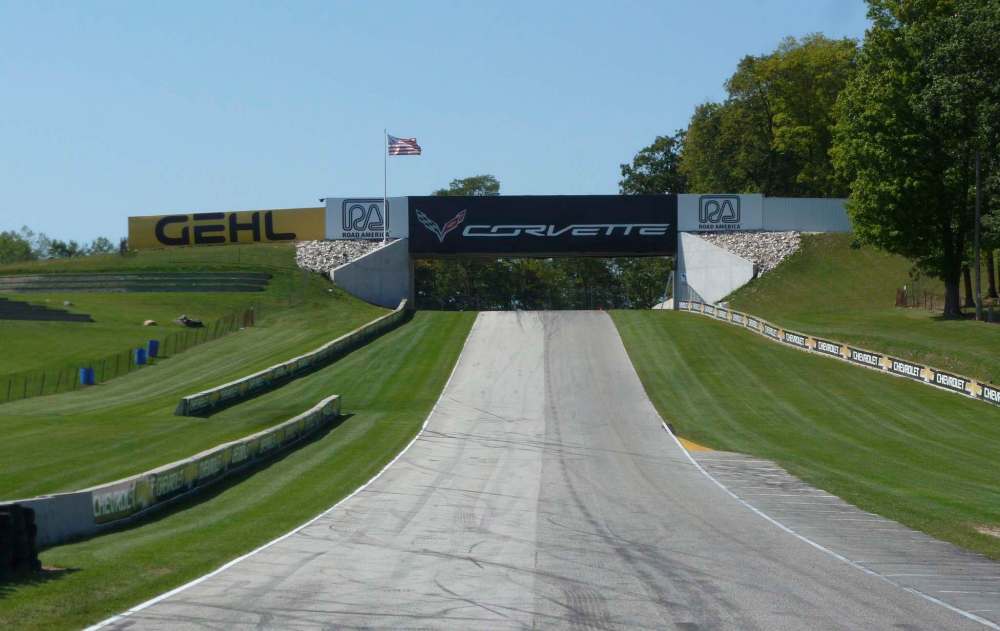
This year marks the 61th anniversary for Road America, home of a racing circuit that proudly claims the title of the National Park of Speed. The scenic, 640-acre racing complex includes a 6.4-kilometre course that winds over hills and between wooded areas near Elkhart Lake, Wis., a village of less than 1,000 residents roughly 100 kilometres north of Milwaukee. The course is an outgrowth from several years of wild and woolly open road racing that took place on public roads here during the early 1950s.
The Birth of Racing in Elkhart Lake
Military veterans returning from Europe in the mid- and late-1940s had gained personal experience with sporty automotive brands such as Aston Martin, Alfa Romeo, Fiat, MG, Sunbeam, Triumph and Jaguar that offered performance, spirit and driving fun most U.S. vehicles found lacking. The soldiers had discovered there was more to driving a vehicle than steering large land cruisers down the open road.
Although economic conditions in the country saw improvement after the Great Depression, many regions of the United States continued to suffer economic hardship. While Elkhart Lake had prospered as a gambling mecca, the Wisconsin state legislature banned this form of entertainment in 1945. This loss, along with a decline in some of the area’s industry, resulted in difficult economic times for the area, but help was on the way.
Wisconsin millionaire Jim Kimberly (grandson of one of the four founders of Kimberly-Clark) had decided to fly around Wisconsin in search of a location where he could race his cars. Kimberly and three friends, including members of the Chicago Region of the Sports Car Club of America, took a liking to the hilly and winding roads around Elkhart Lake. Elkhart Lake’s civic and business leaders took to the idea of racing as a way to help the area escape the economic doldrums. The effort was helped by the support of Wisconsin governor Walter Kohler, who had a summer home in Elkhart Lake.
The Early Race Circuit
The initial series of five races took place on a Sunday in 1950 on public roads north of Lake Elkhart. Participants were mainly from Chicago, and most drove their race cars to Elkhart Lake. The events included 33 cars participating with two races each for professional and novice drivers in two classifications of 30 and 60 miles, respectively. Novices included any driver who had not finished higher than fifth in a previous open road race. A separate race was organized for females. The main event was won by James Kimberly driving a Ferrari.
The following two years saw area racing on an expanded circuit that circled Lake Elkhart and included passes through the village of Elkhart Lake. By 1952, races were held over two days and included nearly 250 cars, including a Jaguar factory team. Races during all three years were run on public roads in the immediate Elkhart Lake area. Portions of the circuit were lined with straw bales and regular fencing in a meagre effort to provide protection for spectators and drivers, but the legal issue of holding private racing events on public roads, along with the risk of serious injury to spectators from this type of open road racing, resulted in the Wisconsin legislature banning these events. Thus, 1952 marked the last of this type racing in Elkhart Lake.
Area visitors can still drive all but a short stretch of the original and expanded circuits used by race car drivers in the early 1950s. The historic race circuits continue in use as public roads that have been listed on the National Register of Historic Places by the National Park Service. The Historic Race Circuits Preservation Society in 2006 placed 14 historical markers at strategic locations on the circuits.
The Arrival of Modern Road Racing
After deciding to cancel the 1953 races because of the safety and legal concerns, an effort was made to construct a permanent road course. Public stock was offered to investors, businesses and racing enthusiasts in 1954, with proceeds used to acquire 525 acres of rolling and wooded land seven kilometres south of Elkhart Lake. Engineer and racing enthusiast Cliff Tufte is credited with spearheading the effort and designing the complex, which has today grown to 640 acres.
The initial races were held at Road America in September 1955, with the main event being won by racing legend Phil Hill driving a Ferrari. Interestingly, races today are run on exactly the same 6.5-kilometre layout that existed during Road America’s first year of racing.
Ten major racing events take place each year beginning in mid-May and running through mid-September. The season opens with a Spring Vintage Weekend with racing by vintage and historical cars. The final event is a Fall Vintage Festival. In-between are two major motorcycle weekends, a NASCAR race and six races featuring cars ranging from prototypes to GT and GTS model race cars.
Adding Activities and Events
While the racing circuit at Road America has remained unchanged over six decades, the number of racing and non-racing events has mushroomed. The racing complex currently offers more than 400 annual events that range from NASCAR and sports car racing to driving schools and sunset cruises. The latter is an opportunity for car owners to experience the course at modest speeds in their own vehicles. Racing enthusiasts can also choose Pace Car Hot Laps, a two-lap ride around the track in a Corvette piloted by an experienced driver. Road America describes these as “white-knuckle” laps.
An unusual program called 4 Miles of Fitness allows visitors to bike, walk or run the course Mondays and Wednesday evenings. The complex also offers various types of tours. For example, a behind-the-scenes tour takes visitors to the VIP Tower and provides information on the mechanics of putting on a major race. This tour includes a visit to the VIP hospitality suites. Perhaps the most unusual tour is a one-hour hayride that explores the road course aboard a horse-drawn wagon.
One of the great pleasures of our own visit to Road America was kart racing. This was a new experience for each of us, and there was little question we are sorely in need of additional practice. Following each kart race, participants are given a printout displaying the lap times and overall standing compared with the other drivers. If karting doesn’t wear you down, two zip lines are available for those who wish to allow their spirits to soar.
If you go
Getting there: Elkhart Lake is a 12-hour drive from Winnipeg via I-29 and I-94. Air Canada, Delta and United each offer one-stop service to Milwaukee, which is a one-hour drive from Elkhart Lake.
Lodging: Elkhart Lake boasts three upscale lodging facilities: the Osthoff, Siebkens and Victorian Village. Elkhart Lake is a small town, and the resorts are in close proximity to one another. Several B&Bs are also available.
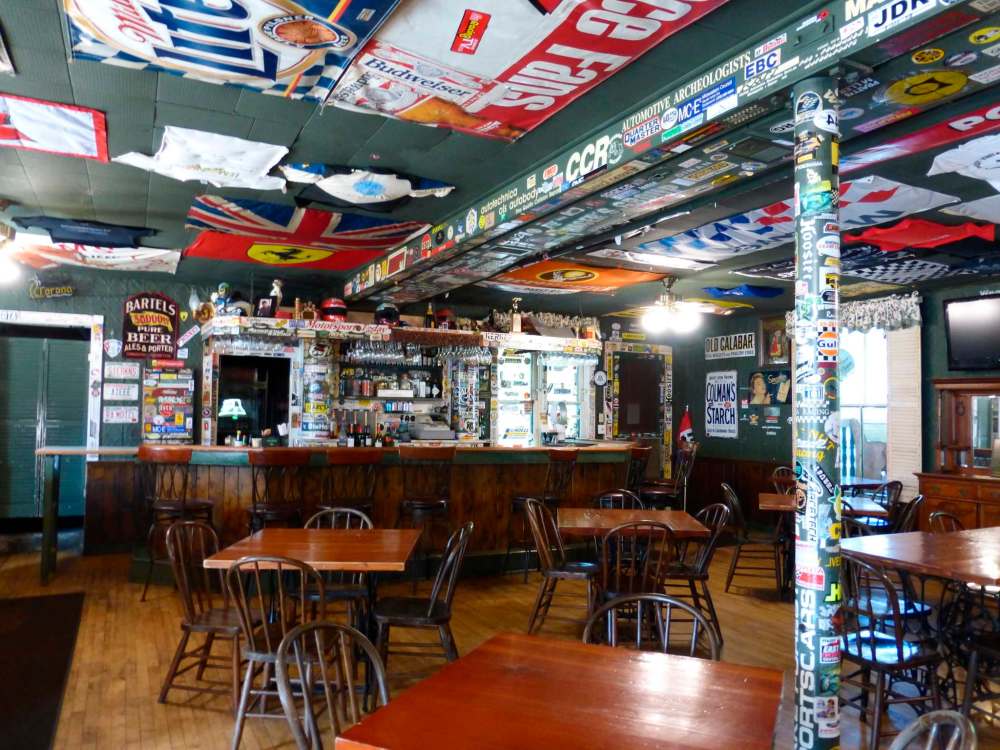
Dining: First-time visitors tend to be surprised by the fine dining available in such a small town. Each of the three resorts offers dining facilities. The race-themed Stop-Inn Tavern at Siebkens serves lunch and dinner Tuesday through Sunday. Several nearby restaurants, including the Lake Street Cafe and Elkhart Inn offer interesting entrees.