

Inquest hears recommendations to improve mental health after Indigenous man’s death
Advertisement
Read this article for free:
or
Already have an account? Log in here »
To continue reading, please subscribe:

Digital Subscription
One year of digital access for only $205*
- Enjoy unlimited reading on winnipegfreepress.com
- Read the E-Edition, our digital replica newspaper
- Access News Break, our award-winning app
- Play interactive puzzles
*First annual payment billed as $205.00 + GST for one year. This annual subscription will automatically renew at $233.00 + GST every 52 weeks (10% off the regular annual price of $259.35). Offer available to new and qualified returning subscribers only. Cancel any time.
To continue reading, please subscribe:
Add Free Press access to your Brandon Sun subscription for only an additional
$1 for the first 4 weeks*
- Enjoy unlimited reading on winnipegfreepress.com
- Read the E-Edition, our digital replica newspaper
- Access News Break, our award-winning app
- Play interactive puzzles
*Your next Brandon Sun subscription payment will increase by $1.00 and you will be charged $17.95 plus GST for four weeks. After four weeks, your payment will increase to $24.95 plus GST every four weeks.
Read unlimited articles for free today:
or
Already have an account? Log in here »
Hey there, time traveller!
This article was published 10/05/2023 (1237 days ago), so information in it may no longer be current.
Improving access to mental health care for Indigenous individuals – particularly those in remote communities – and creating a mental health unit in a northern Ontario jail were among 46 recommendations presented Wednesday at the inquest into the death of a renowned Indigenous artist.
Jurors at the inquest examining what happened to Moses Beaver will now be able to adopt, oppose or amend the recommendations put forward collectively by lawyers for the artist’s family, the Ontario government and other parties.
Beaver, an artist from Nibinamik First Nation, was found unresponsive in a Thunder Bay, Ont., jail cell in February 2017 before being taken to a hospital where he was pronounced dead by suicide. He was 56.
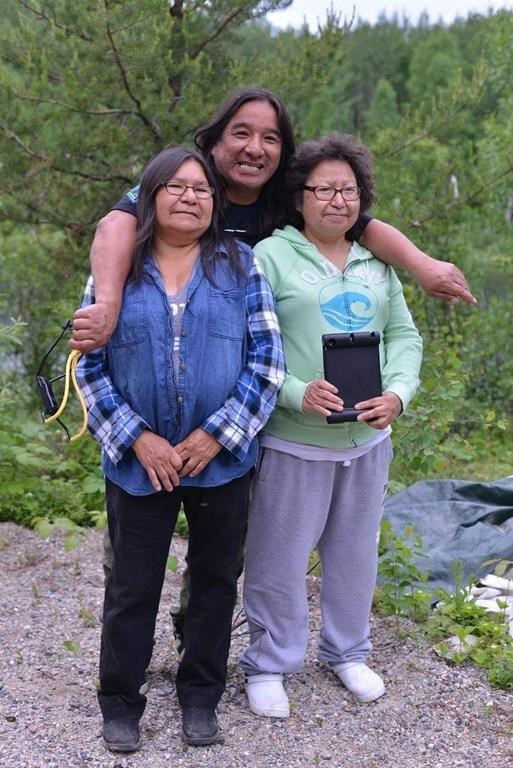
Beaver’s family has told the inquest they tried many times to find him help to deal with intergenerational trauma and his deteriorating mental health, but a disorganized system was not able to meet his needs.
“For the past 23 days, we’ve had to think deeply about the many ways in which non-Indigenous decisions and actions control the experience of Indigenous life,” Caitlyn Kasper, an Indigenous lawyer representing Beaver’s family, said in her closing statement.
Beaver’s sons said their father should have been taken to a hospital, and not a jail, after an alleged assault at a medical facility before he died. The inquest also heard that attempts to ensure jail staff had Beaver’s medical records appeared to be ignored.
“The justice system has revealed itself as a microcosm displaying the damage that occurs when everyday racism against Indigenous people is perpetuated through the actions of employees of the same system,” Kasper said.
“This targeted discrimination does not even have to rely on overtly racist attitudes. It feeds off the acceptance of stereotypes and a lack of cultural understanding.”
Jurors at the inquest received nearly four dozen recommendations for governments, police and the Thunder Bay jail on how to better support Indigenous individuals, particularly those who experience mental health issues. Those were agreed upon by lawyers at the inquest, including for Beaver’s family, various Ontario ministries and the Thunder Bay jail.
The recommendations include a suggestion that the Ministry of Health develop protocols – in consultation with Indigenous communities – to guide decision-making and prioritize delivery of care when a psychiatric emergency occurs in remote First Nations communities.
Another recommendation suggests the creation of a mobile mental health clinic that could provide early intervention care in a culturally competent way for remote First Nations in northwestern Ontario.
The recommendations also include a suggestion that a mental health unit be created in the Thunder Bay jail, “where inmates experiencing mental health symptoms, or those being assessed for a mental illness diagnosis, can be housed, assessed and treated.”
They further recommend education and programming that would address the mistrust of colonial health care among First Nations people.
The inquest heard emotional testimony from Beaver’s loved ones who said his mental health began deteriorating more than two decades ago after his wife died suddenly from a brain aneurysm.
He also spent time in a day school designed to forcibly assimilate Indigenous children, the inquest heard, and his sons alleged he had been sexually assaulted by a teacher.
Beaver also lost a younger brother to suicide, his family said.
The inquest heard that Beaver attempted suicide in 2017 in the days before his death.
His loved ones and nurses in his First Nation community made 58 calls for help to police and medical workers over three days in an attempt to have him airlifted out to a medical facility but the urgency of his medical status was downgraded without explanation, the inquest heard.
During that wait, Kasper, the family’s lawyer, said police had to be called as Beaver allegedly assaulted a worker – that led to him being taken to the Thunder Bay jail.
The inquest heard that Beaver was put on suicide watch after arriving at the jail, with someone supposed to check on him regularly, but the facility was overcrowded and short-staffed at the time.
A nurse and a doctor also told the inquest they tried to send Beaver’s medical records, including details of his bipolar diagnosis, to the jail and made phone calls to get the jail’s attention, but their attempts were ignored.
“There was no effort to obtain health records from other sources, or to fully even read the health record that was in place at the jail,” Kasper told the inquest. “Instead, (they were) told by those in a position of authority to settle down.”
Jurors at the inquest could make recommendations on how to better provide mental health care for Indigenous individuals, both at Thunder Bay’s jail and across remote First Nations.
This report by The Canadian Press was first published May 10, 2023.