

Philippe will be no Lee, but accumulating weather damage makes Nova Scotia vulnerable
Advertisement
Read this article for free:
or
Already have an account? Log in here »
To continue reading, please subscribe:

Digital Subscription
One year of digital access for only $205*
- Enjoy unlimited reading on winnipegfreepress.com
- Read the E-Edition, our digital replica newspaper
- Access News Break, our award-winning app
- Play interactive puzzles
*First annual payment billed as $205.00 + GST for one year. This annual subscription will automatically renew at $233.00 + GST every 52 weeks (10% off the regular annual price of $259.35). Offer available to new and qualified returning subscribers only. Cancel any time.
To continue reading, please subscribe:
Add Free Press access to your Brandon Sun subscription for only an additional
$1 for the first 4 weeks*
- Enjoy unlimited reading on winnipegfreepress.com
- Read the E-Edition, our digital replica newspaper
- Access News Break, our award-winning app
- Play interactive puzzles
*Your next Brandon Sun subscription payment will increase by $1.00 and you will be charged $17.95 plus GST for four weeks. After four weeks, your payment will increase to $24.95 plus GST every four weeks.
Read unlimited articles for free today:
or
Already have an account? Log in here »
Hey there, time traveller!
This article was published 07/10/2023 (1103 days ago), so information in it may no longer be current.
HALIFAX – Damage from repeated weather disasters is accumulating in southern Nova Scotia, leaving the region more vulnerable to storms — even those that aren’t much stronger than a regular autumn squall, says a Halifax-area councillor.
Forecasters say post-tropical storm Philippe is unlikely to hit the Maritimes this weekend with the same strong winds wrought by post-tropical storm Lee last month.
But that’s little comfort for Pam Lovelace, the municipal representative for a rural region west of downtown Halifax, which includes the famous Peggy’s Cove lighthouse.
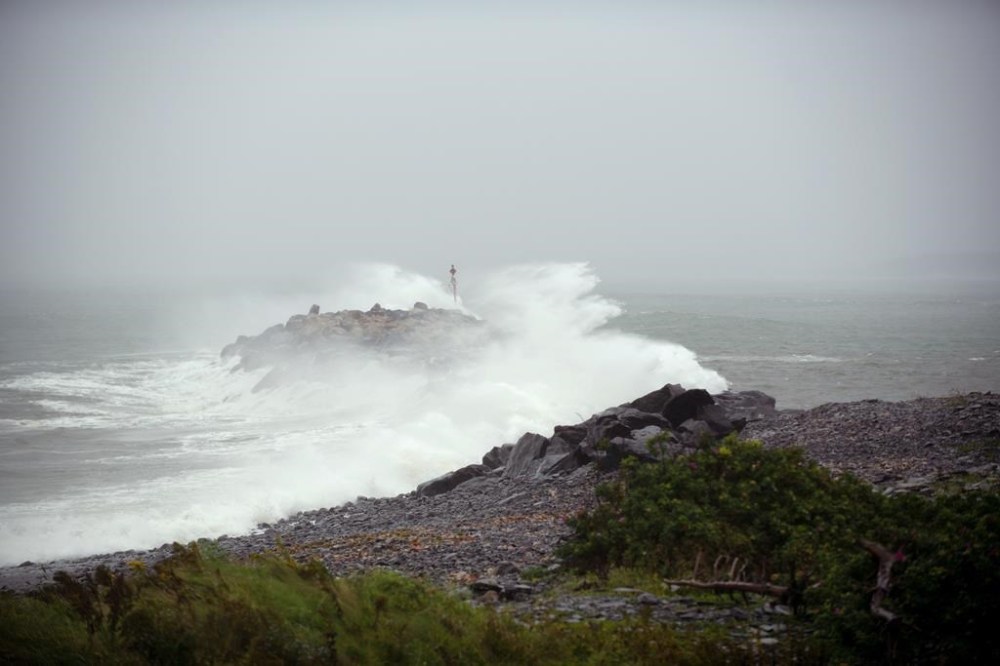
Lovelace’s district includes the Tantallon and Hammonds Plains area, where forest fires destroyed more than 150 homes earlier this year. It was also hit by historic flooding in July after severe thunderstorms dumped more than 200 millimetres on parts of the province, tearing up roads, damaging homes and ultimately killing four people.
“There is absolutely an accumulated effect of all these disasters,” Lovelace said Saturday. “The trees and limbs are vulnerable, people are vulnerable, and it’s just, yet again, one more storm coming our way that could potentially put out power for days.”
Environment Canada has issued tropical cyclone statements for Nova Scotia’s southwest coast, warning of rainfall totals up to 60 millimetres and wind gusts of up to 90 kilometres an hour. Parts of central New Brunswick, including Fredericton, Saint John and Edmundson, could also be soaked by up to 60 millimetres of rain, the agency said.
By comparison, post-tropical storm Lee brought winds of around 110 kilometres an hour when it made landfall on Nova Scotia’s Long Island three weeks ago.
Chris Fogarty, a senior meteorologist with the Canadian Hurricane Centre, said Philippe could still knock branches into power lines and wipe out electricity for some people, but he noted that is not uncommon in Nova Scotia, even in weaker storms.
Philippe, he said, “is definitely not of Lee intensity.” But Philippe will affect the same areas along Nova Scotia’s Atlantic coast that bore the brunt of Lee, he added.
Winds and rains are expected to pick up on Saturday night, with a peak around midnight, Fogarty said. There was worry the storm would hit during high tide, but he said it seemed more likely that its worst impacts will fall close to low tide, which cuts the threat of coastal flooding.
Lee flooded roads in Lovelace’s district, and it knocked down trees and power lines. Trees burnt black in the forest fires earlier this year are more easily toppled by weaker winds, she said.
Road shoulders, culverts and drainage systems are still damaged from Lee, from the flooding in July and even from post-tropical storm Fiona last year, she added.
A road connecting the Peggy’s Cove lighthouse with downtown Halifax is still held together in one section by a temporary, one-lane bridge after it was washed away by the floods.
All this means Philippe — or storms like it — could have an easier time causing even more destruction, Lovelace said.
She noted that the Halifax Regional Municipality was still facing more than $20 million in repair costs from these disasters, including Fiona, according to a September report to it finance committee.
Some in Lovelace’s district were anxious as Philippe approached, especially with power outages expected. But others felt more prepared because they’d already weathered so much and know how to prepare.
“We are weary and tired and exhausted from all these disasters,” she said. “With the long weekend, the hope was to come together with family and enjoy being with family, but for some people, that may not be possible.”
Fogarty noted that this year’s hurricane season has already seen more named storms than a normal year, and it’s not over for another month and a half.
This report by The Canadian Press was first published Oct. 7, 2023.