

Researcher part of trans youth health-care study says N.B. premier has facts wrong
Advertisement
Read this article for free:
or
Already have an account? Log in here »
To continue reading, please subscribe:

Digital Subscription
One year of digital access for only $205*
- Enjoy unlimited reading on winnipegfreepress.com
- Read the E-Edition, our digital replica newspaper
- Access News Break, our award-winning app
- Play interactive puzzles
*First annual payment billed as $205.00 + GST for one year. This annual subscription will automatically renew at $233.00 + GST every 52 weeks (10% off the regular annual price of $259.35). Offer available to new and qualified returning subscribers only. Cancel any time.
To continue reading, please subscribe:
Add Free Press access to your Brandon Sun subscription for only an additional
$1 for the first 4 weeks*
- Enjoy unlimited reading on winnipegfreepress.com
- Read the E-Edition, our digital replica newspaper
- Access News Break, our award-winning app
- Play interactive puzzles
*Your next Brandon Sun subscription payment will increase by $1.00 and you will be charged $17.95 plus GST for four weeks. After four weeks, your payment will increase to $24.95 plus GST every four weeks.
Read unlimited articles for free today:
or
Already have an account? Log in here »
Hey there, time traveller!
This article was published 04/01/2024 (987 days ago), so information in it may no longer be current.
FREDERICTON – An author of a study that New Brunswick’s premier cited to back his province’s policy on gender identity in schools says the politician had his facts wrong about the research.
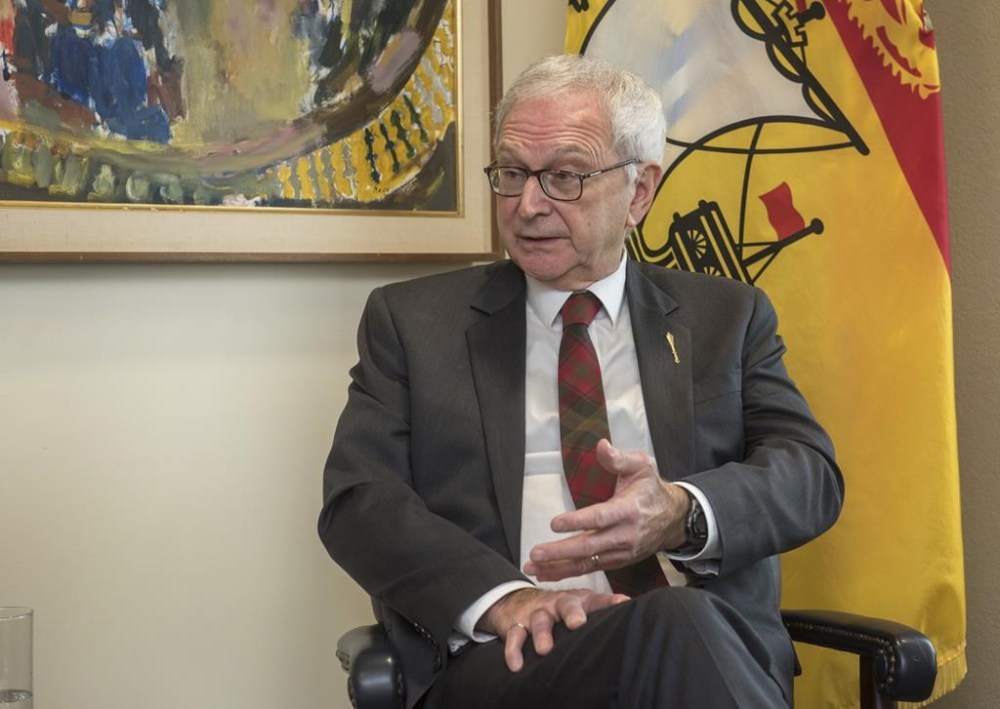
In a year-end interview with The Canadian Press, Blaine Higgs said about 60 per cent of young children who are questioning their gender identity in Canada “are given automatic affirmation and put on some sort of hormone therapy” after “their first medical appointment.”
He cited the statistic to justify his government’s policy on gender identity in schools, which requires teachers to get parental consent before they can use the preferred names and pronouns of non-binary and trans students under 16. At the time, Higgs didn’t offer any evidence to back up that statistic, but his office later said he had been referring to a two-year study called “Trans Youth CAN!” with lead investigator Greta Bauer.
Bauer, the chair in sexual health at the University of Minnesota Medical School, says the study, and published papers on the health care of trans and non-binary youth, does not show that they are put on hormone therapy after a single medical visit. Rather, she said in an interview Thursday, the research indicates that those patients had seen, on average, 2.7 different types of health-care providers and had waited an average of nine months for a referral to a specialist in hormone treatment at a Canadian gender clinic.
The premier’s statement about the study, which was released in 2021 and looked at youth between puberty and age 15, was therefore “not accurate,” she said, adding that political leaders should ensure they are accurately characterizing research when making policy arguments.
“It’s not the patients’ first mental health appointment and it’s not their first medical appointment … it’s the appointment where they are specifically coming to talk about getting a prescription (for hormone therapy),”Bauer said.
Nicolle Carlin, a spokeswoman for the premier’s office, said she doesn’t expect Higgs to correct his statement, as it was drawn from a slide presentation summarizing the study’s findings. The summary noted, “62.4 per cent of youth received a prescription at their first medical appointment at gender clinic.”
But on the very next slide of the same summary — viewed by The Canadian Press — it notes “the majority of youth are seeing a family doctor or pediatrician before the gender clinic and are referred to the clinic by a family doctor or pediatrician.” The summary also notes that 41 per cent of patients had seen a psychologist before visiting one of the 10 clinics in Canada.
During the December interview, Higgs made clear he has no intention of backing down on his government’s changes to the province’s policy on gender identity in schools. That New Brunswick policy has been copied by Saskatchewan, but has also led to serious dissent within Higgs’ governing party, a lawsuit, and strong criticism across the country.
The premier said he expects the issue to figure prominently in his Progressive Conservative party’s upcoming campaign for the election, scheduled for Oct. 21.
On Thursday, in response to questions about the source of his data regarding youth hormone therapy treatment, the premier’s office arranged for Erica Anderson, a U.S.-based clinical psychologist, to speak to journalists during a Zoom call.
Anderson also cited the 2021 Canadian survey of care of trans and non-binary youth, noting the 62.4 percentage who received a prescription on their visit to the gender clinic, but Anderson — like the premier — didn’t mention the prior referrals and wait times that had to occur before patients visited the clinics.
The American psychologist said, “we might be premature in offering medicines for some young people, if not inappropriate in offering them.”
Bauer said both the premier and then Anderson had not cited the study responsibly.
“They’re portraying a misleading picture of what’s happening in medical care, where somebody can walk in off the street and get a prescription, when in fact often times there are significant delays, sometimes for very good reasons around diagnosis or figuring out one’s gender or making sure parents are on board or getting blood work or other medical work done,” she said.
This report by The Canadian Press was first published Jan. 4, 2024.
— Story by Michael Tutton in Halifax.