

‘No austerity,’ despite bigger deficit due to spending on Quebec teachers: Legault
Advertisement
Read this article for free:
or
Already have an account? Log in here »
To continue reading, please subscribe:

Digital Subscription
One year of digital access for only $205*
- Enjoy unlimited reading on winnipegfreepress.com
- Read the E-Edition, our digital replica newspaper
- Access News Break, our award-winning app
- Play interactive puzzles
*First annual payment billed as $205.00 + GST for one year. This annual subscription will automatically renew at $233.00 + GST every 52 weeks (10% off the regular annual price of $259.35). Offer available to new and qualified returning subscribers only. Cancel any time.
To continue reading, please subscribe:
Add Free Press access to your Brandon Sun subscription for only an additional
$1 for the first 4 weeks*
- Enjoy unlimited reading on winnipegfreepress.com
- Read the E-Edition, our digital replica newspaper
- Access News Break, our award-winning app
- Play interactive puzzles
*Your next Brandon Sun subscription payment will increase by $1.00 and you will be charged $17.95 plus GST for four weeks. After four weeks, your payment will increase to $24.95 plus GST every four weeks.
Read unlimited articles for free today:
or
Already have an account? Log in here »
Hey there, time traveller!
This article was published 18/02/2024 (916 days ago), so information in it may no longer be current.
MONTREAL – Premier François Legault said Sunday the ramp-up in spending on education pledged by his government will go a long way to supporting Quebec’s teachers and students — and prompt a bigger budget deficit.
At a news conference, Legault said agreements recently hammered out with unions will see the province “invest massively” in teachers and educational assistants.
“We think that it will improve the working conditions of all the people working in our schools,” Legault told reporters in Montreal.
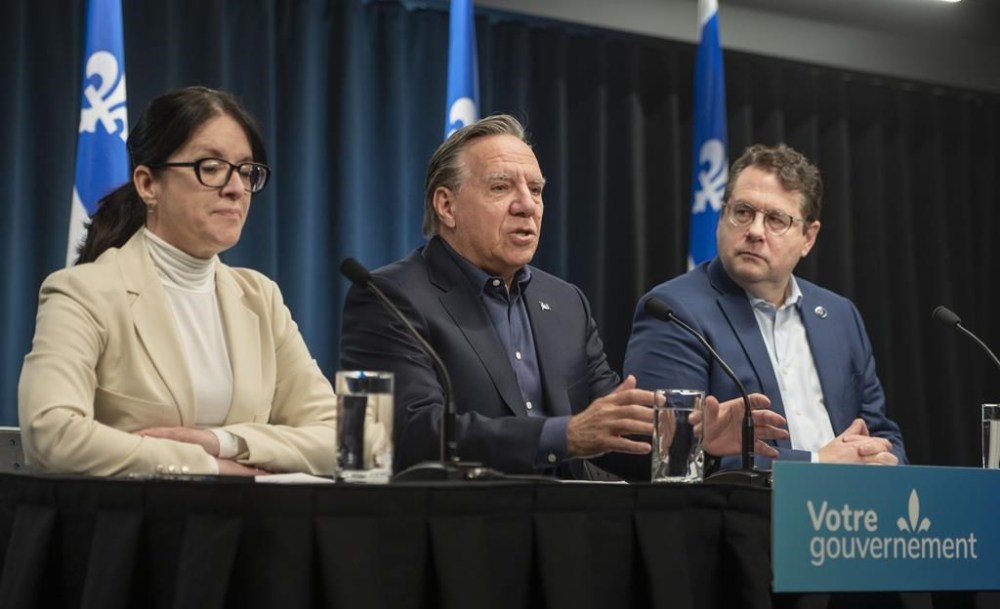
“The yearly deficit for the next year will be a lot higher than expected because of this choice. But I think it’s the right choice. There’s no better investment than education for me.”
The premier stressed that there is “no question” about cutting services or raising income taxes — “we’re already too high compared to our neighbours.”
“No austerity,” he added. But with neither cuts nor tax hikes under consideration, that leaves more red ink on the budget as the only option, Legault said.
In its fall economic statement, the Coalition Avenir Québec government projected deficits of $4 billion in 2023-24, $3 billion in 2024-25 — the budget slated to show the fiscal dent from the deals — and $2 billion the year after that.
On Sunday, Legault promised spending to allow for 5,000 new permanent teaching jobs and 4,000 more educational assistants. The agreements also ensure that new teachers will receive a starting salary of $65,000 per year, while more experienced educators will see a salary cap of $109,000, up from $92,000 currently.
Two major teachers unions approved their tentative agreements earlier this month.
One vote brought an end to a months-long squabble between the Quebec government and the more than 66,000-member FAE, which was the only union to launch an unlimited general strike during last year’s public sector bargaining.
The deal followed 22 days of strike action that shut down roughly 800 schools and saw 368,000 students stay home. The FAE represents about 40 per cent of teachers in the provincial school system.
Last week, members of the Fédération des Syndicats de l’Enseignement (FSE) and its English-language counterpart, the Quebec Provincial Association of Teachers (QPAT), voted 59.5 per cent in favour of the proposed agreement with the province to renew their collective agreements.
The FSE, which is affiliated with the CSQ, represents 95,000 elementary and secondary school teachers, or 60 per cent of all teachers in Quebec. QPAT represents 8,000 on the English side.
In the health sector, government negotiations with the 80,000-strong FIQ nurses union continue in the presence of a mediator.
The province says it hopes to glean more “flexibility” from nurses, with the goal of being able to move them between care units or hospitals according to need. The union has criticized the push, pointing to the prospect of disciplinary sanctions in the event of refusal.
This report by The Canadian Press was first published Feb. 18, 2024.
— With files from Samira Ait Kaci Ali