

US horse racing deaths increased slightly in 2023 from 2022
Advertisement
Read this article for free:
or
Already have an account? Log in here »
To continue reading, please subscribe:

Digital Subscription
One year of digital access for only $205*
- Enjoy unlimited reading on winnipegfreepress.com
- Read the E-Edition, our digital replica newspaper
- Access News Break, our award-winning app
- Play interactive puzzles
*First annual payment billed as $205.00 + GST for one year. This annual subscription will automatically renew at $233.00 + GST every 52 weeks (10% off the regular annual price of $259.35). Offer available to new and qualified returning subscribers only. Cancel any time.
To continue reading, please subscribe:
Add Free Press access to your Brandon Sun subscription for only an additional
$1 for the first 4 weeks*
- Enjoy unlimited reading on winnipegfreepress.com
- Read the E-Edition, our digital replica newspaper
- Access News Break, our award-winning app
- Play interactive puzzles
*Your next Brandon Sun subscription payment will increase by $1.00 and you will be charged $17.95 plus GST for four weeks. After four weeks, your payment will increase to $24.95 plus GST every four weeks.
Read unlimited articles for free today:
or
Already have an account? Log in here »
Hey there, time traveller!
This article was published 03/04/2024 (901 days ago), so information in it may no longer be current.
Horse racing deaths in the United States increased slightly in 2023 from 2022, according to data tracked by the Equine Injury Database and reported by the federally mandated agency that began regulating the sport two years ago.
The Horse Racing Integrity and Safety Authority said in its annual report released Wednesday there were 1.32 deaths per 1,000 starts last year, up from 1.25 the previous year. The number at the 50 HISA-accredited tracks had a rate of 1.23 per 1,000, compared with 1.63 at others across the country.
“Our inaugural annual report reflects our journey toward a safer, fairer and more resilient future for horse racing,” CEO Lisa Lazarus said in a statement accompanying the report. “The success of HISA’s programs relies on steady partnership among the tracks, trainers, riders, owners, veterinarians and state regulators who comprise the sport. Only by working together can we make thoroughbred racing safer for its equine and human athletes.”
HISA began overseeing racetrack safety on July 1, 2022, and last year launched its medication and anti-doping program. The Horseracing Integrity and Welfare Unit (HIWU), which oversees testing and investigation and punishment of potential violations as part of the Anti-Doping and Medication Control Program, is set to release its annual report sometime next week.
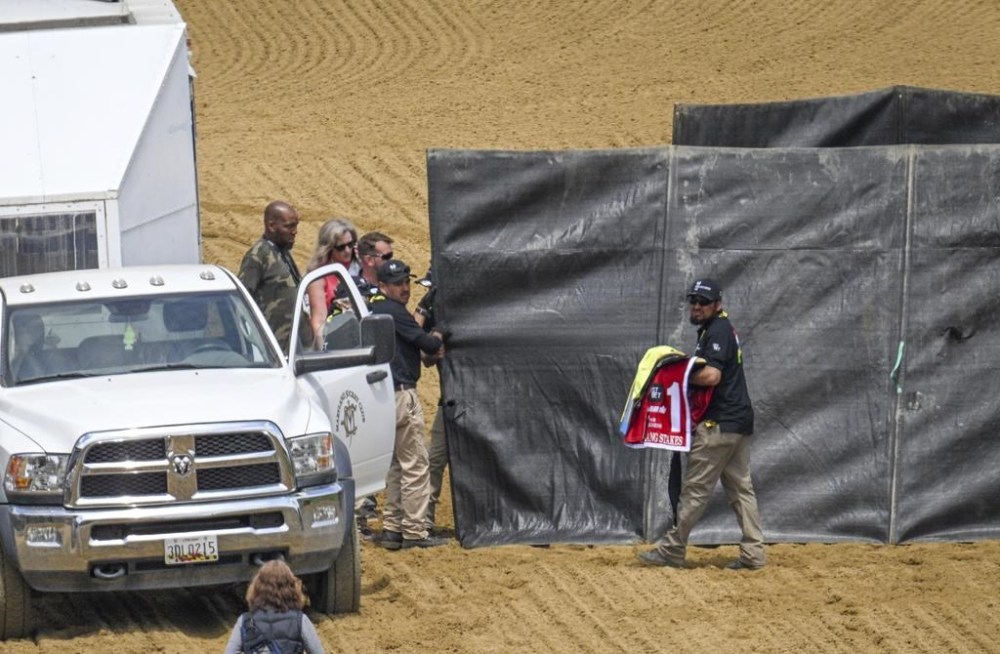
Spates of deaths at Churchill Downs in Louisville around the Kentucky Derby and at New York’s Saratoga Race Course last year thrust the sport into the spotlight for all the wrong reasons. Churchill Downs suspended racing in June after 12 horses died there, prompting an emergency summit with industry leaders before resuming in the fall, and a New York Racing Association investigation into 13 racing or training deaths at Saratoga found no definitive cause, though significant rainfall “could not be overlooked” as a contributing factor.
While up from 2022, the 1.32 deaths per 1,000 starts is still the second-lowest equine fatality rate since they started being tracked in 2009, down from the previous lows of 1.39 in 2021 and 1.41 in ’20.
“Since its implementation began, HISA has made great strides in bringing the sport of racing together under the same uniform standards and regulations, with the noble goal of making the sport fairer and safer for all involved,” National Thoroughbred Racing Association president and CEO Tom Rooney said in an email statement to The Associated Press on Thursday. “This report underscores the importance of HISA, shows the progress Lisa and her team are making, and leaves me optimistic for what’s to come.”
In a message published in the report, Lazarus pointed to national, uniformed practices such as prerace veterinary inspections, treatment records that follow horses throughout their careers, the availability of full medical and workout histories and reporting of racetrack surface conditions as improvements that have been instituted.
“I feel much optimism about the strides we will continue to make by recognizing that protecting the health and safety of our horses and jockeys is a collective, urgent responsibility,” Lazarus wrote.
___
AP sports: https://apnews.com/hub/apf-sports