Album reviews
Advertisement
Read this article for free:
or
Already have an account? Log in here »
To continue reading, please subscribe:

Digital Subscription
One year of digital access for only $205*
- Enjoy unlimited reading on winnipegfreepress.com
- Read the E-Edition, our digital replica newspaper
- Access News Break, our award-winning app
- Play interactive puzzles
*First annual payment billed as $205.00 + GST for one year. This annual subscription will automatically renew at $233.00 + GST every 52 weeks (10% off the regular annual price of $259.35). Offer available to new and qualified returning subscribers only. Cancel any time.
To continue reading, please subscribe:
Add Free Press access to your Brandon Sun subscription for only an additional
$1 for the first 4 weeks*
- Enjoy unlimited reading on winnipegfreepress.com
- Read the E-Edition, our digital replica newspaper
- Access News Break, our award-winning app
- Play interactive puzzles
*Your next Brandon Sun subscription payment will increase by $1.00 and you will be charged $17.95 plus GST for four weeks. After four weeks, your payment will increase to $24.95 plus GST every four weeks.
Read unlimited articles for free today:
or
Already have an account? Log in here »
Hey there, time traveller!
This article was published 19/04/2024 (879 days ago), so information in it may no longer be current.
ROCK/POP
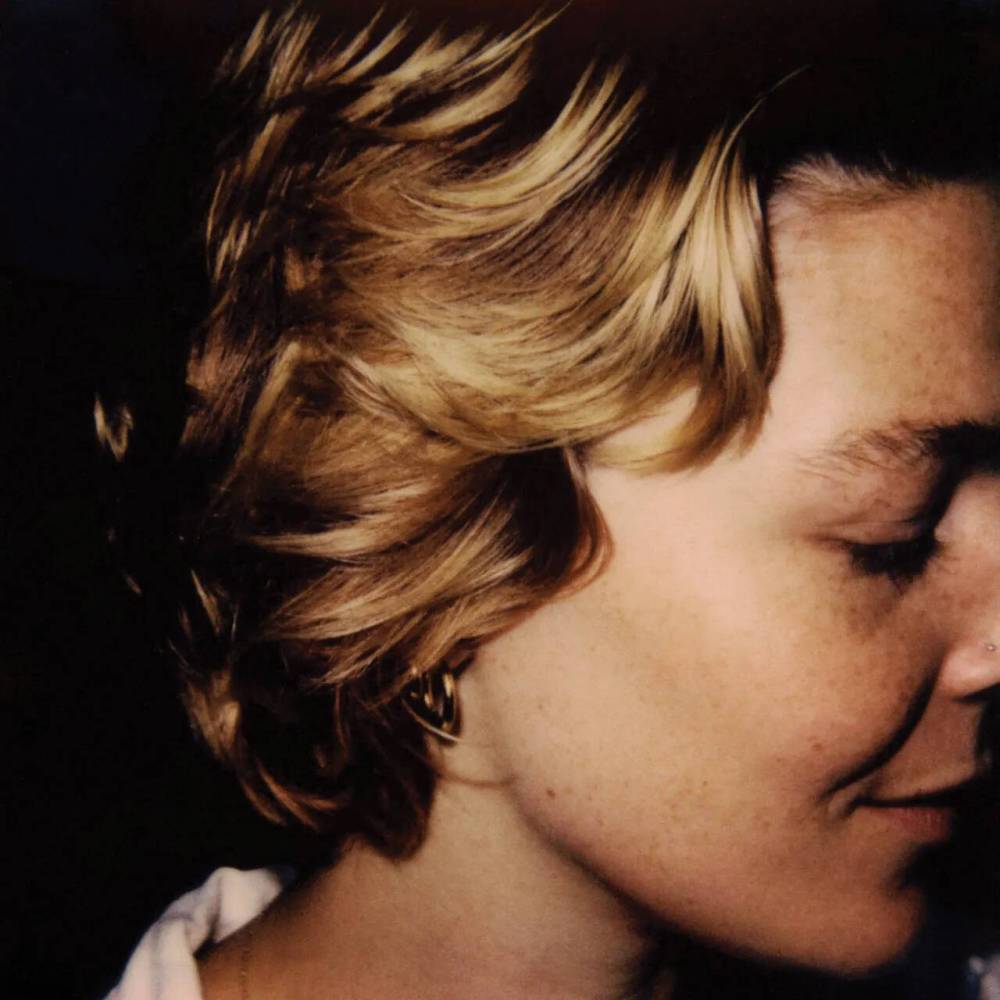
Maggie Rogers
Don’t Forget Me (Capitol)
Maggie Rogers always wanted to be a musician and, while her path has been natural, it’s also been methodical. She began playing harp at seven, learned guitar and piano in her teens and wrote, recorded and released her first record while still a high-school student, which helped her gain admission to New York University’s Clive Davis Institute of Recorded Music.
In 2016, a clip of Pharrell Williams exultantly praising Rogers’ song Alaska at an NYU master class went viral and prompted a bidding war for her services. Capitol won out, her 2018 debut album, Heard it in a Past Life, became a hit, and Rogers’ joyous and exuberant live performances captured the hearts of fans everywhere. At 24, Maggie Rogers was a star.
But then life got weird. Rogers found it hard to reconcile the odd nature of fame with the joy of performing and making music. So she did what every newly minted pop star does … and enrolled in the Harvard School of Divinity. Rogers now says that the thesis she wrote to earn a master’s degree at Harvard has helped her understand her place and that her second album, 2022’s Surrender, was part of the process.
Fast forward two years and Don’t Forget Me is easily the most relaxed, unself-conscious album of Rogers’ brief career. It’s also the best and its secret lies in the fact that she and multi-instrumentalist producer Ian Fitchuk (Kacey Musgraves) didn’t force things. The pair co-wrote and recorded the record in five days over the course of December 2022 and January 2023, then decided that their “creative handshake” didn’t need further embellishment — and it doesn’t.
The 10 songs are a breezy, golden-hour mix of Fleetwood-Mac-meets-Haim paeans to past loves, future dreams and broken-but-still-open hearts. Whether she’s conjuring an uptempo, ’80s-nightclub beat (Drunk, The Kill), pondering the essence of love on a piano ballad (I Still Do, the title track), or leaning into SoCal vibes (So Sick of Dreaming, On & On & On, Never Going Home), Rogers’ sweet mezzo-soprano reveals she’s close to reaching her equilibrium, both personally and professionally. ★★★★ out of five
Stream: So Sick of Dreaming; Never Going Home; Don’t Forget Me.
— John Kendle
POP
Lizzy McAlpine
Older (RCA)
The opening track on folk-pop singer-songwriter Lizzy McAlpine’s third album, Older, is only one minute and 40 seconds long. In that time, The Elevator carries the listener into McAlpine’s internal world, climbing a steady piano melody toward a drum-led instrumental before the song meets an abrupt end in the thick of McAlpine’s current conundrum.

“It wasn’t slow, it happened fast,” she sings in a near-whisper, readying her heart-rendering thought. “I think we can make it; I hope that I’m right.”
Older is a rich world for the listener to live within precisely because the songs vary in range and emotionality. Her songs focus on maturation, entering and leaving relationships, learning to trust and be trusted. On Older, that includes navigating grief and growing older, while watching others grieve and grow older, too.
Older follows McAlpine’s 2021 album Five Seconds Flat and its viral hit Ceilings. The ballad soundtracked hundreds of thousands of social media videos, revered by fans for its cinematic telling of an imagined love story. McAlpine, 24, evolves her visual, scene-driven songwriting on Older — sure to please fans of Ceilings.
McAlpine’s folk-pop tunes have always felt informed by musical theatre styling, if mostly for her ability to infuse each song with character, as if acting. Lyrically, she does that by referencing details — rocks thrown in water, a rejected cigarette, a crooked tie, a carousel ride — and telling blunt truths, such as on Drunk, Running, when she admits: “I’m so sorry I stay/When I shouldn’t” atop piano.
The penultimate song, March, is an aching but even piano-driven ode to McAlpine’s father, who died in 2020. The title track ends with McAlpine repeating the refrain: “I wish I knew what the end is.”
Tucked within McAlpine’s worried words is exactly what listeners look to her for: a still-confident tone, a pretty melody and reflections that only assure listeners in their own troubles. ★★★★ out of five
Stream: The Elevator; Older; Drunk, Running
— Elise Ryan, The Associated Press
JAZZ
Daniel Janke Winter Trio
Available Light (Chronograph)
Canadian pianist Daniel Janke (from the Yukon) was on a residency in France when he met bassist Basile Rahola from Spain and Ariel Tessier from France. The trio performed in Europe and realized that they had a collective voice they needed to share. That international discovery has led to this fine album.
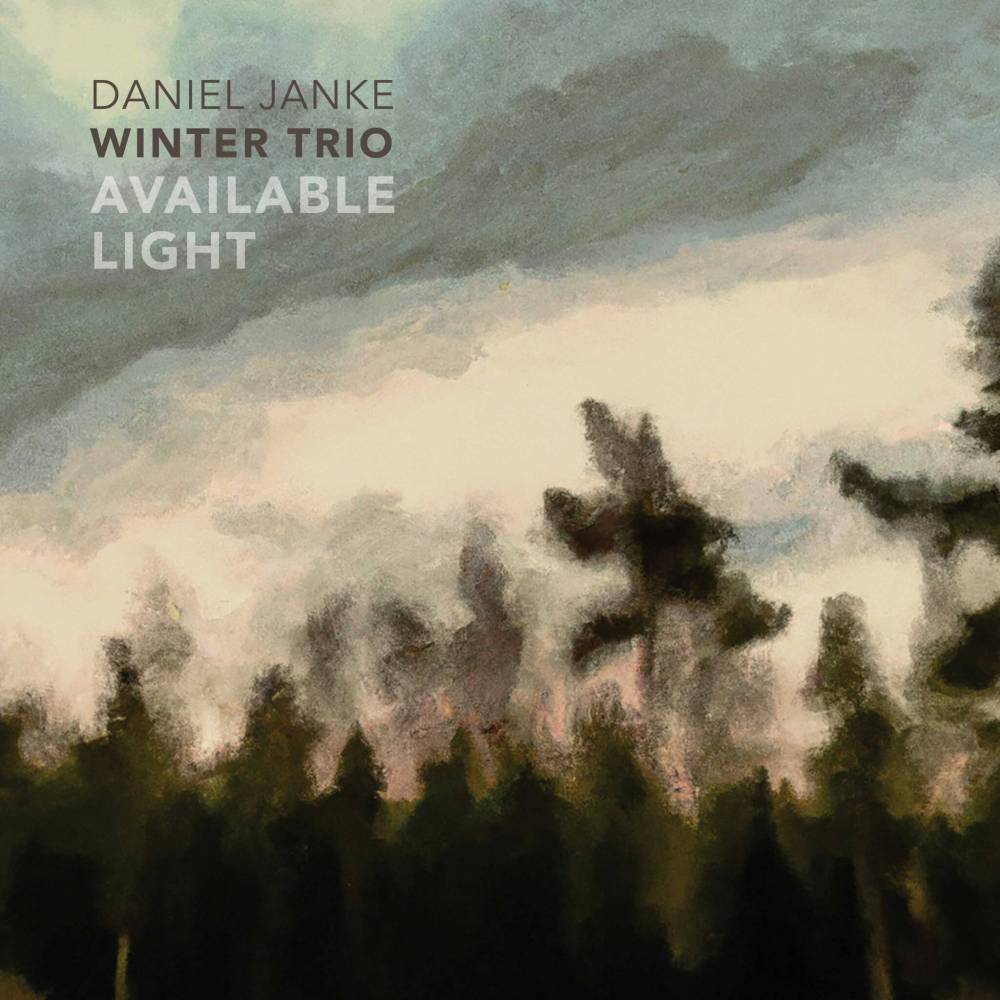
The album title references the film concept of using only natural light, and Janke also thinks of the winter light he experiences in the Yukon. It becomes an interesting metaphor for improvised music. The music has six original compositions by Janke as well as covers of several traditional tunes. His writing has elements of his love for film as well as background in roots and gospel music.
The originals all have a strong melodic foundation with improvisational openings for each member. The opening track, Song For Margaret, is lilting and cheerful. It also introduces Janke’s occasional practise of humming softly along with the tune. Unlike the wailing of someone such as Keith Jarrett, here it is quite endearing.
The title track is gentle and introspective while having a somewhat movie soundtrack feel. It swirls peacefully around the melody with fully involved bass and drums. Eleanor’s Waltz is another example of a gentle theme that communicates affection and respect. Giant moves the groove up a notch but retains the melodic base.
Several of the covers are worth noting. Blessed Assurance is an old gospel hymn that is played with an acknowledged spiritual understanding. The traditional Man of Constant Sorrow on the other hand is a straight up funky bluesy track without a discernible melody. River Ice has a great drum intro and slowly developing tension.
Sometimes a chance meeting leads to the development of a special jazz sound. This album proves it. ★★★★ out of five
Stream: Eleanor’s Waltz; Man of Constant Sorrow
— Keith Black
CLASSICAL
Alfia Bakieva, Les Musiciennes du Concert des Nations,
Jordi Savall
Vivaldi, Four Seasons and Concerti (Alia Vox)
Ever since first composed in 1723, Vivaldi’s Baroque masterpiece The Four Seasons comprised of four individual violin concerti has captivated listeners throughout the ages.
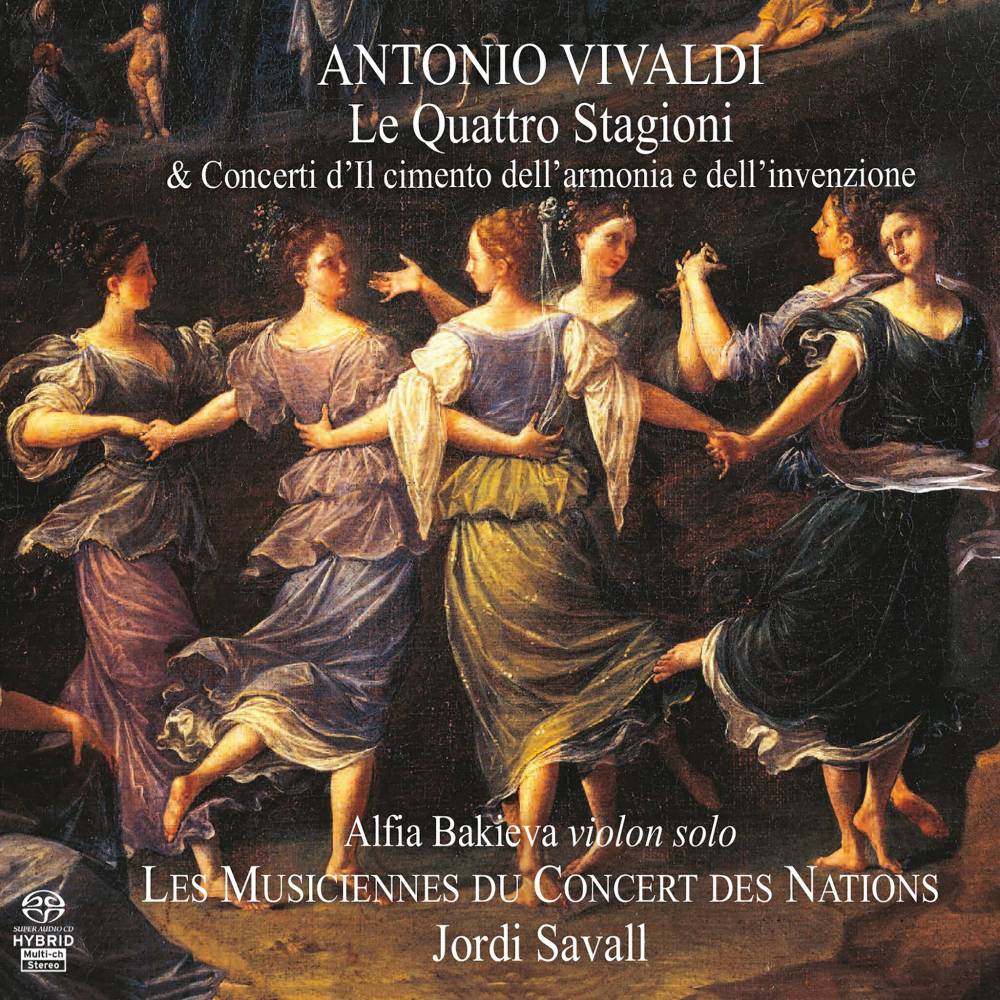
On this double album, conductor Jordi Savall leads Tatar violin soloist Alfia Bakieva with Les Musiciennes du Concert des Nations, the chamber ensemble notably consisting of 20 young musicians hailing from eight different countries.
What makes this album particularly unique is its incorporation of the composer’s own original sonnets celebrating the beauty of the passing seasons, performed here in Italian with English, French and Italian translations provided in the informative liner notes. The second disc also includes an encore performance of the work sans text, allowing listeners to compare and contrast the two versions.
Another noteworthy fact is that Savall leads an all-female ensemble, ostensibly recreating Vivaldi’s own experience during his time at Venice’s Ospedale della Pietà.
Currently based in Salzburg, Austria, Bakieva brings crisp lightness to each individual concerto, performed on her Francesco Ruggeri violin built in 1680 in Cremona, Italy, that further infuses her playing with authenticity.
Highlights include La Primavera, a.k.a. Spring’s opening movement Allegro, crisply rendered by the artist as well as L’Estate, or Summer’s Presto. She also displays her palette of darkly hewn tonal colours during each of the slower movements, including L’Autonno, or Autumn’s Adagio molto, before finally ending with L’Hiver, its final movement Allegro capturing the frozen ethos of the season.
The album rounds out with four additional concerti, showing the depth and breadth of the 18th century composer’s artistry. Of special note is La Tempesta di Mare, RV253 bristling with taut energy, as well as the unabashedly lyrical Andante del Concerto per Violino, RV 583, with Savall’s skilful direction ensuring this work sings. ★★★★ out of five
Stream: La Primavera, or L’Autonno from Le Quattro Stagioni; Andante del Concerto per Violino, RV 583
– Holly Harris
History
Updated on Friday, April 19, 2024 8:21 AM CDT: formats text, rearranges images