

Winnipeg street named after controversial bishop officially renamed in ceremony
Advertisement
Read this article for free:
or
Already have an account? Log in here »
To continue reading, please subscribe:
Monthly Digital Subscription
$0 for the first 4 weeks*
- Enjoy unlimited reading on winnipegfreepress.com
- Read the E-Edition, our digital replica newspaper
- Access News Break, our award-winning app
- Play interactive puzzles
*No charge for 4 weeks then price increases to the regular rate of $19.00 plus GST every four weeks. Offer available to new and qualified returning subscribers only. Cancel any time.
Monthly Digital Subscription
$4.75/week*
- Enjoy unlimited reading on winnipegfreepress.com
- Read the E-Edition, our digital replica newspaper
- Access News Break, our award-winning app
- Play interactive puzzles
*Billed as $19 plus GST every four weeks. Cancel any time.
To continue reading, please subscribe:
Add Free Press access to your Brandon Sun subscription for only an additional
$1 for the first 4 weeks*
*Your next subscription payment will increase by $1.00 and you will be charged $16.99 plus GST for four weeks. After four weeks, your payment will increase to $23.99 plus GST every four weeks.
Read unlimited articles for free today:
or
Already have an account? Log in here »
Hey there, time traveller!
This article was published 21/06/2024 (540 days ago), so information in it may no longer be current.
Winnipeg is holding a ceremony on National Indigenous Peoples Day to rename a major street originally named for a Catholic bishop who championed residential schools.
City council voted to rename Bishop Grandin Boulevard in the city’s south end to Abinojii Mikanah last year.
The new name translates to “children’s way” in Anishinaabemowin.

MIKAELA MACKENZIE / FREE PRESS
Mayor Scott Gillingham speaks at the Abinojii Mikanah renaming ceremony.Bishop Vital-Justin Grandin was identified by the Truth and Reconciliation Commission as leading the campaign for residential schools.
Mayor Scott Gillingham says renaming the street acknowledges the past injustices and honours the resilience and strength of Indigenous communities.
Frank Beaulieu, a knowledge keeper and member of the group who chose the new name, says it unites all Manitobans regardless of race or culture.
“I believe our children and grandchildren unborn will walk in a humble way with humility, respect and love for one another,” he said.
The first street signs bearing the new name went up in May.
Two other thoroughfares in the city named after Grandin were also changed.
Gillingham said the decision to rename the streets is more than a symbolic gesture.
MIKAELA MACKENZIE / FREE PRESS
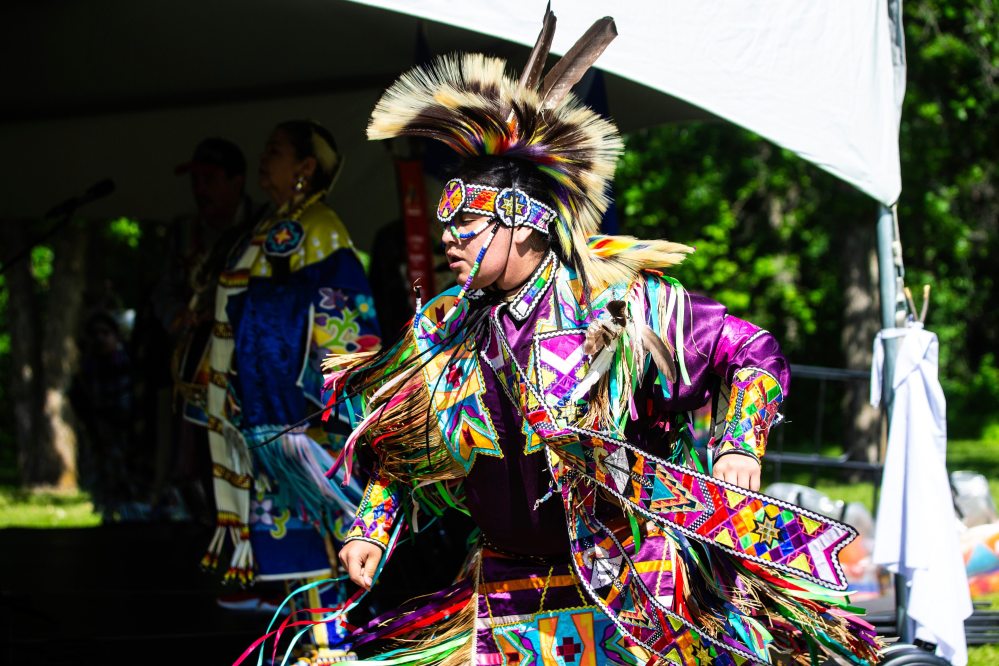
Grass dancer Dreyden Flettroulette dances at the Abinojii Mikanah renaming ceremony.“It’s an affirmation of our commitment to the preservation of Indigenous languages and cultures for future generations,” he said.
Friday’s renaming ceremony included teachings from First Nations, Inuit and Metis elders, music and powwow dancing and speeches from Indigenous and non-Indigenous dignitaries.
This report by The Canadian Press was first published June 21, 2024.