

Tennessee reaches long-term deal with Knoxville-based Pilot to preserve name of Neyland Stadium
Advertisement
Read this article for free:
or
Already have an account? Log in here »
To continue reading, please subscribe:
Monthly Digital Subscription
$0 for the first 4 weeks*
- Enjoy unlimited reading on winnipegfreepress.com
- Read the E-Edition, our digital replica newspaper
- Access News Break, our award-winning app
- Play interactive puzzles
*No charge for 4 weeks then price increases to the regular rate of $19.00 plus GST every four weeks. Offer available to new and qualified returning subscribers only. Cancel any time.
Monthly Digital Subscription
$4.75/week*
- Enjoy unlimited reading on winnipegfreepress.com
- Read the E-Edition, our digital replica newspaper
- Access News Break, our award-winning app
- Play interactive puzzles
*Billed as $19 plus GST every four weeks. Cancel any time.
To continue reading, please subscribe:
Add Free Press access to your Brandon Sun subscription for only an additional
$1 for the first 4 weeks*
*Your next subscription payment will increase by $1.00 and you will be charged $16.99 plus GST for four weeks. After four weeks, your payment will increase to $23.99 plus GST every four weeks.
Read unlimited articles for free today:
or
Already have an account? Log in here »
Hey there, time traveller!
This article was published 13/08/2024 (484 days ago), so information in it may no longer be current.
Tennessee announced on Tuesday a long-term deal with travel-center giant Pilot that will preserve the names of Neyland Stadium and Shields-Watkins Field while giving the Knoxville-based company prominent signage throughout the stadium, including on the playing surface.
Financial terms of the agreement were not disclosed, but it will initially be for up to 20 years with the possibility of extensions, the school and company said.
The deal comes as schools that play big-time college sports search for new revenue streams to address rising costs, including more money than ever going directly to athletes.
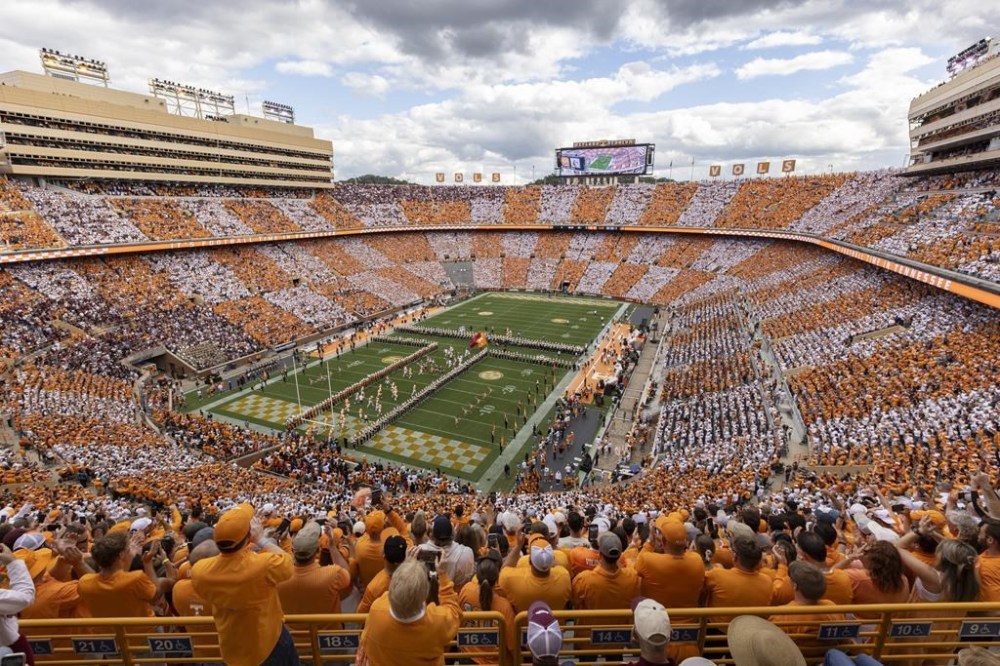
Tennessee athletic director Danny White said the partnership could be described as a naming rights deal without a name change, protecting the traditional name of Tennessee’s 101,915-seat stadium.
White said conversations with Pilot CEO Adam Wright and his team about a branding deal started more than a year ago, well before the NCAA tweaked its rules to allow schools to put sponsored branding on playing surfaces.
“There’s always been a rule that a stadium-naming agreement allows for corporate branding in the stadium, on the field,” White said. “And we structured this in a way where we knew from the onset that changing the name of Neyland Stadium or Shields-Watkins Field was never an option. It’s way too iconic of a building.”
Pilot and the University of Tennessee have a long history. Cleveland Browns owner Jimmy Haslam, a Tennessee alum, is the former CEO of the company as well as a longtime supporter of Volunteers athletics. Haslam’s father, Jim, played football at Tennessee for Gen. Robert Neyland, the coach whose name is on the stadium, and founded Pilot.
Pilot will be designated as the presenting partner of the $337 million Neyland Stadium renovation project. That includes new signage on the east side of the stadium with “Home of the Vols” along with the company’s logo, and Pilot convenience shop in the concourse selling snacks and beverages.
“Simply put, even just saying (Neyland Stadium) preserved by Pilot to me is worth it,” Wright said.
For power conference schools such as Tennessee, a revenue-sharing system that could direct as much as $21 million per year to athletes could begin as soon as 2025. The plan is part of the settlement of multiple antitrust lawsuits against the NCAA and conferences and still needs approval from a judge.
Naming rights deals for stadiums and arenas figure to become popular across the country.
Just last week, Florida International announced a deal with Grammy-winning musician Pitbull that includes naming rights to the school’s 20,000-seat football stadium.
For many schools, however, stadiums and arenas have names steeped in tradition and meaningful to fans. Altering them in any way to accommodate corporate sponsorship would risk backlash.
At Nebraska, for example, Memorial Stadium in Lincoln is dedicated to Nebraskans killed while serving in the military.
Cornhuskers athletic director Troy Dannen said a deal that would change the name of the stadium is not something he has even contemplated, but balancing traditions with financial needs will create tough calls for administrators throughout college sports.
“There are a lot of things that have been held sacred over time that whether you’re able to hold them sacred in this new environment is an outstanding question that we’re all going to have to face,” Dannen said.
Tennessee first played football at Shields-Watkins Field in 1921. It was named for William Simpson Shields, a Tennessee trustee who paid off a debt that was owed on the land and gave it back to the university, and his wife, the former Alice Watkins.
The stadium grew around the field and in 1962 it was expanded to more than 52,000 seats and dedicated to Neyland, who served two stints as Tennessee’s coach for 21 years (1926-52). His teams went 173-31-12, won five Southeastern Conference championships and the 1951 national title.
“The impact he had on this program, as a coach, it’s his vision. That’s why the stadium’s there,” White said. “We were never going to change the name. So it was about how do we preserve the name and build a win-win partnership that allows us to reinvest in our fan experience.”
___
Follow Ralph D. Russo at https://twitter.com/ralphDrussoAP
___
AP college football: https://apnews.com/hub/college-football