

Ontario ends 2023-24 with nearly balanced budget, partly due to international tuition
Advertisement
Read this article for free:
or
Already have an account? Log in here »
To continue reading, please subscribe:

Digital Subscription
One year of digital access for only $205*
- Enjoy unlimited reading on winnipegfreepress.com
- Read the E-Edition, our digital replica newspaper
- Access News Break, our award-winning app
- Play interactive puzzles
*First annual payment billed as $205.00 + GST for one year. This annual subscription will automatically renew at $233.00 + GST every 52 weeks (10% off the regular annual price of $259.35). Offer available to new and qualified returning subscribers only. Cancel any time.
To continue reading, please subscribe:
Add Free Press access to your Brandon Sun subscription for only an additional
$1 for the first 4 weeks*
- Enjoy unlimited reading on winnipegfreepress.com
- Read the E-Edition, our digital replica newspaper
- Access News Break, our award-winning app
- Play interactive puzzles
*Your next Brandon Sun subscription payment will increase by $1.00 and you will be charged $17.95 plus GST for four weeks. After four weeks, your payment will increase to $24.95 plus GST every four weeks.
Read unlimited articles for free today:
or
Already have an account? Log in here »
Hey there, time traveller!
This article was published 19/09/2024 (703 days ago), so information in it may no longer be current.
TORONTO – Ontario ended the 2023-24 fiscal year with a nearly balanced budget, in part due to higher-than-expected revenue from international student tuition at colleges.
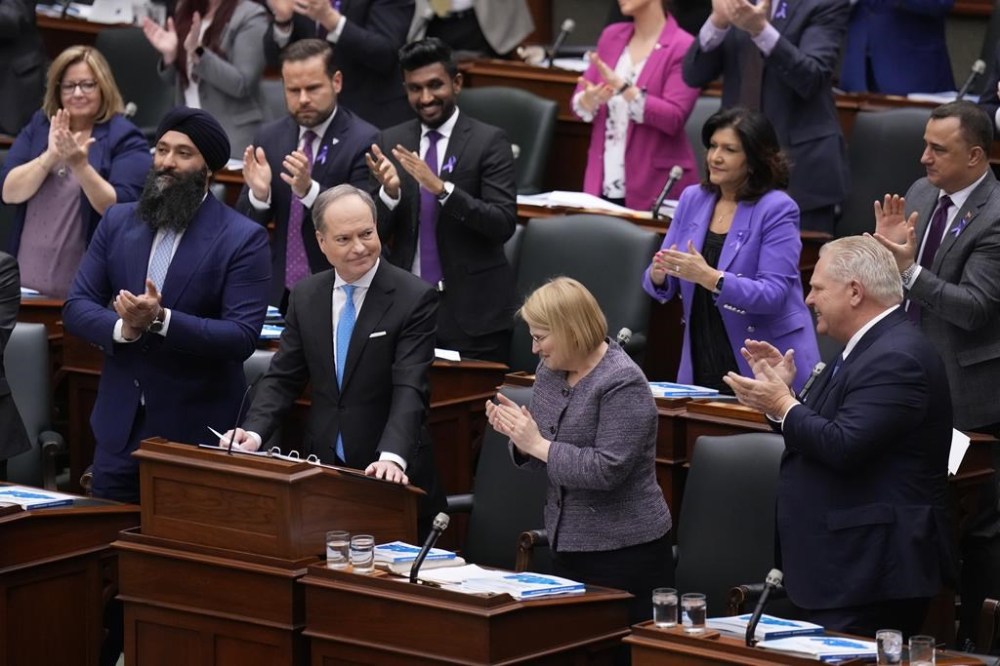
Finance Minister Peter Bethlenfalvy and Treasury Board President Caroline Mulroney released public accounts Thursday, a final tally of the spending and revenues for the last fiscal year. It showed Ontario ended the 2023-24 year just $600 million in the red, down from the $1.3-billion deficit for that year projected in the 2023 budget.
Revenues were up by $1.6 billion, or eight per cent, from what was expected at the time of the 2023 budget, and that was largely driven by increased tuition revenue from international students at colleges, government officials said.
That revenue is accounted for as part of “other non-tax revenues,” which were $3.4 billion higher than projected. That boost was partially offset by lower-than-expected tax revenues.
Ontario universities nearly doubled international student enrolment between 2014-15 and 2021-22, and colleges more than tripled international enrolment, according to a report last year from University of Ottawa-based think tank the Smart Prosperity Institute.
Ontario’s post-secondary institutions, particularly colleges, had been increasingly relying on international student tuition revenue after Premier Doug Ford’s government cut domestic tuition by 10 per cent in 2019 and froze it there.
Average university fees in 2020-21 were $7,938 for domestic undergraduate students and $40,525 for international undergraduate students.
The federal government announced in January that it was slashing the number of international-student permits, which Immigration Minister Marc Miller said was intended to curb bad actors from taking advantage of high tuition fees while providing a poor education.
Ontario’s allotment of new visas was cut in half, and the province indicated in the 2024 budget that losses for the college sector, whose finances show up on the province’s books, will total about $3 billion over two years.
Miller announced Wednesday that the number of visas will be further reduced by 10 per cent, and Ontario government officials say they do not yet have an estimate of how that will affect the province’s finances.
Bethlenfalvy said he expects to have more information by the time he releases his fall economic update by mid-November.
“We provided some sustainability to help colleges and universities navigate these changes,” he said. “We continue to be there for colleges and universities.”
The provincial government announced in February that it would put an additional $1.3 billion over three years toward post-secondary institutions increasingly struggling with finances in the face of low provincial funding and frozen tuition fees, but colleges and universities have said it does not come close to sustaining the sector.
Colleges Ontario said in a statement that the federal government’s announcement this week will hurt colleges and deepen a labour crisis.
“These developments highlight the pressing need for immediate action from Ontario and the federal government to address the fiscal challenges facing public colleges and ensure stability for Ontarians,” president Marketa Evans wrote.
Steve Orsini, president and CEO of the Council of Ontario Universities, said he is concerned the new changes will erode Canada’s brand as a destination for top talent.
“The reduction in international student enrolment not only diminishes the cultural and academic diversity that enriches the learning environment for all students, but also risks the long-term financial sustainability of Ontario’s universities,” he wrote in a statement.
This report by The Canadian Press was first published Sept. 19, 2024.