

Murder charge withdrawn after conviction of Timothy Rees set aside in 1989 killing
Advertisement
Read this article for free:
or
Already have an account? Log in here »
To continue reading, please subscribe:
Monthly Digital Subscription
$1 per week for 24 weeks*
- Enjoy unlimited reading on winnipegfreepress.com
- Read the E-Edition, our digital replica newspaper
- Access News Break, our award-winning app
- Play interactive puzzles
*Billed as $4.00 plus GST every four weeks. After 24 weeks, price increases to the regular rate of $19.95 plus GST every four weeks. Offer available to new and qualified returning subscribers only. Cancel any time.
Monthly Digital Subscription
$4.99/week*
- Enjoy unlimited reading on winnipegfreepress.com
- Read the E-Edition, our digital replica newspaper
- Access News Break, our award-winning app
- Play interactive puzzles
*Billed as $19.95 plus GST every four weeks. Cancel any time.
To continue reading, please subscribe:
Add Free Press access to your Brandon Sun subscription for only an additional
$1 for the first 4 weeks*
*Your next subscription payment will increase by $1.00 and you will be charged $16.99 plus GST for four weeks. After four weeks, your payment will increase to $23.99 plus GST every four weeks.
Read unlimited articles for free today:
or
Already have an account? Log in here »
TORONTO – A decades-long legal saga came to a bittersweet end for an Ontario man Thursday after prosecutors chose not to try him a second time in the killing of a young girl — a murder for which he spent more than 20 years behind bars before his conviction was set aside last month.
Ontario’s top court ordered a new trial for Timothy Rees after finding that evidence that affected the fairness of his trial had been withheld, but it remained up to the Crown to decide whether to proceed.
Prosecutors withdrew the charge against Rees on Thursday, saying that in light of the appeal ruling and the passage of time, it was no longer in the public interest to try the case.

It remains unclear why the evidence — which included a conversation recorded by police — wasn’t disclosed, Ontario Superior Court Justice Jane Kelly said, noting that none of the people in the Toronto courtroom were involved in that decision.
“You have maintained your innocence for all these years,” resulting in a longer imprisonment, the judge said, addressing Rees at the request of his lawyer.
“Twenty-three years is simply too long … one day would have been too long,” Kelly said.
Rees was found guilty in 1990 of second-degree murder in the killing of Darla Thurrott and sentenced to life in prison with no chance of parole for 15 years. He challenged his conviction but the appeal was dismissed in 1994, and the Supreme Court declined to hear his case.
Rees was released on day parole in 2009 and later granted full parole.
Two years ago, the federal justice minister referred Rees’s case back to the Appeal Court following the identification of new information that the court had not heard in his trial or appeal. The Appeal Court found there was a miscarriage of justice that warranted a new trial.
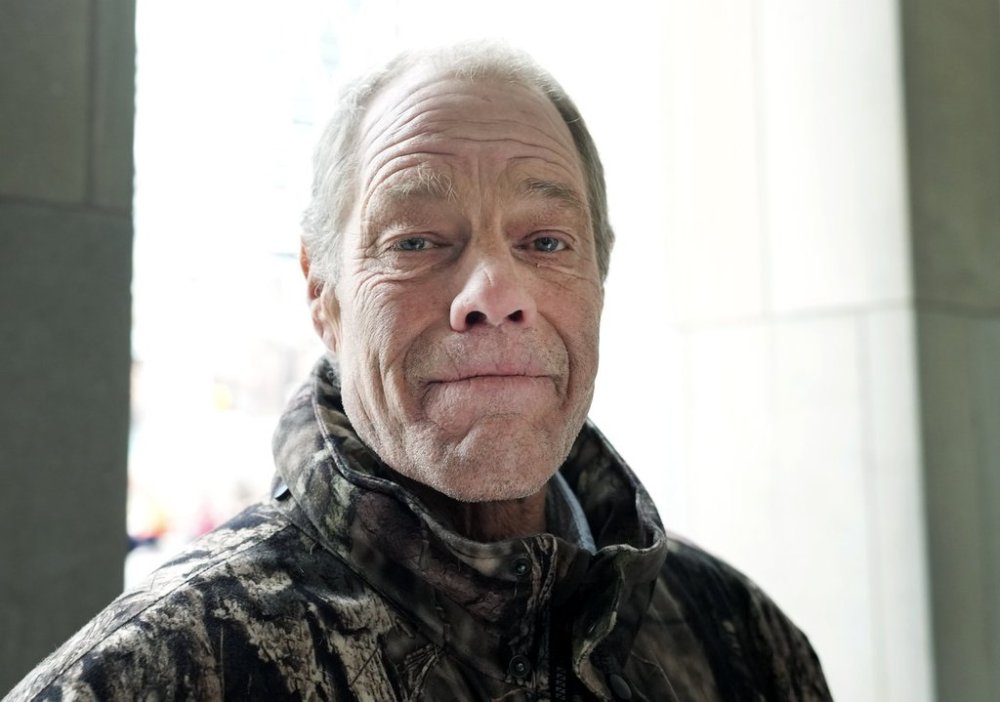
Outside the courthouse Thursday, Rees said it “means the world” to him to no longer be labelled a murderer for a crime he didn’t commit, adding he had waged a “long, hard battle” to clear his name.
Still, the case’s resolution stirred mixed emotions, he said.
“I’m just glad it’s over. It should be a happy day but it’s really not because I’m still saddened over Darla’s death,” he said.
There’s “no justice for her,” he added.
Rees said he’s “very angry” that those investigating Darla’s death didn’t disclose the evidence at the heart of his appeal. “They should be going to jail for what they did, in my opinion,” he said.
The new appeal turned on a recording of a conversation between an officer and the landlord of the building, which police had not disclosed.
On the recording, the landlord, who lived in the same home as Darla and her family, denied killing the girl and “made some statements suggesting prior sexual contact with her,” the appeal decision said.
He also made comments that suggested he had encountered Darla on the night of her death, and others denying he had, it said.
The fact that the tape had not been disclosed affected the fairness of the trial by depriving the defence of material to further advance its theory of a third-party suspect, the court ruled.
The landlord, who has since died, was the defence’s main suspect, court heard Thursday.
Rees’s defence lawyer, James Lockyer, said the tape and another recording related to the case were eventually discovered by a cold case investigator, who found them in a box in the office of the chief of police.
He recalled feeling “bewilderment and amazement” when police handed over the tapes.
Wrongful convictions are often solved by fluke, Lockyer said outside court. “Without the discovery of this tape, I doubt … this day would ever have come,” he said.
Lockyer asked the judge to address Rees directly because it’s important that the justice system show accountability, he said.
“I think when the justice system does so much damage to someone, as it did to Tim Rees, I think it should step up and take responsibility for it,” he said.
“There are a lot of lessons to be learned from these cases and from Tim Rees’s case particularly, and (Kelly) addressed the main one, the non-disclosure of a key piece of evidence.”
This report by The Canadian Press was first published Dec. 18, 2025.