

Ole Miss QB Trinidad Chambliss sues NCAA for extra year of eligibility
Advertisement
Read this article for free:
or
Already have an account? Log in here »
To continue reading, please subscribe:

Digital Subscription
One year of digital access for only $205*
- Enjoy unlimited reading on winnipegfreepress.com
- Read the E-Edition, our digital replica newspaper
- Access News Break, our award-winning app
- Play interactive puzzles
*First annual payment billed as $205.00 + GST for one year. This annual subscription will automatically renew at $233.00 + GST every 52 weeks (10% off the regular annual price of $259.35). Offer available to new and qualified returning subscribers only. Cancel any time.
To continue reading, please subscribe:
Add Free Press access to your Brandon Sun subscription for only an additional
$1 for the first 4 weeks*
- Enjoy unlimited reading on winnipegfreepress.com
- Read the E-Edition, our digital replica newspaper
- Access News Break, our award-winning app
- Play interactive puzzles
*Your next Brandon Sun subscription payment will increase by $1.00 and you will be charged $17.95 plus GST for four weeks. After four weeks, your payment will increase to $24.95 plus GST every four weeks.
Read unlimited articles for free today:
or
Already have an account? Log in here »
Hey there, time traveller!
This article was published 16/01/2026 (234 days ago), so information in it may no longer be current.
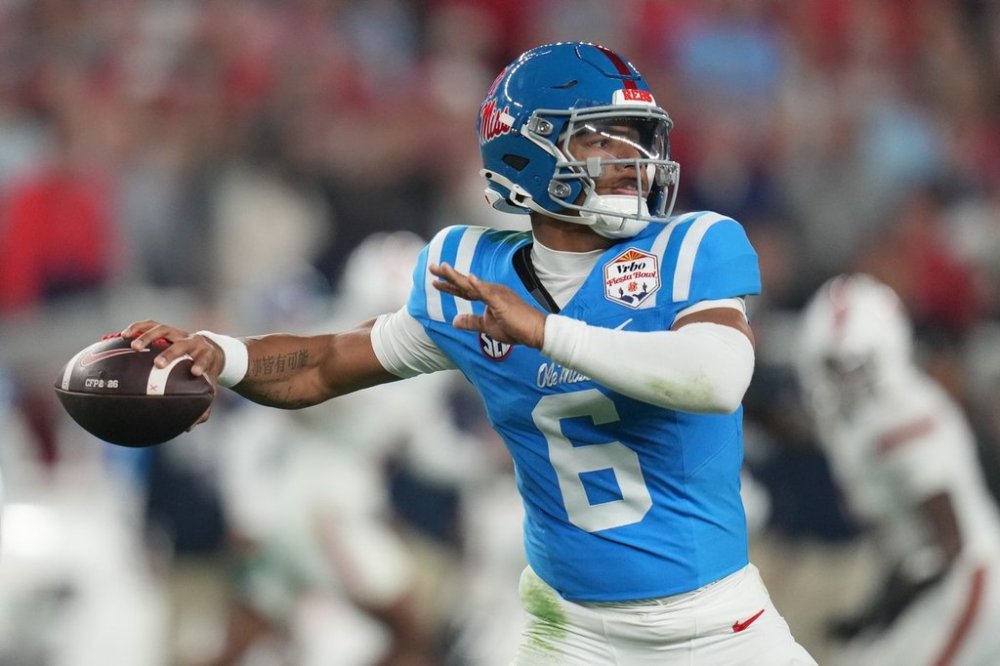
Mississippi quarterback Trinidad Chambliss sued the NCAA in state court on Friday for an additional year of eligibility so he can play for the Rebels next season.
The suit filed in Lafayette County came a week after the NCAA denied Ole Miss’ request for an extra year, saying the university and Chambliss’ previous school — Ferris State — failed to provide adequate medical documentation to back up the request.
The lawsuit filed Friday called the NCAA’s denial in “bad-faith, unreasonable and arbitrary,” and detailed Chambliss’ history of illness and included letters from physicians.
“Despite the duty of good faith and fair dealing it owes to Trinidad, the NCAA insists on considering the evidence in Trinidad’s case in an isolated, rather than comprehensive manner; interpreting its rules to impose requirements not contained therein; taking unreasonable if not irrational positions; and acting in an arbitrary and capricious manner in its decision-making and ruling,” the suit says.
Ole Miss’ arguments revolve around the fact that the 23-year-old Chambliss, although he has been in college for five years, has only played three years of college football because of that medical history.
“Trinidad first enrolled in Ferris State in the fall of 2021, but medical and physical incapacity prevented his ability to adequately train and condition and develop athletically,” the suit says.
After taking a redshirt his first season at Ferris State in 2021-22, Chambliss was held out in his second season for medical reasons.
“Obviously, Trinidad’s medical conditions, which rendered him incapable of competing in any game during these years, were beyond his or Ferris State’s control,” the suit says.
He played two more seasons at the Division II school in Michigan, leading the Bulldogs to a national championship before transferring to Ole Miss before the start of this season.
Chambliss completed 294 of 445 passes (66.1%) for 3,937 yards with 22 touchdowns and three interceptions for Ole Miss (13-2), which set a school record for wins, including two after making the College Football Playoff for the first time. He ran for 527 yards and eight more TDs.
The Rebels lost 31-27 to Miami in the College Football Playoff semifinals on Jan. 8.
The NCAA, when contacted Friday, did not have a new statement, but referred to its statement from a week ago saying “This decision aligns with consistent application of NCAA rules.”
The NCAA said in that week-old statement that approval of such waivers requires schools to submit medical documentation from a treating physician at the time of a student’s incapacitating injury or illness.
“The documents provided by Ole Miss and the student’s prior school include a physician’s note from a December 2022 visit, which stated the student-athlete was ‘doing very well’ since he was seen in August 2022,” the NCAA said. “Additionally, the student-athlete’s prior school indicated it had no documentation on medical treatment, injury reports or medical conditions involving the student-athlete during that time frame and cited ‘developmental needs and our team’s competitive circumstances’ as its reason the student-athlete did not play in the 2022-23 season.”
Ole Miss athletic director Keith Carter previously said the school will appeal the NCAA’s ruling.
___
Get poll alerts and updates on the AP Top 25 throughout the season. Sign up here. AP college football: https://apnews.com/hub/ap-top-25-college-football-poll and https://apnews.com/hub/college-football