

‘A huge problem’: Toronto snowstorm highlights accessibility issues, disability advocates say
Advertisement
Read this article for free:
or
Already have an account? Log in here »
To continue reading, please subscribe:
Monthly Digital Subscription
$1 per week for 24 weeks*
- Enjoy unlimited reading on winnipegfreepress.com
- Read the E-Edition, our digital replica newspaper
- Access News Break, our award-winning app
- Play interactive puzzles
*Billed as $4.00 plus GST every four weeks. After 24 weeks, price increases to the regular rate of $19.95 plus GST every four weeks. Offer available to new and qualified returning subscribers only. Cancel any time.
Monthly Digital Subscription
$4.99/week*
- Enjoy unlimited reading on winnipegfreepress.com
- Read the E-Edition, our digital replica newspaper
- Access News Break, our award-winning app
- Play interactive puzzles
*Billed as $19.95 plus GST every four weeks. Cancel any time.
To continue reading, please subscribe:
Add Free Press access to your Brandon Sun subscription for only an additional
$1 for the first 4 weeks*
*Your next subscription payment will increase by $1.00 and you will be charged $16.99 plus GST for four weeks. After four weeks, your payment will increase to $23.99 plus GST every four weeks.
Read unlimited articles for free today:
or
Already have an account? Log in here »
TORONTO – Every winter, David Lepofsky uses the same strategy to navigate frigid temperatures in Toronto: walking as fast as possible to get to his destination.
But he said it’s far too dangerous to use that technique this winter, which has brought extended periods of bone-chilling cold weather and a record snowfall on Sunday that will take days to clean up.
The 68-year-old retired lawyer and disability rights advocate who is blind said it’s impossible for him to walk fast when the roads and walkways are covered with layers of ice and snow.
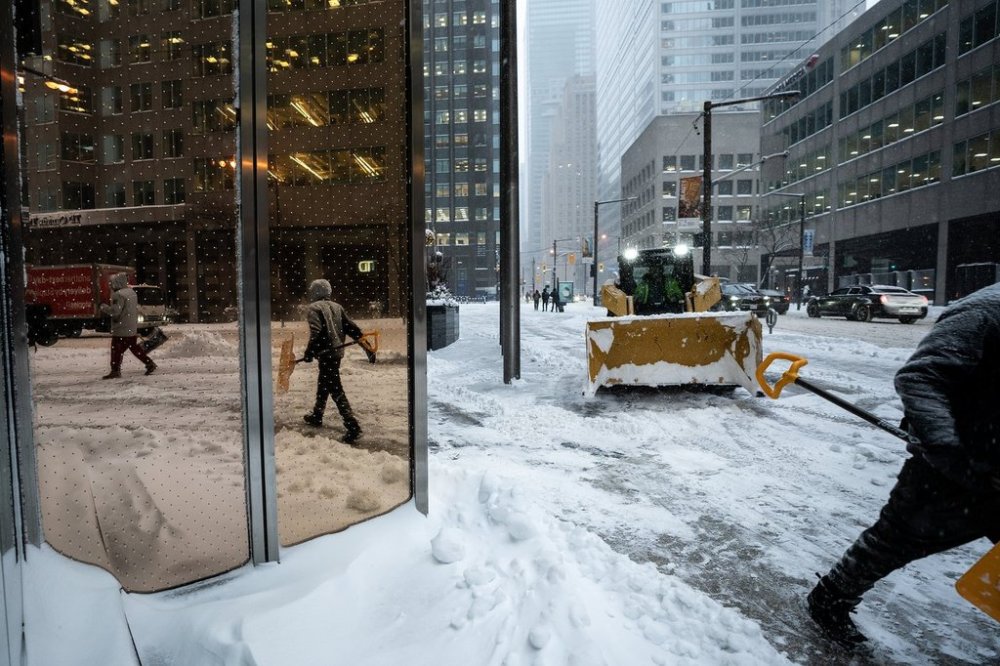
While he understands that clearing more than 50 centimetres of snow accumulation can be complicated in big cities, Lepofsky thinks more could — and should — be done to support people like him.
“If they shovel the snow in a way that creates mountains of snow that impede our safe navigation out of our house or onto the street to pick up an Uber or whatever, this is a huge problem,” he said in an interview.
He said his wife normally asks him to pick up groceries from a nearby store, but he now has to decline such requests.
“Because even if the route is shovelled in certain parts, you can hit one mountain and it’s game over,” he said. “Nobody wants a broken hip … later in life that can be terminal.”
Lepofsky is a part-time professor who teaches disability rights at several Ontario universities. He is among those pushing for decades for the implementation of the Accessibility for Ontarians with Disabilities Act.
He now serves as chair of the AODA Alliance, a coalition of volunteers advocating for accessibility, and hosts a podcast on disability rights.
Lepofsky said under AODA, the Ontario government is required to enact a set of standards for municipalities to minimize the effects of severe weather events on people with mobility issues, a much-needed move the province hasn’t yet made.
Rabia Khedr, the national director of the advocacy group Disability Without Poverty, echoed Lepofsky’s comments.
“Under Accessibility for Ontarians with Disabilities Act, there is this whole thing of the built environment and public spaces being barrier-free,” she said. “However, I don’t think we’ve yet to identify every single barrier that people could potentially face, and especially in terms of emergency preparedness.”
Khedr said snow-clogged roads are especially challenging for people with disabilities who live alone.
“It makes them very vulnerable if they’re dependent on caregivers coming to their house and caregivers may not be able to enter into their street or into their … driveways,” she said.
Khedr called on municipalities to prioritize accessibility needs in extreme weather situations.
“I’m blind. I depend on what I hear, what I feel, what I touch, and a blanket of snow completely changes what I see, especially the quantity of this snow that piled up yesterday,” she said in an interview on Monday.
“And when pathways and walkways are not cleared, then it becomes even harder to figure out where to navigate.”
She said cities could offer programs that would give people with disabilities the option to pay a “reasonable” fee for snow removal from their driveways or pathways.
The City of Toronto said the cleanup after Sunday’s storm is expected to take several days, asking residents to be patient as that work continues. Officials have promised more proactive and efficient snow removal after criticism of city operations during heavy snowfall in February 2025.
“The impact on everyone is this is all a nightmare, but for people with disabilities, it can affect whether you can get out to buy goods, like food or the drugstore, or get to a needed health appointment,” Lepofsky said.
He said one way that municipalities could address the issue is by registering the addresses of people with disabilities for extra attention during snow-clearing operations in the winter. Property owners could also do their part by fully clearing the snow from their sidewalks to make life easier for neighbours who are living with a disability, he said.
The biggest cause of disability is aging, and most people experience some form of disability as they grew old, Lepofsky said.
“If you don’t have (a disability) now, you’re going to get one later and that’s the truth about everybody, so by not handling this properly, our governments are hurting the majority of everyone.”
This report by The Canadian Press was first published Jan. 27, 2026.