

Millbrook First Nation in Nova Scotia adds waterfront reserve land at Tufts Cove
Advertisement
Read this article for free:
or
Already have an account? Log in here »
To continue reading, please subscribe:

Digital Subscription
One year of digital access for only $205*
- Enjoy unlimited reading on winnipegfreepress.com
- Read the E-Edition, our digital replica newspaper
- Access News Break, our award-winning app
- Play interactive puzzles
*First annual payment billed as $205.00 + GST for one year. This annual subscription will automatically renew at $233.00 + GST every 52 weeks (10% off the regular annual price of $259.35). Offer available to new and qualified returning subscribers only. Cancel any time.
To continue reading, please subscribe:
Add Free Press access to your Brandon Sun subscription for only an additional
$1 for the first 4 weeks*
- Enjoy unlimited reading on winnipegfreepress.com
- Read the E-Edition, our digital replica newspaper
- Access News Break, our award-winning app
- Play interactive puzzles
*Your next Brandon Sun subscription payment will increase by $1.00 and you will be charged $17.95 plus GST for four weeks. After four weeks, your payment will increase to $24.95 plus GST every four weeks.
Read unlimited articles for free today:
or
Already have an account? Log in here »
Hey there, time traveller!
This article was published 30/01/2026 (233 days ago), so information in it may no longer be current.
DARTMOUTH – More than 108 years after the catastrophic Halifax Explosion caused widespread damage, the chief of Millbrook First Nation says his community is returning home.
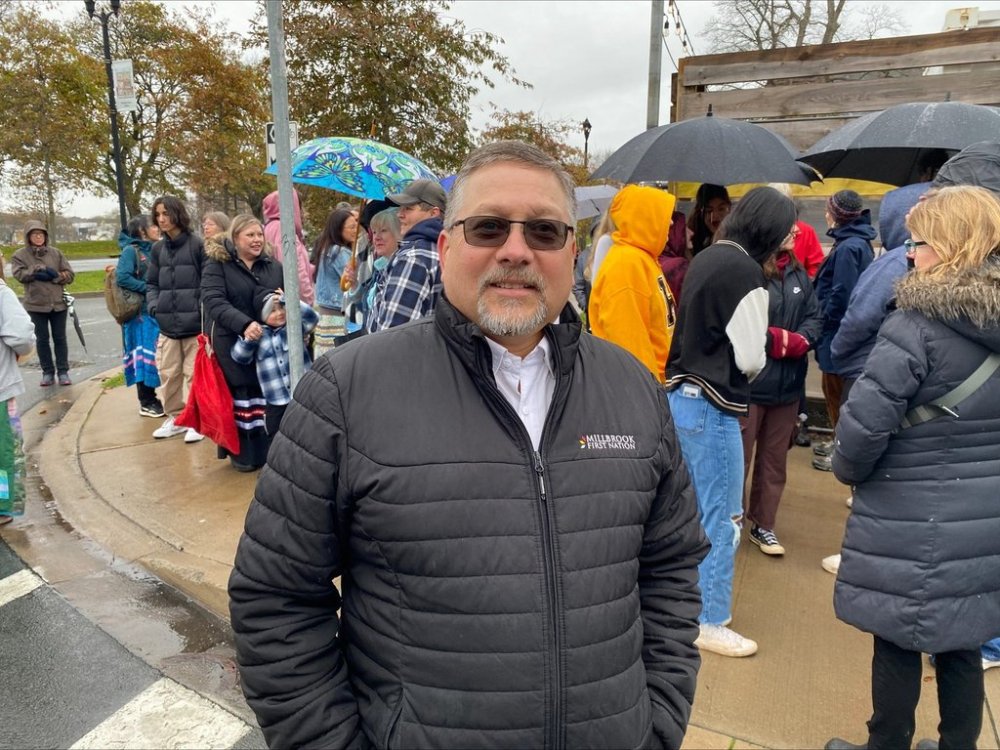
Chief Bob Gloade and Minister of Crown-Indigenous Relations Rebecca Alty announced Friday more than seven hectares, or 0.07 square kilometres, of coastal land and water lot space in Tufts Cove in Dartmouth, N.S., has been added to the Millbrook First Nation reserve.
On Dec. 6, 1917, two wartime ships collided in Halifax harbour, sparking a massive explosion that killed almost 2,000 people, wounded 9,000 and left 25,000 homeless.
A Mi’kmaq village on the Dartmouth side of the harbour called Turtle Grove was wiped out by a tsunami created by the blast, and survivors left for Millbrook First Nation and Sipekne’katik First Nation.
“Our community members resided in that location back at that time… there’s an annual memorial service for those residents that we lost during the Halifax explosion,” Gloade said Friday at a news conference.
“There’s a deep connection to the history of Turtle Grove that we’re reconnecting with,” he added.
Millbrook First Nation is a Mi’kmaq community located near the town of Truro, N.S., which is about 100 kilometres northeast of Halifax. About 1,100 residents are living on reserve in the community which has close to 2,400 members.
The chief said the new land will be used to develop homes, commercial buildings and space for new services, and they are looking to infill much of the water lot to create new land. He said the goal is to create about 1,000 housing units on the new reserve land.
“It’s going to create jobs, opportunities and places to live for not only our community residents, but all Nova Scotians,” he said.
Gloade said Friday’s announcement follows decades of work that began well before he joined Millbrook’s council 26 years ago.
Alty congratulated the chief and his council, saying she’s well aware this day “has been a long time coming.”
“It’s one of my priorities as minister to accelerate these processes moving forward,” she said.
The minister told reporters the addition of this reserve land will support the community’s long-term growth. She said there is significant potential at Tufts Cove, as new homes and economic activity will benefit the First Nation and surrounding region.
“As a government, we recognize that for far too long, First Nations across the country have had to struggle to reclaim what was unfairly taken from them – land, culture and the ability to make important decisions for yourself. While we can’t change the past, we can choose to act with integrity in the present,” Alty said.
Gloade said the community is in the early stages of planning development, and hopes to start on the project by creating an access road to the waterfront site within this year.
This report by The Canadian Press was first published Jan. 30, 2026.
Note to readers:This is a corrected story. A previous version said seven hectares is equivalent to 0.7 square kilometres. In fact, it’s 0.07 square kilometres.