

Love and loss
Vulnerable memoir chronicles Griffiths’ marriage to Salman Rushdie, the attempt on his life and the sudden loss of a friend
Advertisement
Read this article for free:
or
Already have an account? Log in here »
To continue reading, please subscribe:
Monthly Digital Subscription
$1 per week for 24 weeks*
- Enjoy unlimited reading on winnipegfreepress.com
- Read the E-Edition, our digital replica newspaper
- Access News Break, our award-winning app
- Play interactive puzzles
*Billed as $4.00 plus GST every four weeks. After 24 weeks, price increases to the regular rate of $19.95 plus GST every four weeks. Offer available to new and qualified returning subscribers only. Cancel any time.
Monthly Digital Subscription
$4.99/week*
- Enjoy unlimited reading on winnipegfreepress.com
- Read the E-Edition, our digital replica newspaper
- Access News Break, our award-winning app
- Play interactive puzzles
*Billed as $19.95 plus GST every four weeks. Cancel any time.
To continue reading, please subscribe:
Add Free Press access to your Brandon Sun subscription for only an additional
$1 for the first 4 weeks*
*Your next subscription payment will increase by $1.00 and you will be charged $16.99 plus GST for four weeks. After four weeks, your payment will increase to $23.99 plus GST every four weeks.
Read unlimited articles for free today:
or
Already have an account? Log in here »
Poet and novelist Rachel Eliza Griffiths’s The Flower Bearers is an open wound of a memoir. In it we are introduced to a talented, fragile 42-year-old woman on the eve of her marriage to author Salman Rushdie. Griffiths writes that at the time she wanted “to be exposed and immersed in the name of a love that was as marvellous as the love of words and life itself we both shared.” Ecstatically, she proclaims: “Yes! I am in love — again.”
In the book’s opening scene, Griffiths revels in her wedding preparations, describing in sensual terms the experience of having her body decorated with henna: “Brown and slender, long arms stretch above their parallel shadows on the white sheet,” she writes. “The wrists, palms, and knuckles are embroidered with a hand-drawn world of diamonds and delicate curlicues. On my left palm, a man’s name has been inscribed.” She is giddy with joy, but that joy is tinged with foreboding: “When I whisper that I’m happy today,” Griffiths writes, “when I murmur that nothing can hurt us, I foolishly believe myself.”
Griffiths and Rushdie first met four years before, in 2017, at a literary soirée in Manhattan, and their attraction was immediate. Minutes into their conversation, Rushdie suggested they move to the terrace, where they could talk more easily. On the way out, Rushdie “collided with a massive plate glass door,” Griffiths recalls. “Hitting the glass at full momentum sent him immediately to the floor. He was sprawled there with blood flowing down his nose, his glasses cracked, and a sizable knot blooming on the dome of his head.” Stunned and embarrassed but not badly hurt, Rushdie attempted a hasty exit, but Griffiths insisted on accompanying him to his nearby apartment. There, she placed an ice pack on his head, and the two talked and laughed until the sun came up.
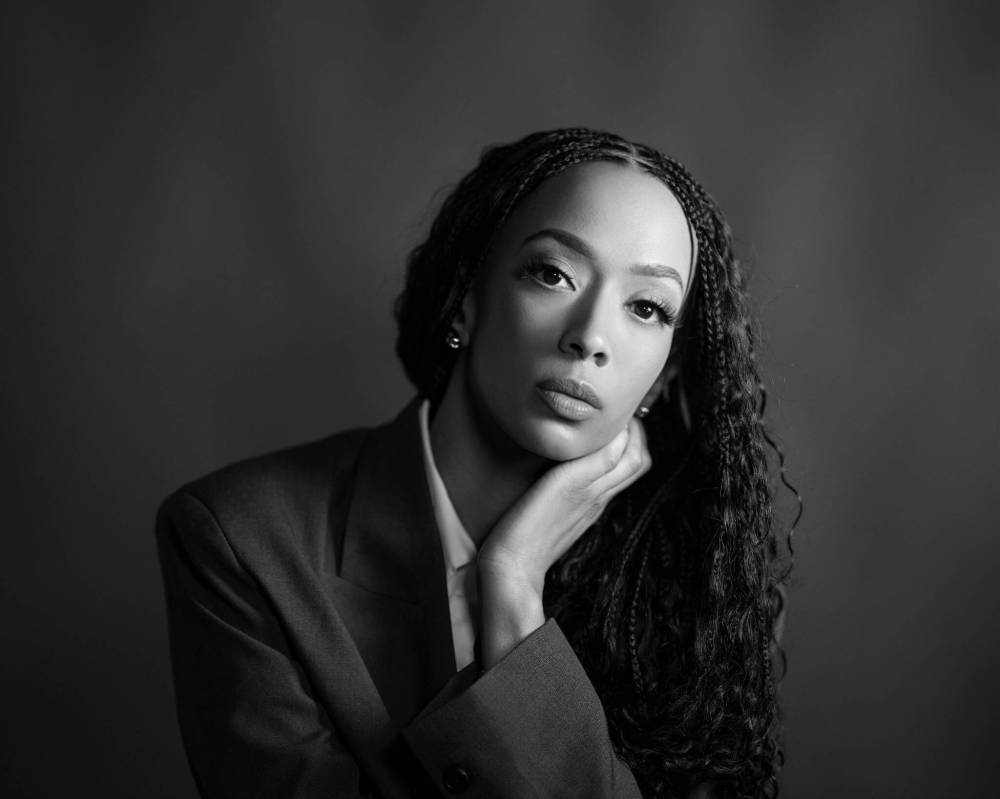
Rachel Eliza Griffiths photo
There are moments in Rachel Eliza Griffiths’ memoir that are almost too raw to bear, as she revisits the spiral she experienced as grief and fear accrued.
At the time, Griffiths was an aspiring poet and visual artist who struggled to make ends meet and was beset by anxiety and mental illness. She reports being plagued by “alters” — voices and visions that had tormented her since childhood. In her 20s and early 30s, she was hospitalized multiple times following a suicide attempt and other incidents of suicidal ideation. She initially resisted seeking psychological help because of shame and the view that “therapy was for white folks,” but at 30 she began regularly seeing a therapist and was ultimately diagnosed with dissociative identity disorder.
The first friend she revealed her diagnosis to was Kamilah Aisha Moon, a fellow poet she’d met in graduate school who became her “chosen sister.” They were both infected with “literary madness,” bonding over their shared adoration of the works of June Jordan, Lucille Clifton, Toni Cade Bambara, Alice Walker and others. They exchanged stories of trauma and bolstered each other, drank too much and workshopped poetry together. When others discouraged Griffiths from writing, Moon cheered her on: “I centred Aisha’s words as I might focus on a lighthouse,” she recalls. In an email to Moon, Griffiths writes: “When I think about you everything good in me radiates.”
On the night before her wedding to Rushdie in her hometown, Wilmington, Del., Griffiths texts Moon, wondering why she hasn’t yet arrived — there is no response. She fears something is wrong, but also knows Moon often fails to charge her phone. Griffiths sleeps uneasily, but the next day the wedding goes forward. Only after the ceremony is over does Griffiths allow herself to think again about Moon’s whereabouts.
At that point, the story takes the first of many grim turns: Griffiths learns Moon has died. “I am howling I don’t know for how long I howl until I choke on the air that is too thin in my lungs to hold my screams,” Griffiths writes. “I don’t know yet that I will never know the cause of Aisha’s death.”
There are several mentions in this disturbing and intimate memoir of Griffiths’s deep need for privacy, and yet her words on the page are as emotionally raw as a primal scream. Over the next year, she writes, “the only lifeline I cling to is my marriage to Salman.” But that lifeline fails to rescue her. In 2022, she was at home in Manhattan while he traveled upstate for a speaking engagement at the Chautauqua Institution. Griffiths received a call from a friend: “Her voice is broken, strange. Then she is sobbing. I hear her say my husband’s name.”
The reader, of course, has waited with dread for this moment to come — when Griffiths learns that a man publicly attacked Rushdie with a knife, blinding him in one eye and nearly killing him. At the hospital, she writes, she had “never felt such a palpable sensation of death being near.” But she forbade it from entering the room. “Love is a power, as real as that knife, and deeper than its woundings.”
Griffiths recounts that for the next two years, she was crazed, “trapped between the grief for my friend and the trauma of my husband’s attempted murder,” and unable to move on. “Each morning I kiss my husband’s face, looking at the single blacked-out lens of the glasses he wears. I tell myself I will ‘get used to’ his new face. But I will never get used to it and neither will he,” she writes. “I want to promise him that no one will ever hurt him again, but I know that is a lie.”
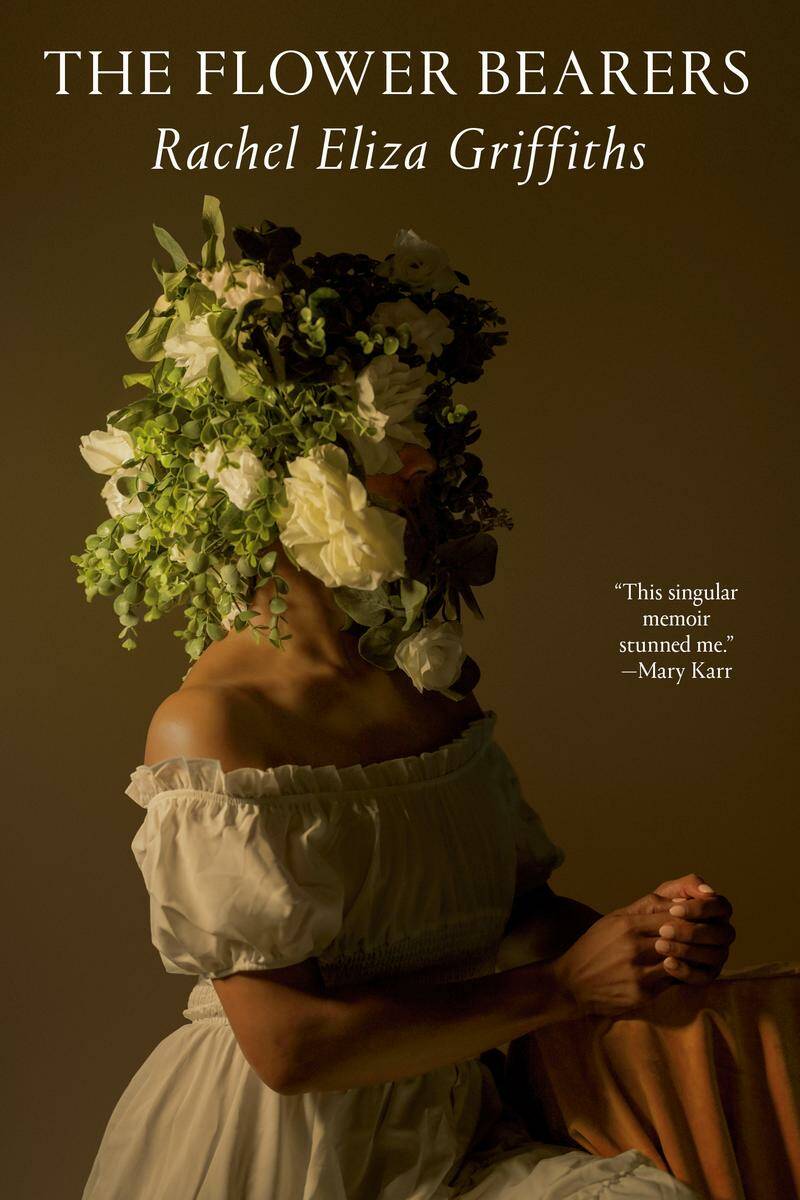
The Flower Bearers
There are moments in The Flower Bearers that are almost too raw to bear, as Griffiths revisits the spiral she experienced as her grief and fear accrued. That begins to make sense as she looks back at her one encounter with Lucille Clifton more than a decade before, when the poet had pronounced Griffiths “a seer.” When Griffiths brushed aside the label, Clifton posed this question to her: “Do you want to be a seeing woman or a blind one?” Her memoir is an attempt to let those words guide her toward the truth and, just maybe, away from grief. “One morning, I open a new journal. I take a breath and attempt to break through the silence,” Griffiths recalls. “I begin to write.”
Leigh Haber is an independent editor, writer and publishing strategist who for 10 years ran Oprah’s Book Club.
— The Washington Post