

Database of complaints against Montreal police part of five-year anti-racism plan
Advertisement
Read this article for free:
or
Already have an account? Log in here »
To continue reading, please subscribe:

Digital Subscription
One year of digital access for only $205*
- Enjoy unlimited reading on winnipegfreepress.com
- Read the E-Edition, our digital replica newspaper
- Access News Break, our award-winning app
- Play interactive puzzles
*First annual payment billed as $205.00 + GST for one year. This annual subscription will automatically renew at $233.00 + GST every 52 weeks (10% off the regular annual price of $259.35). Offer available to new and qualified returning subscribers only. Cancel any time.
To continue reading, please subscribe:
Add Free Press access to your Brandon Sun subscription for only an additional
$1 for the first 4 weeks*
- Enjoy unlimited reading on winnipegfreepress.com
- Read the E-Edition, our digital replica newspaper
- Access News Break, our award-winning app
- Play interactive puzzles
*Your next Brandon Sun subscription payment will increase by $1.00 and you will be charged $17.95 plus GST for four weeks. After four weeks, your payment will increase to $24.95 plus GST every four weeks.
Read unlimited articles for free today:
or
Already have an account? Log in here »
MONTREAL – Montreal police say they plan to create a centralized database of complaints against officers involving discrimination or racism, part of a five-year plan to eliminate systemic racism within the force.
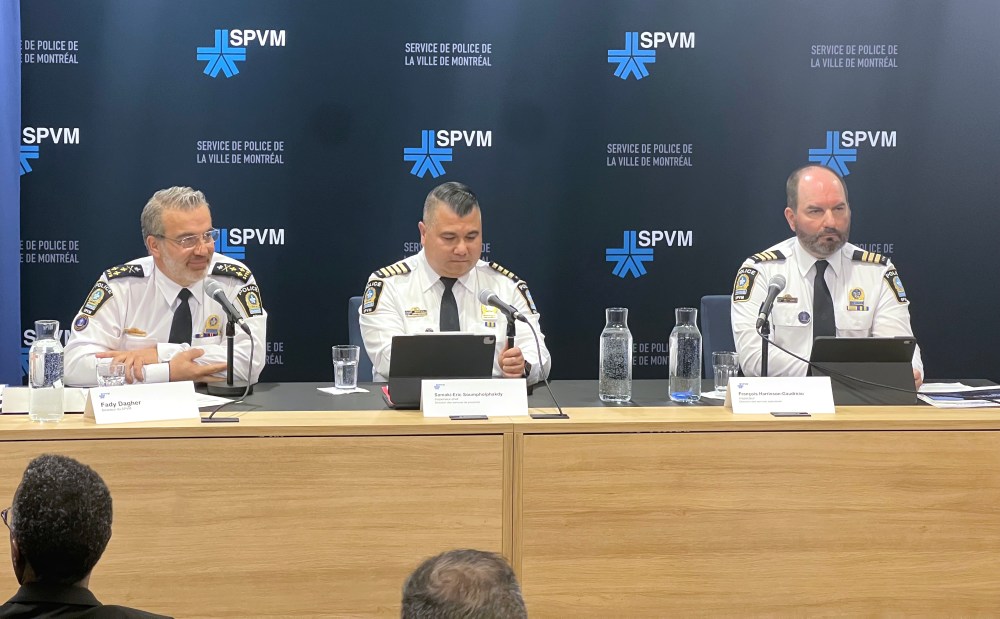
With the database, supervisors will be better able to monitor officers who transfer departments or units, because their complaint record will be easily accessible, Chief Insp. Samaki-Eric Soumpholphakdy told reporters Tuesday.
The new tracking system is part of a five-year “anti-racism” plan that Chief Fady Dagher says will help increase the public’s trust in its police. Dagher said he wants to eliminate instances of discrimination involving officers by 2030.
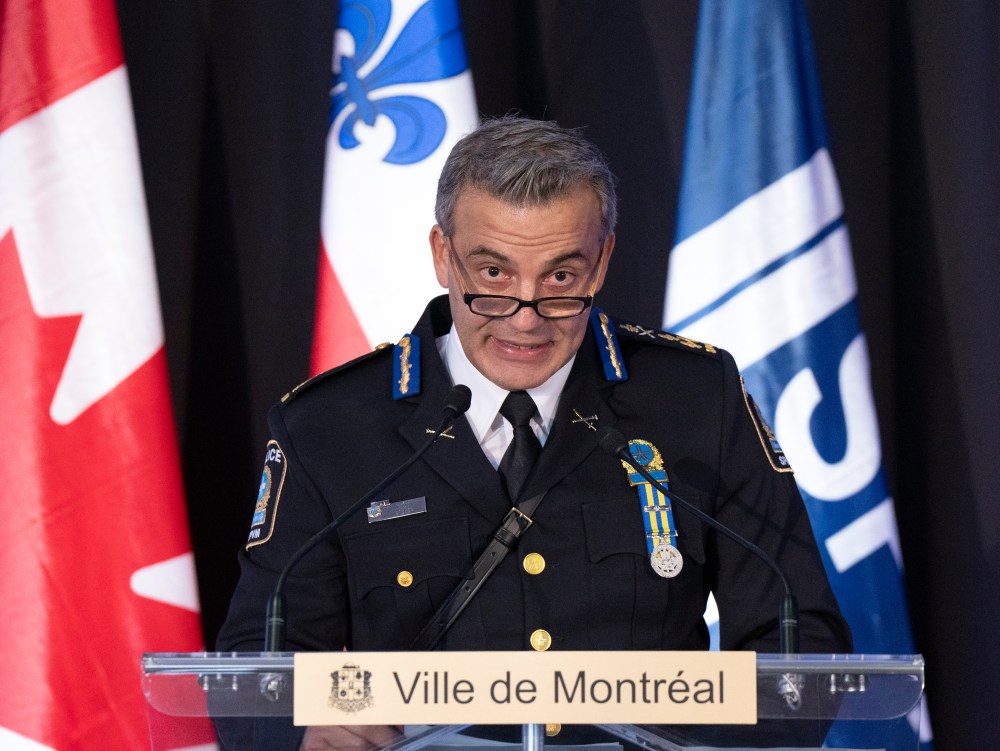
”We have zero tolerance,’’ he said.
Part of the five-year plan, he said, is to strengthen local partnerships and customize police officers’ approaches to every neighbourhood.
‘’We want a custom-made approach per neighbourhood,’’ he said, adding that Montreal is a metropolis with a multicultural population whose diverse needs must be better taken into account by police.
He said he wants to implement a ‘’family police’’ approach, where the neighbourhood beat officer is seen as a type of “family doctor.”
“Right now we aren’t doing any groundwork to facilitate communication between residents and neighbourhood officers, and we want to address that,” Dagher said.
He also plans to organize assemblies where officers and members of the public can talk and get to know each other better.
Dagher also promised to improve the police’s ability to track hate crimes across the city, lamenting how their current system is “not reliable” yet, “but I promise that by 2030, we’ll have a clearer picture.”
Montreal police have had challenges in recruiting police officers with diverse backgrounds, but Dagher said there has been a rise over the last three years in the number of racialized members of the police force. Soumpholphakdy said that in 2024, 36 per cent of Montreal police staff were women, and between 16 and 17 per cent of new hires were members of visible minority groups.
In 2024, Quebec Superior Court judge ruled in a class-action lawsuit that racial profiling was a “systemic problem” within the Montreal police force. The class-action lawsuit was brought by the Black Coalition of Quebec on behalf of racialized citizens who alleged they were unfairly arrested, detained, and racially profiled by Montreal police between mid-2017 and early 2019.
“The City of Montreal is responsible for racial profiling committed by its police officers,” Justice Dominique Poulin wrote in a judgment, adding that the city “is itself at fault” as racialized people are overrepresented in police stops.
Poulin ordered the City to pay $5,000 for those arrested without justification. The ruling noted that the city acknowledges systemic biases but argued that profiling was not widespread.
Dagher testified during the class-action lawsuit that racial profiling existed, calling it a “very insidious, very subtle, very underhanded problem.”
In a separate 2024 development, Montreal police Cmdr. Patrice Vilcéus, who is of Haitian origin, described racism within the force as a “cancer eating away at the organization” in his resignation letter marking the end of his 30-year career.
He said he had fought “all forms of unjust exclusion and unfair treatment,” criticized managers who resist change, and called on the force to embrace more diverse perspectives.
The report by The Canadian Press was first published March 24, 2026.