

Parts of southern Ontario under rainfall warnings as storm tracks through area
Advertisement
Read this article for free:
or
Already have an account? Log in here »
To continue reading, please subscribe:

Digital Subscription
One year of digital access for only $205*
- Enjoy unlimited reading on winnipegfreepress.com
- Read the E-Edition, our digital replica newspaper
- Access News Break, our award-winning app
- Play interactive puzzles
*First annual payment billed as $205.00 + GST for one year. This annual subscription will automatically renew at $233.00 + GST every 52 weeks (10% off the regular annual price of $259.35). Offer available to new and qualified returning subscribers only. Cancel any time.
To continue reading, please subscribe:
Add Free Press access to your Brandon Sun subscription for only an additional
$1 for the first 4 weeks*
- Enjoy unlimited reading on winnipegfreepress.com
- Read the E-Edition, our digital replica newspaper
- Access News Break, our award-winning app
- Play interactive puzzles
*Your next Brandon Sun subscription payment will increase by $1.00 and you will be charged $17.95 plus GST for four weeks. After four weeks, your payment will increase to $24.95 plus GST every four weeks.
Read unlimited articles for free today:
or
Already have an account? Log in here »
TORONTO – Residents in parts of southern Ontario could be in for a wet commute to work today as rain is expected throughout the region.
Environment Canada says residents from Kitchener to Owen Sound could expect upwards of 30 millimetres to fall by this morning.
Forecasters warned that water would likely form pools on roads and in low-lying areas.
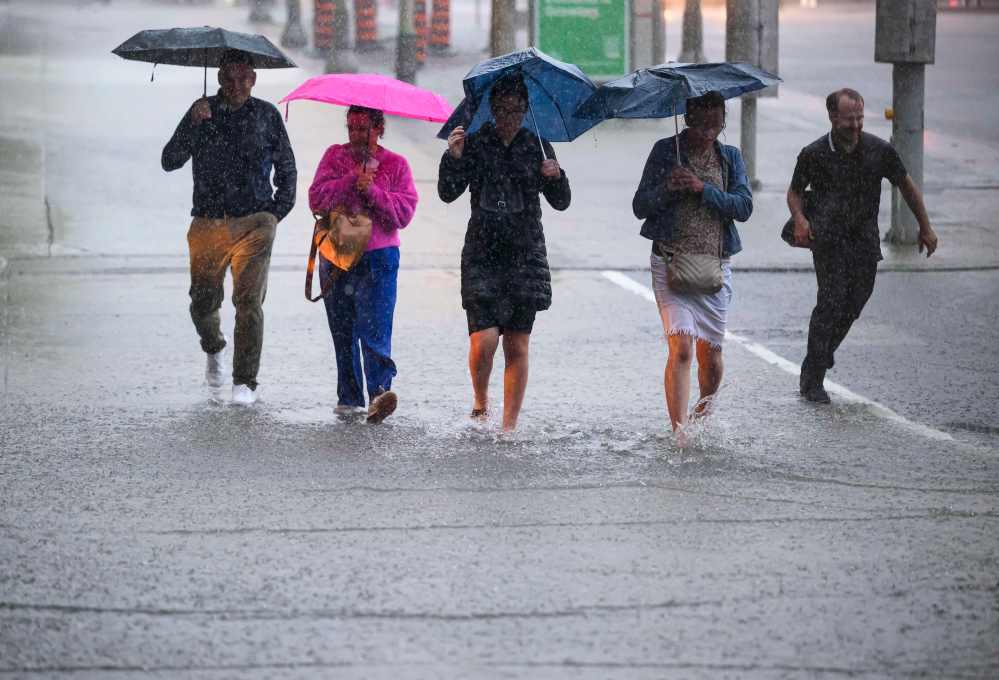
The weather office had earlier warned of severe thunderstorms moving east of the Ontario border with Michigan, but those advisories — as well as a tornado warning — were later cancelled.
A special weather statement remains in place for areas from Windsor to Woodstock, including Chatham-Kent and London, where meteorologists were forecasting up to 50 millimetres of rain.
Environment Canada says people are being encouraged not to drive through flooded roadways, to avoid low-lying areas, and to watch for washouts near rivers, creeks, and culverts.
This report by The Canadian Press was first published April 15, 2026.