

‘Get a gauge’: Alberta’s Smith says first year without time changes will be telling
Advertisement
Read this article for free:
or
Already have an account? Log in here »
To continue reading, please subscribe:

Digital Subscription
One year of digital access for only $205*
- Enjoy unlimited reading on winnipegfreepress.com
- Read the E-Edition, our digital replica newspaper
- Access News Break, our award-winning app
- Play interactive puzzles
*First annual payment billed as $205.00 + GST for one year. This annual subscription will automatically renew at $233.00 + GST every 52 weeks (10% off the regular annual price of $259.35). Offer available to new and qualified returning subscribers only. Cancel any time.
To continue reading, please subscribe:
Add Free Press access to your Brandon Sun subscription for only an additional
$1 for the first 4 weeks*
- Enjoy unlimited reading on winnipegfreepress.com
- Read the E-Edition, our digital replica newspaper
- Access News Break, our award-winning app
- Play interactive puzzles
*Your next Brandon Sun subscription payment will increase by $1.00 and you will be charged $17.95 plus GST for four weeks. After four weeks, your payment will increase to $24.95 plus GST every four weeks.
Read unlimited articles for free today:
or
Already have an account? Log in here »
EDMONTON – Alberta Premier Danielle Smith says only time will tell whether ditching twice-a-year clock changes is the right call.
Her government announced this week that it would soon table legislation to move the province to permanent daylight time, meaning Albertans won’t need to switch their clocks back this fall, or ever again.
Many health and biology experts warn that standard time is better for the human body, but Smith says Albertans should try it out for at least a year before deciding how they feel about it.
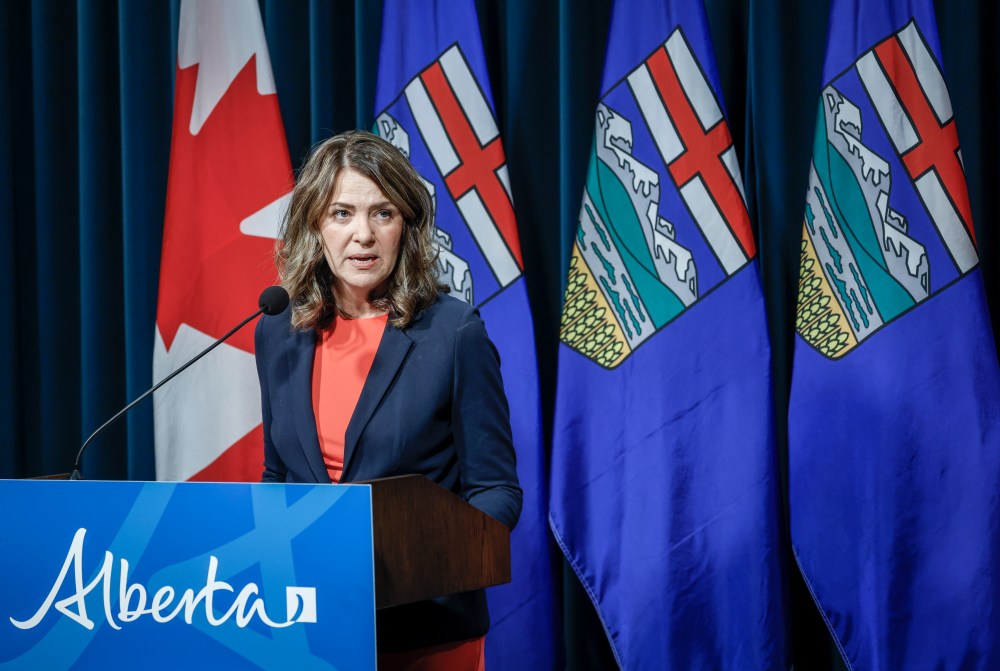
“People don’t really know what it’s going to be until they live it,” Smith told reporters at an unrelated news conference Wednesday.
Permanent daylight time means Albertans will experience dark mornings in the winter in exchange for more sun in the evenings.
“No one’s shy of telling me what their opinion is, and so I’m sure we’ll get a gauge on whether or not people think that we’ve made a mistake,” said Smith.
She said she expects Albertans will prefer later winter sunrises over the incredibly early summer under permanent standard time.
“I think on balance they would probably agree with the majority that daylight savings is the way to go.”
Smith said that if she’s wrong, it’s possible the government could put the decision to a vote in 2027.
Adopting permanent daylight time has been a hotly-contested topic in Alberta. It was narrowly defeated in a provincewide referendum five years ago.
Smith said the government decided not to put it to a vote again, largely because it felt its hands were tied with British Columbia announcing last month it was adopting permanent daylight time and Saskatchewan already being on year-round standard time.
“I think that the decision got foisted upon us,” said the premier.
“We are now an island.”
Another factor for skipping a vote, Smith said, is that there wouldn’t be enough, well, time.
Her government has already called a referendum for Oct. 19 on a number of topics related to immigration and the Constitution.
Adding the time change question on that referendum would mean sorting the results before clocks fall back on Nov. 1.
Industries and professional sports leagues that publish schedules months in advance would need more notice, said Smith. “Making sure that we’re not giving people only a couple of weeks notice was one of the considerations.”
The Northwest Territories is following Alberta’s lead to adopt permanent daylight time, announcing this week it too would make the change in order to stay in line with Alberta.
To the east, Manitoba Premier Wab Kinew told the CJOB radio station in Winnipeg that his government would soon start public engagement about his province ditching time changes.
Kinew provided few other details about the engagement but said experts have been advising him to adopt the same time as Saskatchewan’s standard time.
“Could we maybe have a Prairie time zone by the end of the year?” Kinew said.
If Manitoba makes the move, all three Prairie provinces would share the same time zone.
This report by The Canadian Press was first published April 22, 2026.
— With files from Steve Lambert in Winnipeg
Related Articles
Time for change? Province launches survey to review clock changes

Advertisement Advertise With Us
Advertisement Advertise With Us