

Floodwaters in hard-hit Ontario recede but warnings remain with rain ahead
Advertisement
Read this article for free:
or
Already have an account? Log in here »
To continue reading, please subscribe:
Digital Subscription
One year of digital access for only $1.44 a week*
- Enjoy unlimited reading on winnipegfreepress.com
- Read the E-Edition, our digital replica newspaper
- Access News Break, our award-winning app
- Play interactive puzzles
*Billed as $5.77 plus GST every four weeks. After 52 weeks, price increases to the regular rate of $19.95 plus GST every four weeks. Offer available to new and qualified returning subscribers only. Cancel any time.
To continue reading, please subscribe:
Add Free Press access to your Brandon Sun subscription for only an additional
$1 for the first 4 weeks*
- Enjoy unlimited reading on winnipegfreepress.com
- Read the E-Edition, our digital replica newspaper
- Access News Break, our award-winning app
- Play interactive puzzles
*Your next Brandon Sun subscription payment will increase by $1.00 and you will be charged $17.95 plus GST for four weeks. After four weeks, your payment will increase to $24.95 plus GST every four weeks.
Read unlimited articles for free today:
or
Already have an account? Log in here »
As floodwaters began to recede in some hard-hit parts of Ontario, warnings remained in place Wednesday with rain forecasted for already inundated regions.
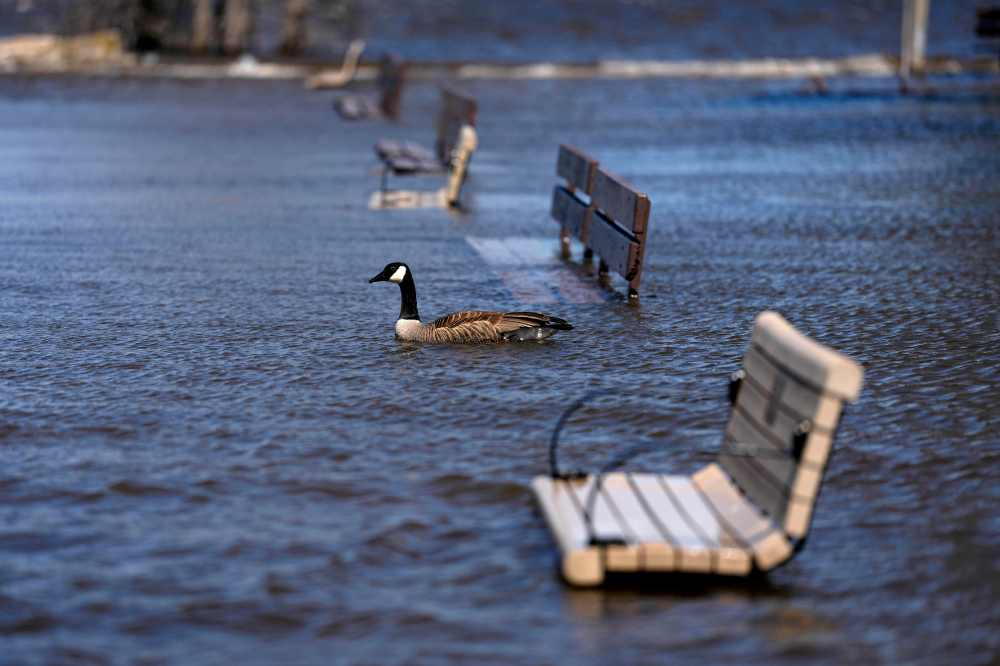
Ontario’s lakes and rivers swelled with melting snow and rain this month, sending water rushing into basements, businesses and boat houses. Many municipalities in cottage country and into central Ontario have declared local states of emergency and marshalled volunteers to fill sandbags to hold back the rising waters.
Greater Sudbury, which declared a state of emergency last week, came into the spring with more than double its normal snowpack after a major March storm. That melting snow combined with above-average rainfall to send river flows surging, with 100-year-flood levels surpassed on parts of the Vermillion River and the Whitson River.
The local conservation authority’s general manager says he’s hopeful the region is past peak flooding but cautioned residents to “remain vigilant”.
“The waters can be very cold, fast-moving and, on roads that may have had water over it, you can’t really see what’s hidden underneath,” said Carl Jorgenson of Conservation Sudbury.
A similar combo of heavy snowpack and persistent April rain appeared to help to set the table for seasonal flooding into Ontario’s high-risk cottage country, where several municipalities remain under local states of emergency. The March snowstorm that walloped Sudbury was also felt in the region and then followed up by more lake-effect snow, said warning preparedness meteorologist Monica Vaswani with Environment and Climate Change Canada.
The Insurance Bureau of Canada said it was still too early to say how much insured losses had been incurred due to the floods.
An updated warning issued Wednesday for the districts of Muskoka, Haliburton and Parry Sound said residents could anticipate lake and water levels to stabilize over the next week, with some decreases possible. The warning says some levels are comparable to major 2019 floods.
A spokesperson for the Muskoka District says it remains focused on keeping roads open and helping evacuees.
“The waters are thankfully starting to come down, however we remain watchful and stand ready to keep helping our residents to cope with the damaging effects of flooding,” said spokesperson Lindsey Adlam.
Meanwhile, as heavy rains encroached on eastern Ontario, conservation officials there said another round of flooding was possible by the weekend along the lower Ottawa River from Arnprior to Brittania. Those levels were likely to be lower than last week’s peak, which was consistent in some areas with a moderate, 10-year flood event, said Katherine Watson with South Nation Conservation.
A rainfall warning for parts of eastern Ontario issued by Environment Canada said between 30 and 50 millimetres was possible starting Wednesday through Thursday afternoon.
Climate change, driven by the burning of fossil fuels, is expected to make flooding more frequent and severe across parts of Canada.
This report by The Canadian Press was first published April 29, 2026.