

Brazilian medalist at 2016 Rio Olympics banned 2 years for missed doping controls
Advertisement
Read this article for free:
or
Already have an account? Log in here »
To continue reading, please subscribe:
Digital Subscription
One year of digital access for only $1.44 a week*
- Enjoy unlimited reading on winnipegfreepress.com
- Read the E-Edition, our digital replica newspaper
- Access News Break, our award-winning app
- Play interactive puzzles
*Billed as $5.77 plus GST every four weeks. After 52 weeks, price increases to the regular rate of $19.95 plus GST every four weeks. Offer available to new and qualified returning subscribers only. Cancel any time.
To continue reading, please subscribe:
Add Free Press access to your Brandon Sun subscription for only an additional
$1 for the first 4 weeks*
- Enjoy unlimited reading on winnipegfreepress.com
- Read the E-Edition, our digital replica newspaper
- Access News Break, our award-winning app
- Play interactive puzzles
*Your next Brandon Sun subscription payment will increase by $1.00 and you will be charged $17.95 plus GST for four weeks. After four weeks, your payment will increase to $24.95 plus GST every four weeks.
Read unlimited articles for free today:
or
Already have an account? Log in here »
LAUSANNE, Switzerland (AP) — A Brazilian bronze medalist at the 2016 Rio de Janeiro Olympics was banned for two years Friday for missing doping controls.
Maicol Siqueira was unavailable to give a no-notice sample for drug testing three times in a one-year period, said the International Testing Agency, which runs the anti-doping program for World Taekwondo.
The 33-year-old athlete is banned until Jan. 18, 2028, the ITA said in a statement.
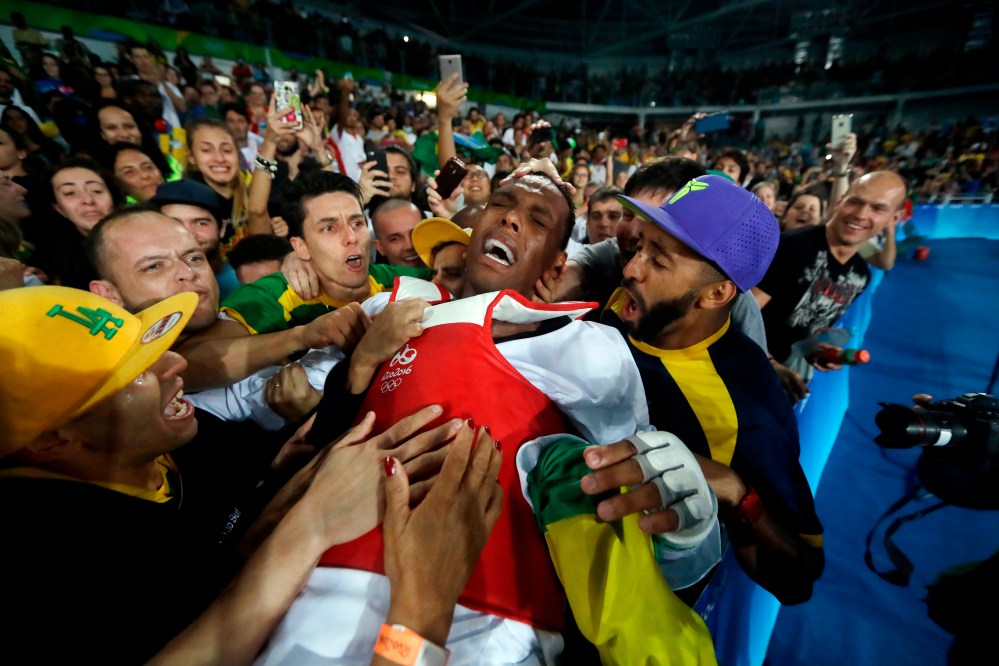
Siqueira took bronze in the men’s 80-kilogram class at his home Olympics 10 years ago, and team gold with Brazil at the 2023 PanAmerican Games
It was unclear if he was still competing when he missed the doping controls.
The global anti-doping system requires athletes to specify a one-hour period each day where they will be available to give a sample for testing. Three so-called “whereabouts” failures in a 12-month period can be prosecuted as an anti-doping rules violation.
___
AP sports: https://apnews.com/sports