

Archeologists accuse N.L. government of ‘colonial logic’ in dispute with Innu
Advertisement
Read this article for free:
or
Already have an account? Log in here »
To continue reading, please subscribe:

Digital Subscription
One year of digital access for only $205*
- Enjoy unlimited reading on winnipegfreepress.com
- Read the E-Edition, our digital replica newspaper
- Access News Break, our award-winning app
- Play interactive puzzles
*First annual payment billed as $205.00 + GST for one year. This annual subscription will automatically renew at $233.00 + GST every 52 weeks (10% off the regular annual price of $259.35). Offer available to new and qualified returning subscribers only. Cancel any time.
To continue reading, please subscribe:
Add Free Press access to your Brandon Sun subscription for only an additional
$1 for the first 4 weeks*
- Enjoy unlimited reading on winnipegfreepress.com
- Read the E-Edition, our digital replica newspaper
- Access News Break, our award-winning app
- Play interactive puzzles
*Your next Brandon Sun subscription payment will increase by $1.00 and you will be charged $17.95 plus GST for four weeks. After four weeks, your payment will increase to $24.95 plus GST every four weeks.
Read unlimited articles for free today:
or
Already have an account? Log in here »
ST. JOHN’S – A group of archeologists at Memorial University have voiced their support for the Innu Nation, saying the Newfoundland and Labrador government has undermined public trust and harmed Innu people.
The comments were made in a letter signed by seven professors from Memorial’s archeology department and shared publicly by the Innu Nation on Thursday.
The letter is the latest development in a dispute between the Indigenous group in Labrador and the provincial government, which the Innu Nation says stems from the province espousing a “fringe theory” that Innu arrived in Labrador just 300 years ago, after the Europeans.
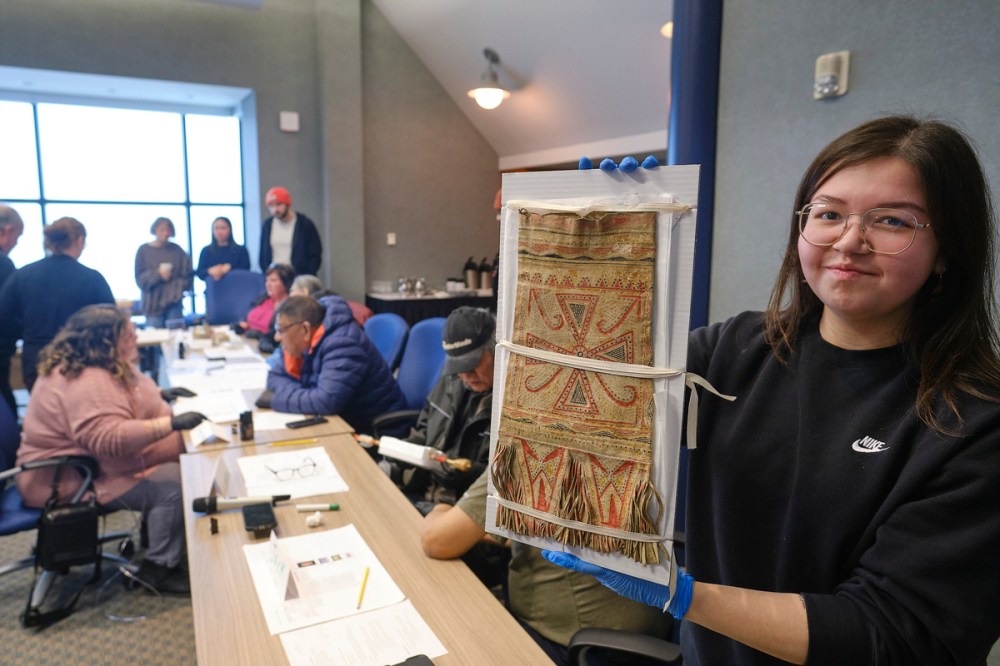
The Innu Nation says the theory erases thousands of years of Innu history in the region.
In their letter, the archeologists also opposed the theory, saying it employed “colonialist logic.”
“To deny Innu authority over their own history because it does not conform to a restrictive reading of the archeological record is not rigorous archeology,” the letter said.
Provincial officials have “undermined public trust, damaged a collaborative exhibit, and caused harm to Innu elders, knowledge holders, families, and youth,” it added.
The Innu Nation announced last week it was cancelling the “Innu Pakassiun” cultural exhibit, which was set to open in Labrador on National Indigenous Peoples Day.
Jodie Ashini, a cultural guardian with the Innu Nation, said executives from the provincial art gallery had relayed a request from the provincial government asking that the exhibit not include an Innu timeline, nor make any links between the stone tools on display and the Innu.
The nation opted to cancel the exhibit rather than make changes.
“Innu Pakassiun” means “Innu tools for survival” and the show was assembled entirely by Innu over several years, Ashini said earlier this week.
Premier Tony Wakeham and Lela Evans, minister for Indigenous relations and reconciliation, met with the Innu Nation shortly after, but there was no resolution. Provincial officials have issued several prepared statements about the issue this week, none of which have specifically addressed the 300-year theory.
“During the meetings, the premier apologized for matters related to the Innu exhibit, committed to free Indigenous cultural expression at all provincial government institutions and committed that buildings publicly displaying Indigenous culture will not be required to establish an occupancy timeline,” Wakeham said in a statement Tuesday.
Ashini said provincial officials seem to have first raised the idea during a court case about Innu rights to hunt caribou. The case was based on charges from 2013, which were stayed in 2022, said Senwung Luk, a lawyer who represented the accused hunters. He confirmed that lawyers for the provincial government submitted a report from the province’s archeology office arguing the Innu arrived in Labrador in the 18th century.
The Memorial University archeologists said the theory is based on “a methodologically flawed assumption that changes in the materials at a site signalled a new distinct people had arrived and replaced another. The theory also dismissed oral history and Indigenous knowledge as “secondary or inadmissible forms of evidence,” the archeologists said.
“Archeology should not be used to narrow Indigenous histories to what colonial institutions are prepared to recognize. Its task is not to extinguish continuity by demanding static material signatures across centuries,” their letter said.
“We trust that government is genuinely open to a scholarly interpretation of the record that recognizes Innu occupancy as extending well beyond 300 years,” it added.
Lela Evans, minister for Indigenous relations and reconciliation, said Wednesday that the government met with the Innu Nation and it hopes to find a respectful resolution to the dispute.
This report by The Canadian Press was first published June 26, 2026.