

Preston Manning co-chairing virtual educational assembly ahead of Alberta referendum
Advertisement
Read this article for free:
or
Already have an account? Log in here »
To continue reading, please subscribe:

Digital Subscription
One year of digital access for only $205*
- Enjoy unlimited reading on winnipegfreepress.com
- Read the E-Edition, our digital replica newspaper
- Access News Break, our award-winning app
- Play interactive puzzles
*First annual payment billed as $205.00 + GST for one year. This annual subscription will automatically renew at $233.00 + GST every 52 weeks (10% off the regular annual price of $259.35). Offer available to new and qualified returning subscribers only. Cancel any time.
To continue reading, please subscribe:
Add Free Press access to your Brandon Sun subscription for only an additional
$1 for the first 4 weeks*
- Enjoy unlimited reading on winnipegfreepress.com
- Read the E-Edition, our digital replica newspaper
- Access News Break, our award-winning app
- Play interactive puzzles
*Your next Brandon Sun subscription payment will increase by $1.00 and you will be charged $17.95 plus GST for four weeks. After four weeks, your payment will increase to $24.95 plus GST every four weeks.
Read unlimited articles for free today:
or
Already have an account? Log in here »
EDMONTON – Preston Manning is stepping into the fray ahead of Alberta’s fall referendum by headlining a public forum tackling Western Canada’s long-standing grievances with Ottawa.
The virtual sessions, set for Sept. 19 and 20, are to be co-chaired by Manning, the former Reform Party leader, and former B.C. premier Gordon Campbell.
The event comes as Alberta Premier Danielle Smith is set to put ten questions to voters on Oct. 19, including whether they want the province to remain in Canada or hold a second, binding referendum on separation.
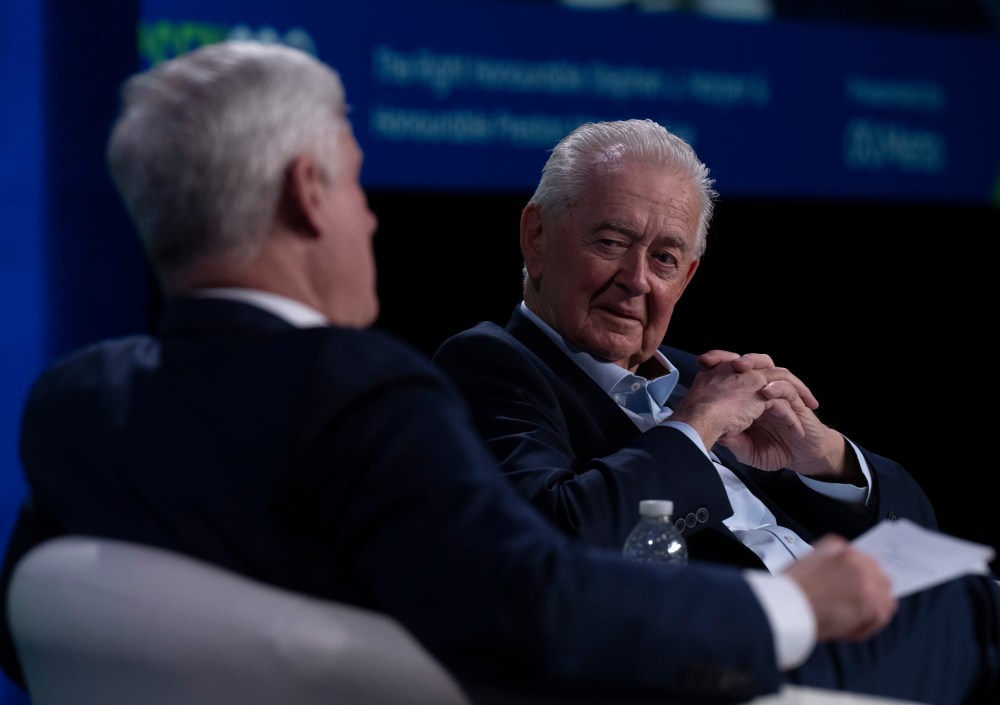
Manning said the events are meant to be educational and engage voters without sinking into partisan bickering that often characterizes public meetings.
“This is an important referendum, and it’s important that people, no matter what their views are, that they get out and vote on it,” he said in an interview Thursday.
He said it will be different than other public advisory panels that approached the same issues, such as the Alberta Next panel under Smith, and the previous Fair Deal panel on which Manning served.
“They’re useful exercises, (but) those tend to end up being partisan. You get your own bunch being in the majority of the meetings,” he said.
“This is intended to be a little broader than that.”
He added it’s not about championing one view over another, with speakers taking turns presenting various options.
And, Alberta won’t be the only focal point.
The assembly plans to hold a followup session in October and create recommendations after Alberta’s vote. Then, it will share its proposals with policy-makers across the West.
Manning said concerns about the role of the federal government are shared outside of Alberta, so the assembly’s conclusions would be relevant to other provinces.
He said the assembly is meant to be a democratic exercise without partisan wrangling.
“People don’t see that process operating in legislatures today. They don’t see it operating in the House of Commons. What they see there is instant polarization on issues,” he said.
“Maybe it can demonstrate, particularly to young people who are losing faith in democratic institutions, that it is possible to resurrect that democratic procedure and that democratic ethic.”
Manning also said they hope to draw attention to Smith’s nine other ballot questions.
They include proposals to restrict social services from some immigrants. to push for constitutional negotiations on abolishing the Senate and giving provinces the power to appoint superior court judges.
Smith has framed those proposals as a political compromise that could address some of Alberta’s grievances with Ottawa. She has said she and her United Conservative Party want to remain in Canada.
Manning said a yes vote for those nine proposals will encourage provinces to “push the envelope” on issues of shared federal-provincial jurisdiction, including immigration.
This report by The Canadian Press was first published Aug. 13, 2026.

Advertisement Advertise With Us