

TSB calls for stricter rules on medical fitness assessments after Alberta train crash
Advertisement
Read this article for free:
or
Already have an account? Log in here »
To continue reading, please subscribe:

Digital Subscription
One year of digital access for only $205*
- Enjoy unlimited reading on winnipegfreepress.com
- Read the E-Edition, our digital replica newspaper
- Access News Break, our award-winning app
- Play interactive puzzles
*First annual payment billed as $205.00 + GST for one year. This annual subscription will automatically renew at $233.00 + GST every 52 weeks (10% off the regular annual price of $259.35). Offer available to new and qualified returning subscribers only. Cancel any time.
To continue reading, please subscribe:
Add Free Press access to your Brandon Sun subscription for only an additional
$1 for the first 4 weeks*
- Enjoy unlimited reading on winnipegfreepress.com
- Read the E-Edition, our digital replica newspaper
- Access News Break, our award-winning app
- Play interactive puzzles
*Your next Brandon Sun subscription payment will increase by $1.00 and you will be charged $17.95 plus GST for four weeks. After four weeks, your payment will increase to $24.95 plus GST every four weeks.
Read unlimited articles for free today:
or
Already have an account? Log in here »
WAINWRIGHT – The Transportation Safety Board is calling on the federal government to strengthen its oversight of how railways assess whether employees are medically fit for work.
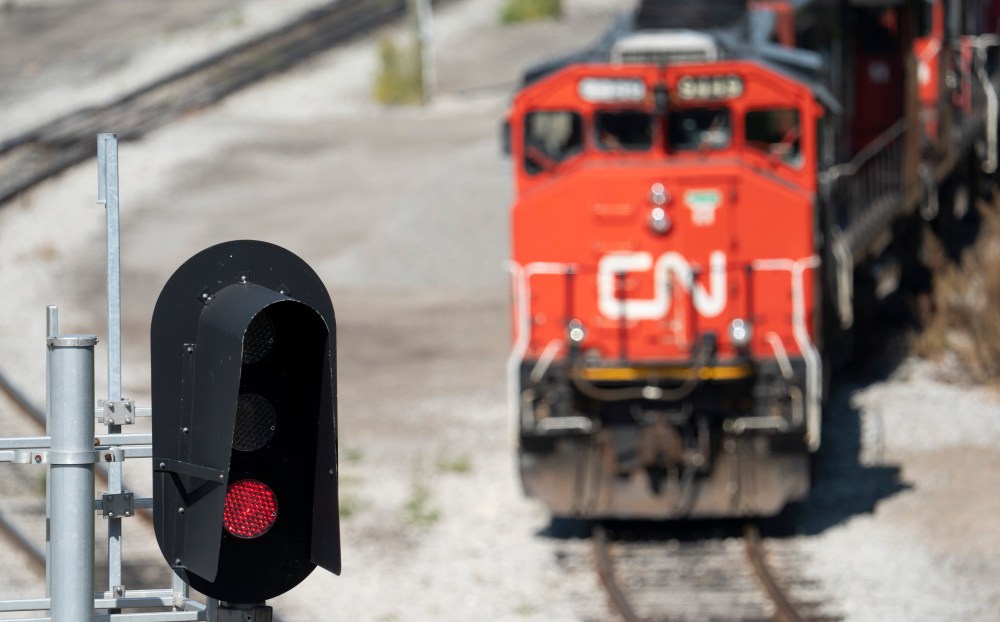
The call comes after an investigation into a 2023 collision between two Canadian National Railway trains near Wainwright, Alta., about 200 kilometres southeast of Edmonton.
No one was injured in the collision.
The TSB found that a locomotive engineer had been cleared to work despite incomplete medical assessments related to his Type 1 diabetes.
It said that on Aug. 8, 2023, a train passed a stop signal while being operated by a trainee under the supervision of the engineer.
He did not respond to the trainee’s repeated request for guidance because he was experiencing a “significant decline in cognitive functioning,” the TSB said in a news release Tuesday.
“Without adequate guidance, the trainee did not apply sufficient braking to stop before the signal,” it said.
“A breakdown in communication and shared situational awareness among the crew further delayed their response.”
The investigation found that several of the required annual diabetes assessments were incomplete but nevertheless accepted by CN. It also found that Transport Canada had not audited CN’s compliance with railway medical rules in the 12 years before the crash.
“Because no audits were conducted, the gaps in the locomotive engineer’s medical assessments were not captured through regulatory oversight,” the TSB said.
It said the guidelines railways use for assessing the medical fitness for duty of employees with diabetes are inconsistent with recommendations published by Diabetes Canada or with the medical certification guidelines used in the air and marine transportation sectors.
CN said in a statement that it received the results of the TSB investigation.
“While CN does not discuss details concerning employees, we take the findings of every investigation seriously,” spokesperson Ashley Michnowski said Tuesday.
“We learn from each incident and apply those learnings to our network and operations.”
This report by The Canadian Press was first published Aug. 25, 2026.