

Ontario’s top court rejects developer’s constitutional challenge over Greenbelt law
Advertisement
Read this article for free:
or
Already have an account? Log in here »
To continue reading, please subscribe:

Digital Subscription
One year of digital access for only $205*
- Enjoy unlimited reading on winnipegfreepress.com
- Read the E-Edition, our digital replica newspaper
- Access News Break, our award-winning app
- Play interactive puzzles
*First annual payment billed as $205.00 + GST for one year. This annual subscription will automatically renew at $233.00 + GST every 52 weeks (10% off the regular annual price of $259.35). Offer available to new and qualified returning subscribers only. Cancel any time.
To continue reading, please subscribe:
Add Free Press access to your Brandon Sun subscription for only an additional
$1 for the first 4 weeks*
- Enjoy unlimited reading on winnipegfreepress.com
- Read the E-Edition, our digital replica newspaper
- Access News Break, our award-winning app
- Play interactive puzzles
*Your next Brandon Sun subscription payment will increase by $1.00 and you will be charged $17.95 plus GST for four weeks. After four weeks, your payment will increase to $24.95 plus GST every four weeks.
Read unlimited articles for free today:
or
Already have an account? Log in here »
TORONTO – The Ontario Court of Appeal has sided with a lower court in rejecting a developer’s constitutional challenge of a 2023 law that returned 15 parcels of land to the Greenbelt.
The provincial legislation at the centre of the legal dispute reversed Premier Doug Ford’s plan at the time to open up protected land for development, but lawyers for Minotar Holdings Inc. argued the law violates the authority of the superior courts and “unwritten constitutional principles.”
In a decision released Friday, the Appeal Court found the developer’s argument would do “real harm to the balance of the Constitution and must be rejected.”
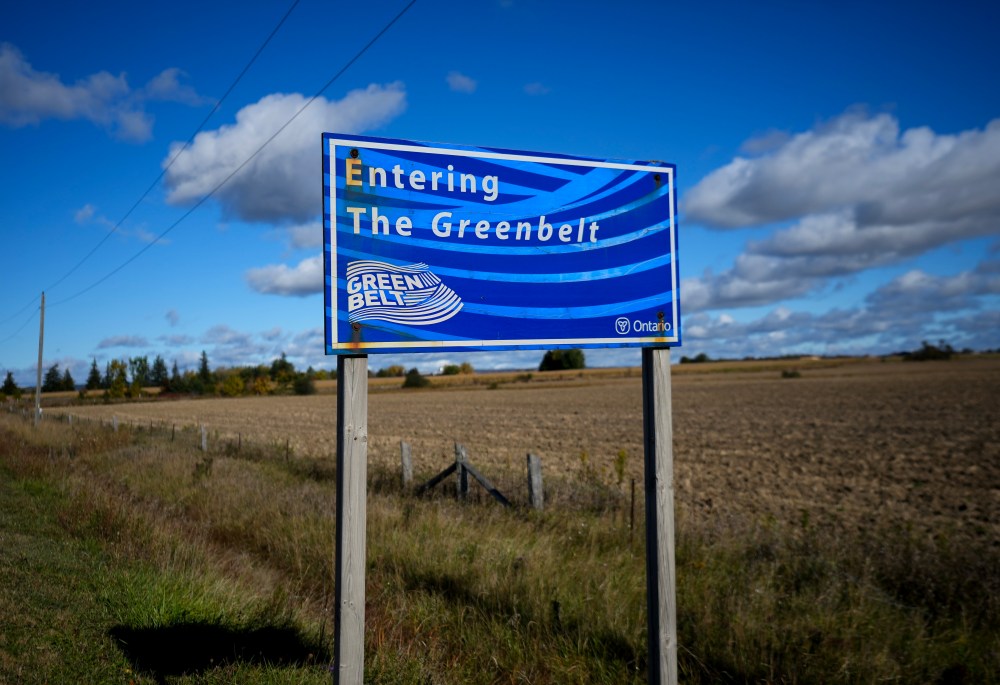
Minotar Holdings Inc. sued the province in 2017 after it had long argued its 210-acre parcel of land was erroneously included in the Greenbelt.
The developer and the province agreed in 2022 to settle the lawsuit by removing 37 acres of the property from the protected land reserve, but the province voided that settlement a year later when scandal erupted over Ford’s decision to open up some Greenbelt land for development.
In the wake of scathing reports from the offices of the auditor general and integrity commissioner that found unfair favouring of certain developers, Ford returned all 15 parcels of land to the Greenbelt, including the 37-acre tract owned by Minotar.
The law that restored the land also required any future Greenbelt boundary changes to be done through legislation rather than regulation. That effectively immunized the government from judicial oversight of changes to the Greenbelt, Minotar lawyer Paul Fruitman argued in 2023.
But in a 2-1 decision, the Appeal Court has now agreed with a lower court that the province’s action did not violate the jurisdiction of the superior courts.
“The legislative amendments alter the legal rights of persons through changes to substantive law,” the decision reads. “These are not constraints on inherent judicial powers; they fall within well-established modes of regulation.”
This report by The Canadian Press was first published Aug. 28, 2026.